
I buy the masks, wear them for weeks, and photograph what happens, then read what the brand says the thing does, line by line, and check what it can actually back up.
Everything on this page applies to LED masks. That is what I own, that is what I have been using and filming since 2023, and the grid below does not move from one article to the next so you can easily compare any review here.
What a test actually looks like
Eight weeks at minimum, twelve when a mask has started to show me something. Sessions run in the evening, on clean skin and at roughly the same hour, so that two photos taken a month apart are comparing the same face under the same conditions.
A mask that has produced nothing I can point at by week eight has already answered the question, and I stop there rather than wait for the tenth week to be kinder. One that has started to move something gets the full twelve, because a change in skin texture needs a complete cell turnover cycle behind it before anyone can call it a result.
How often I run a mask is not my preference either, but comes from the mask’s own irradiance, the figure that decides how much light one session actually puts on skin. Anything published between 30 and 50 mW/cm² is usable, and where a mask sits inside that band is what sets the frequency.
| Published irradiance | Sessions per week |
|---|---|
| Around 50 mW/cm² | 3 |
| Around 40 mW/cm² | 4 |
| Around 30 mW/cm² | 5 |
| Not disclosed | 5, and the review says the figure was missing |
A weaker mask is not disqualified by this. It simply has to be worn more often to land a comparable dose across a week, which is a cost you pay in evenings rather than in dollars. A brand that publishes nothing gets the demanding end of the scale, since I have no reason to assume the number it is keeping to itself is a flattering one.
What I am watching over those weeks is mostly unglamorous: how long a session really takes once I count removing my makeup, getting the thing positioned and wiping it down afterwards, whether the strap starts digging in around minute eight, and how much light escapes at the eyes, enough that I keep them shut for the whole ten minutes. Then comes the question that settles it by week five: am I still reaching for the thing, or quietly stepping around it on the shelf?
The grid of Tested by Emilie
It has seven criteria, each rated out of 5 in half point steps and then weighted, and since the weights add up to 100, the total is the score.
| Criterion | Weight | What it rates |
|---|---|---|
| Results | 24% | What changed on my face, over what period, photographed the same way every time |
| Irradiance | 16% | How much light actually reaches the skin, and whether that figure holds up |
| Coverage | 14% | How many diodes, how evenly they sit, and what they leave out |
| Proof | 14% | What the brand documents, and whether the documentation survives being checked |
| Comfort | 12% | Fit, weight, heat, eye comfort, and whether a session survives a real week |
| Value | 12% | Price and consumables, against the result and against the masks I have already used |
| Safety and support | 8% | Eye shielding, build, warranty, returns, support, dependence on an app |
Five of them need more explanation than a table row can hold, so each one gets its own section below.
Results
My own face is the first thing this criterion looks at, and the heaviest. It is also a sample of one, on one skin type, in one season, so it is not the only thing it looks at. Two other sources feed the number, and every review says out loud which one is talking.
The before and afters a brand publishes come second. They were chosen by the people selling the mask, shot under lighting nobody outside the company controls, so they never carry what a controlled trial would. A long, dated series that lines up with the study the brand is quoting still tells me more than an empty product page. Third are buyer reports in volume, meaning the results column of a review widget across thousands of entries, never a handful of comments I picked because they suited my argument.
Two limits keep that from turning into a marketing summary: a mask that did nothing on me cannot go above 3 out of 5 here, however good the paperwork looks, and 4 or more requires a result I watched happen, on my face, over the weeks.
Irradiance
Irradiance is how much light the mask puts onto your skin, in mW/cm². It decides whether a session does anything at all, and it is the number most product pages would rather talk around.
Two masks can carry the same wavelength on the box and sit nowhere near each other in output. Multiply irradiance by session length and you get the dose in J/cm², which is the figure the published research is built on. A mask landing well under the dose used in a study cannot borrow that study’s results, however many times the marketing cites it.
So I score how the figure is published, not just whether it exists. A number that arrives with its measurement condition, sits inside the useful band and matches the session length the brand recommends scores at the top. A number published bare, with no way of knowing where it was taken, sits in the middle. Not disclosed scores low, because a brand that will not tell you how much light it produces is asking you to take the most important number in the category on trust.
The measurement condition is what separates masks here. 30 mW/cm² at the surface of a diode and 30 mW/cm² at your cheek describe two very different masks, so a brand that writes measured in direct contact with the skin has handed you the half of the number most of the others keep. A distance in centimetres and a contact condition are worth the same to me. What matters is knowing where the reading was taken.
More power is not a better score. The useful band runs from 30 to 50 mW/cm². 10 minutes at 50 puts roughly 30 J/cm² on your skin, which is inside the range the published research works in. A mask advertising 120 would mostly be asking you to hold a hotter source against your face for no extra benefit, so I reward a figure that lands in the band rather than the biggest figure on the shelf.
Coverage
Coverage is how many diodes a mask carries and where they actually sit. It is the one criterion you can judge with your own eyes before you buy, which is exactly why brands are so careful about which photos they publish.
Count the diodes, then look at the gaps between them. A hundred LEDs spread across a whole face and a hundred packed over the forehead and cheeks are not the same product. Blanket style masks are where this goes worst: the fabric folds around the face and leaves whole zones, usually the sides of the nose and everything around the mouth, with nothing pointing at them.
I also check what a brand is counting when it gives you a number. One mask I tested advertises 236 LEDs and holds 110 physical bulbs, each carrying two or three diodes of different wavelengths. That is not a lie, but it is not the number you thought you were reading either, so reviews here give both.

Proof
Proof rates the paperwork: what the brand puts in writing, and whether it survives being checked against the source. I audit seven points and rate them together out of 5.
- Are wavelengths given in nm, and not just “red light”?
- Can the dose per session be worked out in J/cm² from the published figures?
- Is the FDA clearance number cited, and findable in the database?
- Does the clinical study cited cover this model, or a different device?
- Is that study documented past the headline number: sample size, duration, lab named?
- Are the warranty term and support documented?
A point the brand does not publish counts as not earned, never as neutral. The clearance number and the study weigh more than the rest, because those are the two a brand is most likely to gesture at without holding.
This is also the part of a review I can complete for a mask I have never had on my face, which is why the comparison tables on this site run wider than my own shelf.
Safety, support and build
This criterion covers what you find out after the money has left your account: whether the eye shielding is real or decorative, what the warranty says once you read past the number of years, whether anyone answers an email, and whether the mask stops working the day an app gets discontinued.
Build quality sits here too, and it is the reason I keep buying from marketplace listings as well as from brand sites. Some of what arrives is a plastic shell with diodes glued behind it, shipped with a spec sheet nobody stands behind.
The badge
The badge is the score read at a glance: if a mask reaches 65 out of 100 it is Emilie Approved, and if it lands below that it is Shelved. There is no second judgment sitting behind the number, and once the grid has produced one, the badge is not mine to negotiate.
| Badge | Condition |
|---|---|
| Emilie Approved | 65/100 or more |
| Shelved | Under 65/100 |
| Still testing | The test is running and the mask has no score yet |
A badge never appears without the number that produced it. On its own it would be exactly the kind of unverifiable opinion this site was built to argue with, and you would have no way to check whether I had been generous.
Whether I am still using a mask three months later is a separate question, and arithmetic does not settle it. That answer lives in the dated Still using it? block at the end of each review, where I say what stayed in my routine and what went into a drawer. It is the part of a review I cannot fake, and the part I would read first.
The photos and videos
Same camera, same lamp, same distance, same time of day, and no makeup, on Sunday mornings, because that is the one moment of the week I can guarantee.
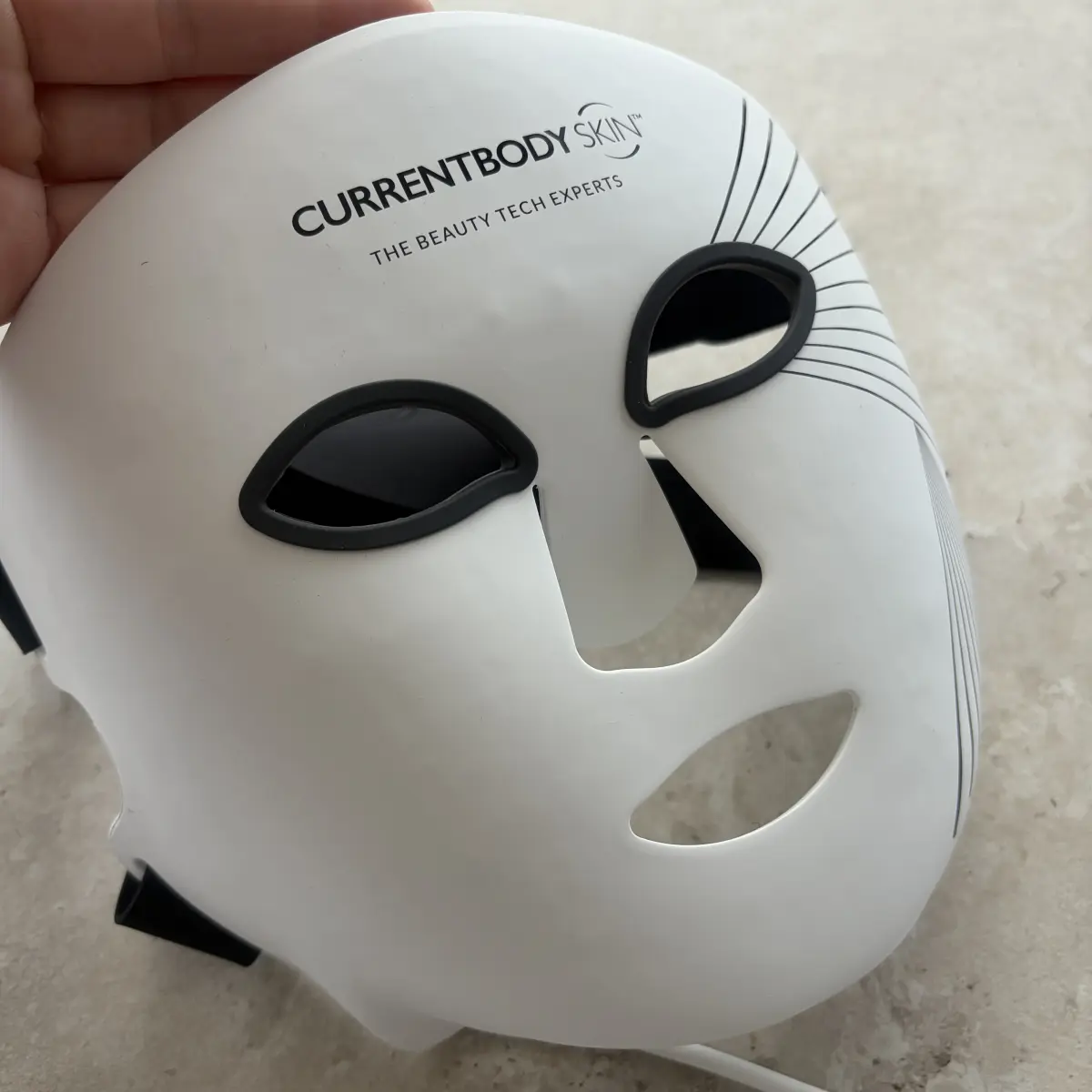
Video does what a photo cannot. Light density, the way a panel falls across a face, a mask that flickers or heats up: none of that survives a still image, so when the thing I am judging is a behavior rather than a state, I film it, and most of it ends up on my YouTube channel before it ends up here.
None of that makes a photo proof of anything on its own. Light, sleep and hydration move a face more than most masks do, and I would rather say so than sell you a before and after. The photos are there so you can look at what I looked at, and disagree with me.