
I buy the devices I test unless the article says otherwise. Some links and discount codes on this site are paid links: if you buy through one, I earn a commission. It never changes a score or a verdict.
The comfort of an LED mask is very important: if you use it three times a week, the sessions need to be pleasant to maintain consistency! This is one of the advantages of at-home LED masks: being able to do your sessions at home, without any constraints.
I’ve tested many LED masks, and I can tell you that a strap that’s difficult to adjust, a timer that needs to be set on your phone, or a mask that feels heavy on your face are all drawbacks to avoid. Here’s everything you need to know to choose a comfortable LED mask that you’ll actually want to use!
One of the 7 criteria on my grid
Comfort is the fifth of my 7 criteria, and the hardest one to judge from a product page, which is why so many of your questions land on it after my tests. So I’ve written a page per criterion, each with the masks I’ve worn as examples. Here are the 7, in the order of my grid:
- Results, 24% of the score
- Irradiance, 16% of the score
- Coverage, 14% of the score
- Proof, 14% of the score
- Comfort, 12% of the score, this page
- Value, 12% of the score
- Safety & support, 8% of the score
The shape of the mask and its weight
There are 3 main types of LED masks:
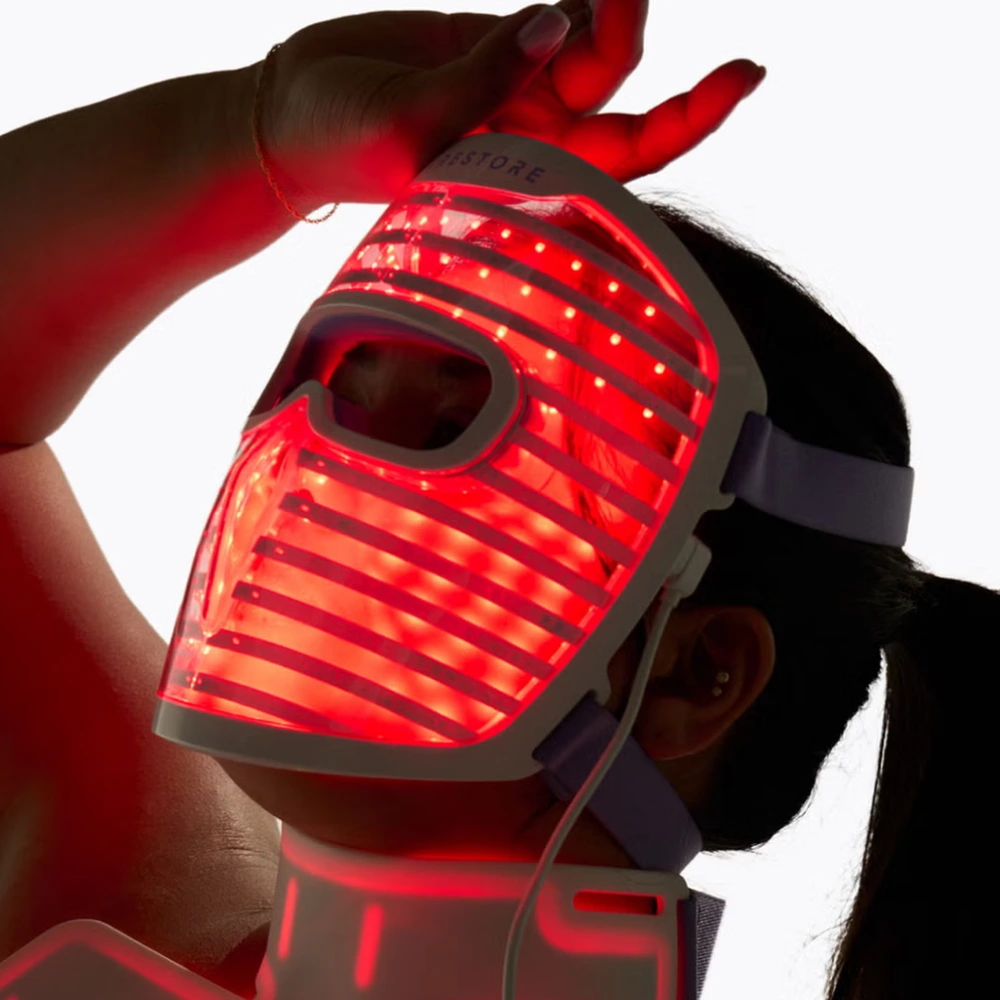
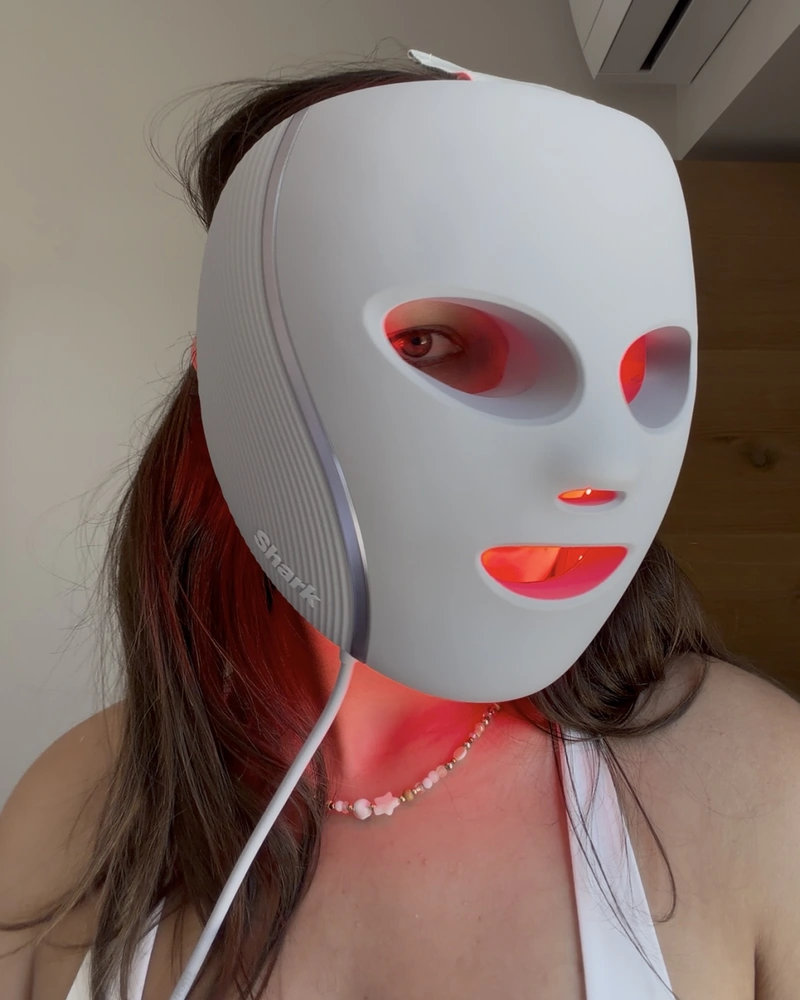
- Rigid masks, such as Shark, Therabody, and iRestore. These aren’t great because they feel heavy at the end of a session, they put pressure on the cheekbones, and most importantly, they keep the LEDs away from the skin (I discuss this in my reviews).
- Flat masks, like Omnilux and Nanoleaf, are more comfortable, but they remain further from the skin in several areas and don’t cover the entire face properly.
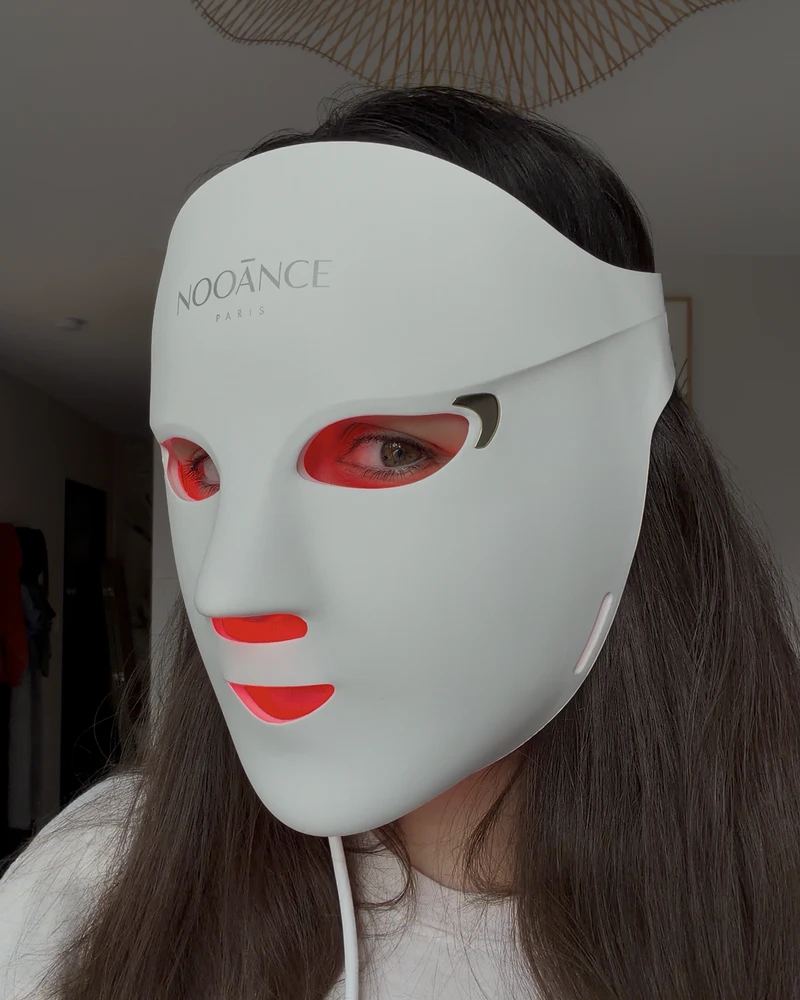
- Molded 3D silicone masks are newer; they conform better to the contours of the face and adhere the LED panel to the skin, like the Nooance, JOVS, and Currentbody models.
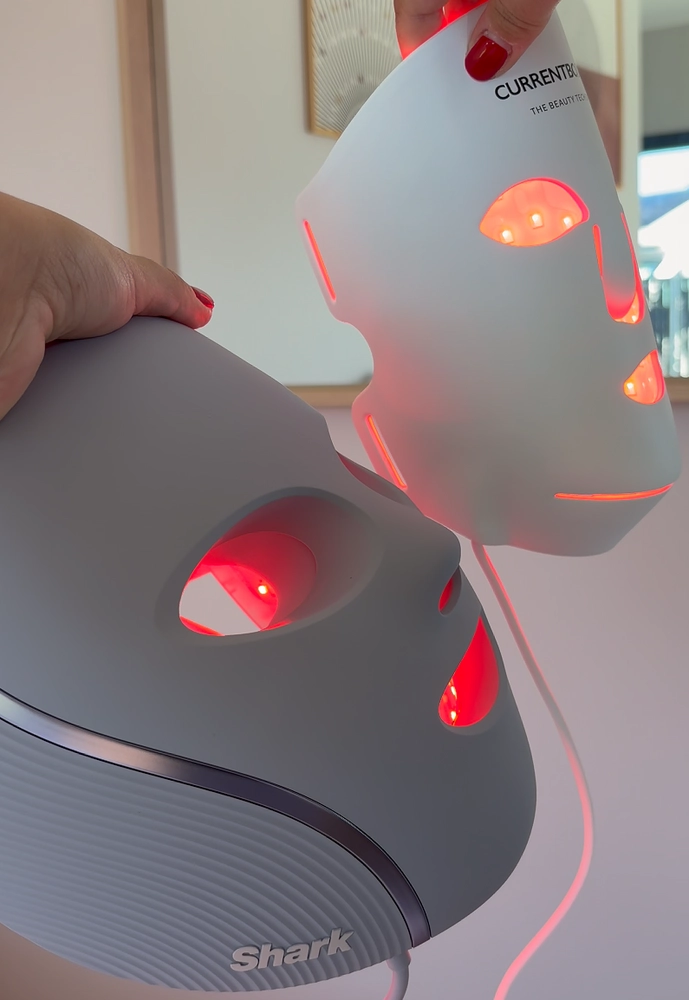
For hot spots, there’s the nose, for example, which is often poorly treated by rigid and flat masks. For instance, the CurrentBody LED mask has an opening over the nose, but it presses on the sides, which becomes uncomfortable over time.
- Therabody TheraFace Mask 1.3
- Shark CryoGlow 1.1
- Nooance Aurion X252 0.6
- iRestore Illumina 0.4
- FOREO FAQ Swiss 202 0.4
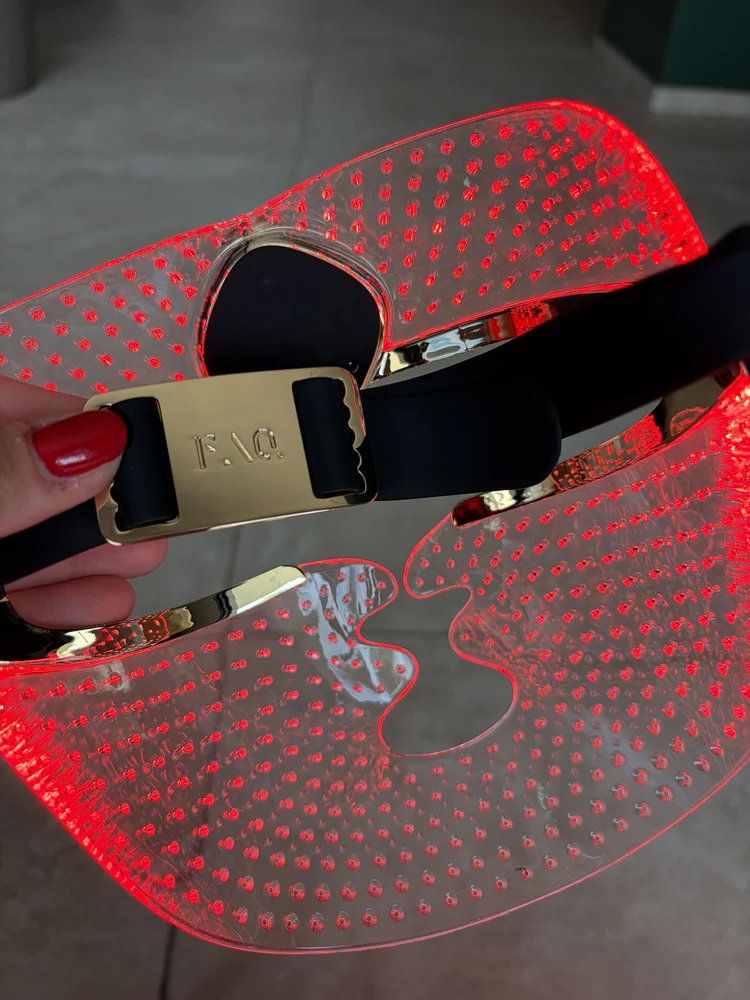
Weight is even more of a problem with hard-shell LED mask, as the load puts a lot of strain on the nose. The Therabody, at 1.3 lbs, is the main complaint in customer reviews, and the Shark, at over 1.1 lbs, made me feel dizzy when walking because of its deep shell… But lightness isn’t the only comfort factor, as evidenced by the FOREO LED mask, which is the lightest model I’ve tested, yet one of the most difficult to put on.
Dangers: heat and eyes
Heat isn’t a problem with certified LED masks. If you buy an uncertified LED mask, I can’t comment because the power isn’t regulated. But the ones I’ve tested have never caused me any problems; at most, it’s a slight, gentle, and even warmth.
However, for the eyes, it’s a real danger. Good models incorporate eye protection into their design to protect the eyes. It’s also a comfort in itself because being able to keep your eyes open during the session is really nice.
The Nooance and Currentbody LED masks (my comparison) integrate eye protectors into the shell; these are my favorite features. The iRestore visor is another option, also comfortable, but unfortunately, it limits exposure around the eyes and nose.
On the other hand, some don’t protect the eyes, like the Omnilux, so I had to use opaque glasses for this test: really inconvenient!
Straps, timer, battery: the frictions
Putting on an LED mask is usually very quick (a few seconds) and easy. But for some models, it’s a little less so… For example, a multi-point Velcro strap with a chin strap holds the mask in place in 5 seconds, while a flat band with a buckle, like the ones found on swimming goggles, requires both hands, pulls on your hair, and doesn’t really seal the mask to your face…
These are typically the issues I encountered while testing the FOREO, the Qure, and the Dr. Dennis Gross.
There’s also the timer, which I take into account in my tests. Most masks have a timer that stops after 10 minutes, but some don’t have an indicator, which is a bit of a nuisance. I’m picky about this, but when you use it for several years, it bothers me personally.
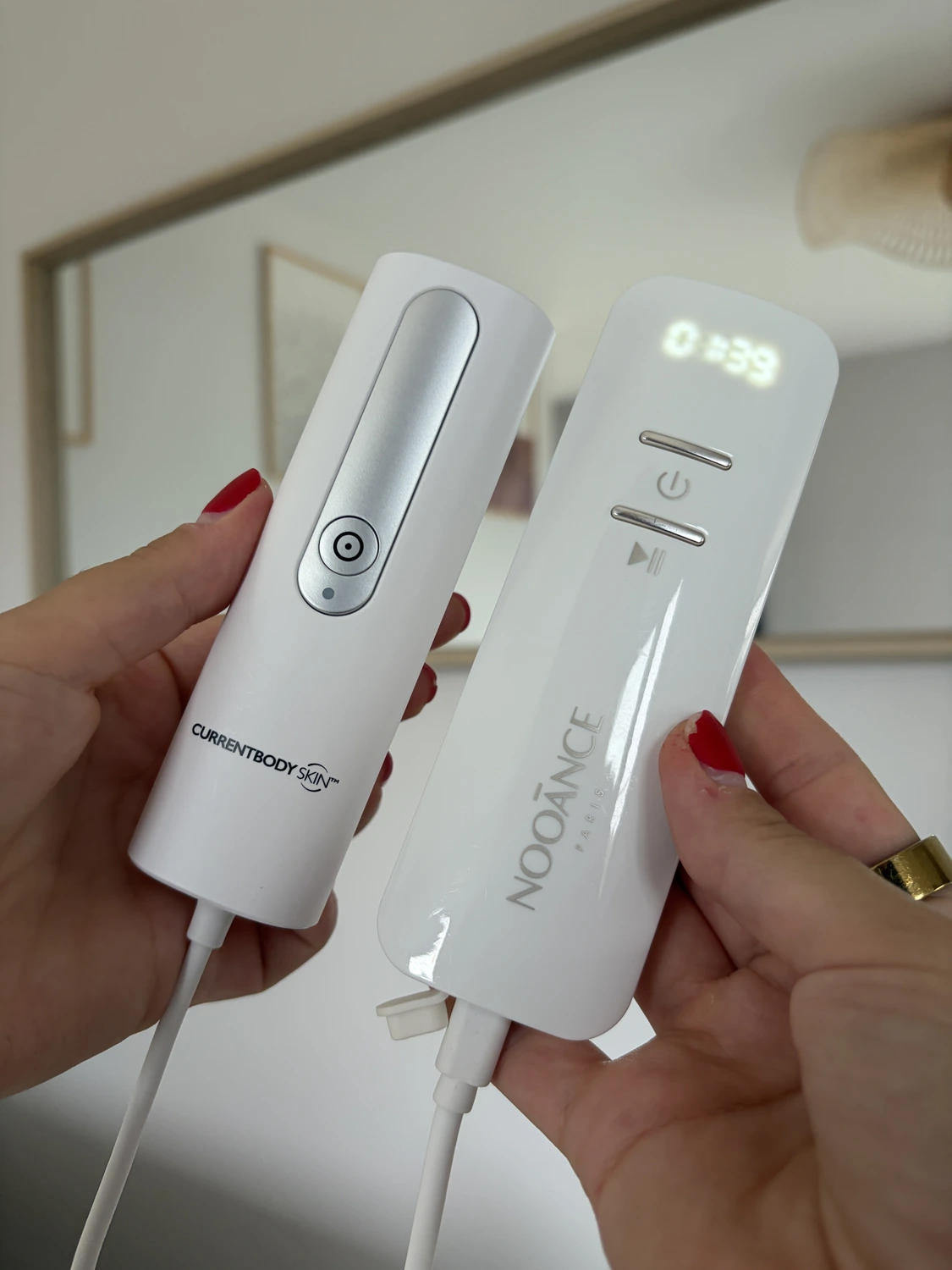
4 LED masks I assessed on comfort
Best: Nooance Elite X600
The mask is molded from soft, medical-grade silicone, very gentle on the skin. It has clip-on eye covers that I use during every session to comfortably watch TV, and it’s lightweight. Its shape fits well under the chin and jaw. Without the eye covers, however, its brightness can be tiring on the eyes because it’s powerful. I go into more detail about it in my review of the Nooance Elite X600.
Okay: CurrentBody Series 2
It’s similar to the Nooance, but to be honest, not as well-designed. It has a 3D mold with the same concept, but less refined (it gapes at the chin because of an added strap). It’s still comfortable, with well-integrated eye protection.
However, it has a hole at the nose, which bothers me and irritated my skin a bit after several weeks of testing. My review of the CurrentBody Series 2 details my experience.
Mid: Shark CryoGlow
The Shark has one of the best-designed remote controls I’ve used, a strap that stays securely in place, and the shortest sessions, from 4 to 8 minutes depending on the program.
But it weighs over 1.1 lbs, and its rigid shell places the mask far from my skin: my eyes are too far apart, and I feel dizzy when I move because it’s so oppressive. It has quite a few flaws, to be honest, and I tell you all about them in my Shark CryoGlow review here.
Worst: Dr. Dennis Gross FaceWare Pro
A simple silicone elastic band that pulls on your hair and doesn’t hold the bottom of the mask to your chin, a program that stops every 3 minutes (so I had to restart it twice to reach 9 minutes), no eye protection included… One of the worst I’ve tried in terms of comfort, and I gave it a 2/5 rating. You can read my review of the Dr. Dennis Gross LED mask to better understand why I don’t recommend it.
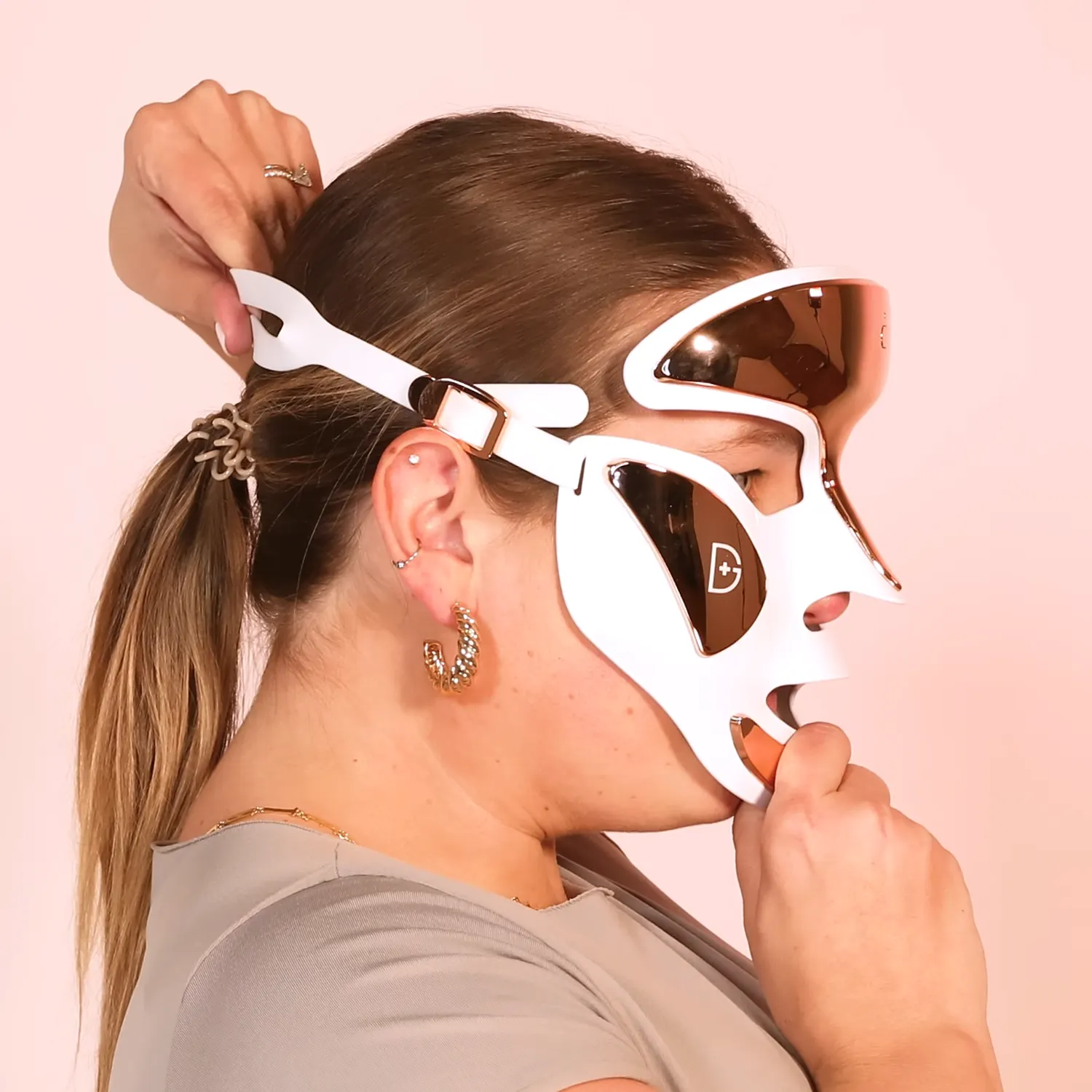
Weight, heat and eye glare are scored for every mask in my LED mask picker, and my ranking of the best LED face masks says which ones I would wear every week.
The mistakes I see buyers make with comfort
Judging comfort in a 2-minute try-on. A sharp edge on the nose, a slippery strap, a heavy mask: these aren’t necessarily noticeable at first, but rather after several sessions.
Thinking a rigid mask is more comfortable. Most rigid masks are uncomfortable because they’re too heavy, especially those with added technology…
Paying for options that add weight and noise. Vibration motors, cooling pads, and fans make each session heavier, noisier, or colder, and I turned them all off in less than a week.
Ignoring the timer. A three-minute program or the absence of a countdown timer can really add friction to the experience. Check the session duration and make sure there’s a timer.
LED mask comfort: your questions
Are LED masks comfortable to wear?
Molded silicone models are comfortable once the eye protection is in place. Rigid shells press against the cheekbones and nose, flat ones float on the chin, and heavier ones pull on the back of the neck. Be careful not to underestimate friction, as a painful strap can quickly discourage you from using your LED goggles.
Can I keep my eyes open under an LED mask?
With shields that hold, yes, and I read my phone through most of my sessions. With thin inserts that shift, or no shields at all, the glare forces your eyes shut or sends you to opaque goggles, and a session becomes 10 minutes of sitting still. Check what’s in the box before you buy.
How heavy is too heavy for an LED mask?
It depends on the shell. 1.3 lbs on a rigid Therabody is the first complaint in its buyer reviews, and the Shark at over a pound made me dizzy when I walked. A molded silicone mask spreads its weight and I stop noticing it. Under about 0.7 lb on a thin shell, weight stops being the issue, and the strap becomes it.
Can I move around during an LED mask session?
With a cordless mask that holds and lets you see, yes: I cook, read and answer emails through a session. With a heavy rigid shell, a controller on a cord that pops off, or opaque goggles, you sit. That difference is most of what separates a mask I wear in month 3 from one I shelve.
Sources
- Observations
- My own 8 to 12 week tests of each LED mask, with the missed sessions, the timers and the charging intervals logged in each review linked above. Omnilux: sessions 1 to 5 without eye protection, goggles from week 2
- Buyer reports
- Best Buy and Amazon reviews quoted in the Therabody and Nanoleaf reviews
- Checked
- November 2026

About Emilie
I have tested LED masks since 2023. I buy the devices, use them for weeks, and read the spec sheets nobody reads, because this market runs on numbers most brands never publish. Not a dermatologist, and I say so whenever a question needs one.