
I buy the devices I test unless the article says otherwise. Some links and discount codes on this site are paid links: if you buy through one, I earn a commission. It never changes a score or a verdict.
I wore the Dr. Dennis Gross LED mask, exact model DRx SpectraLite FaceWare Pro, for 4 weeks, 5 evenings a week: 20 sessions of 9 minutes in red + blue mode. It’s the rigid white and rose gold LED mask sold at Sephora, with a dermatologist’s name on the box and a 3-minute session as its main promise.
So here are my before and after photos, my score, and how many lights really turn on when you count them.
31/100
Shelved since October 2026After 4 weeks and 20 sessions I got no result, and my skin tone actually got a little worse. Only 48 light points turn on in red mode, none of them on the nose, and the rigid shell stays far from the skin. On top of that, Dr. Dennis Gross publishes no irradiance at all for a LED mask sold at $455.
Buy it if
- You want the shortest routine possible: 3 minutes, cordless, one button.
Skip it if
- You want to know what dose of light you’re getting: there’s no irradiance figure anywhere.
- You want light on your nose, your jawline, your chin or your crow’s feet.
- You want to keep your eyes open comfortably: there’s no eye protection in the box.
- You have $455 to spend: the Nooance Aurion X252 costs $449 and scored 84/100 here.
What I tested: the Dr. Dennis Gross DRx SpectraLite FaceWare Pro
The DRx SpectraLite FaceWare Pro, bought at Sephora for $455. I have no affiliate link and no deal with Dr. Dennis Gross, so I earn nothing if you buy it.

Dr. Dennis Gross recommends one 3-minute session a day, and the LED mask shuts off by itself when the time is up. I think 3 minutes is too short to deliver a real dose of light, since the brand publishes no irradiance and the LED array sits far from the skin.
When I see the power of my other LED masks, I know that Dr Dennis Gross one is weaker, and I will explain you why. So I ran 3 cycles back to back in red + blue mode, for 9 minutes, 5 evenings a week.
The manual asks you to let the LED mask rest 5 to 10 minutes between two uses, which I didn’t do, because it turns 9 minutes into a session of 20 to 30 minutes where you have to remember to restart your LED mask twice.
Results: 1.5/5
What changed on my face following my test, including my before-and-after photos. I also evaluate the “before-and-after” examples provided by the brand being tested, as well as the results of any studies that may have been conducted on the mask.
Read my results guideMy own results with before & after
Nothing improved on my skin after 4 weeks with the Dr. Dennis Gross LED mask. In fact my skin tone got slightly worse, with a bit more redness than when I started.
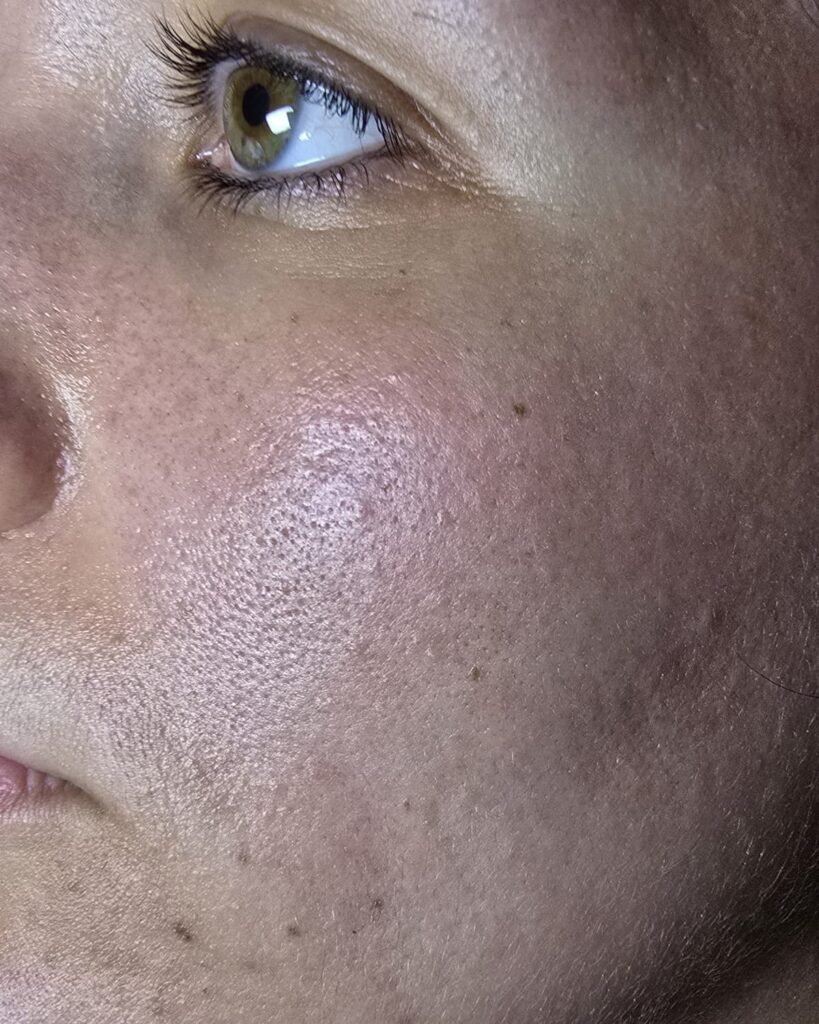
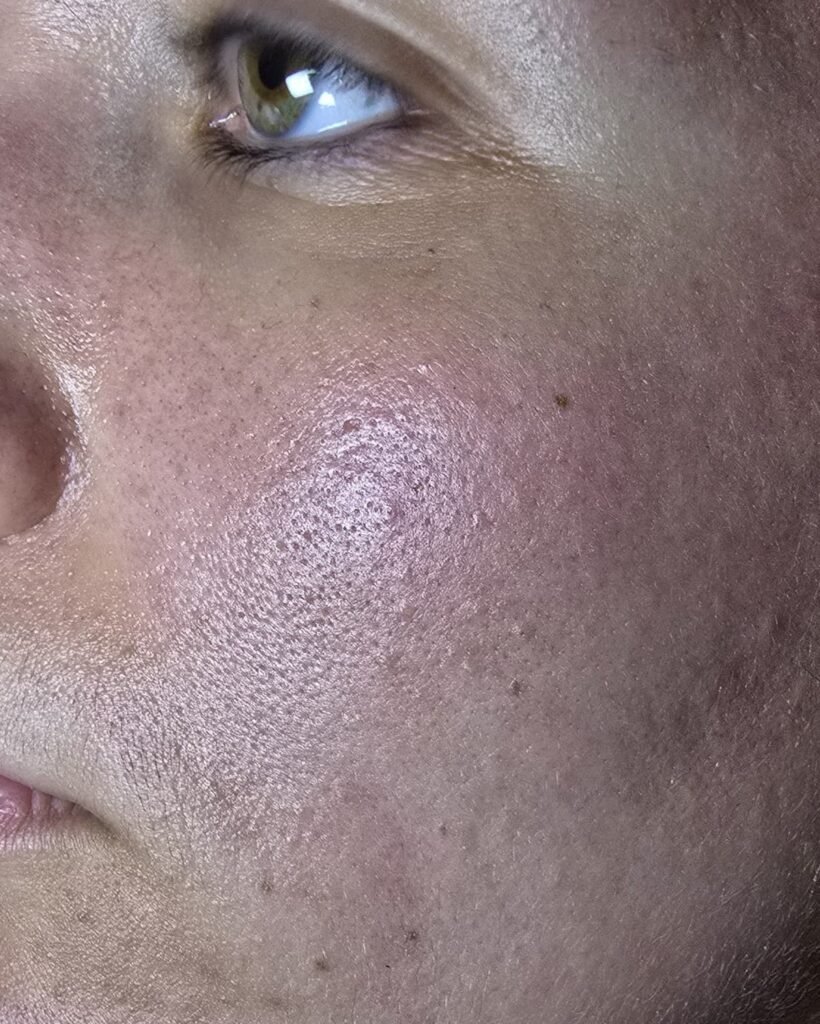
This decrease is not due to the LED mask itself, which does not damage the skin. It’s simply because I’ve been doing red light therapy sessions with more powerful models since 2023, so my skin is already well-maintained. Still, it shows that Dr Denis Gross LED mask is not as powerful as newer LED masks.
Dr. Dennis Gross’s own figures
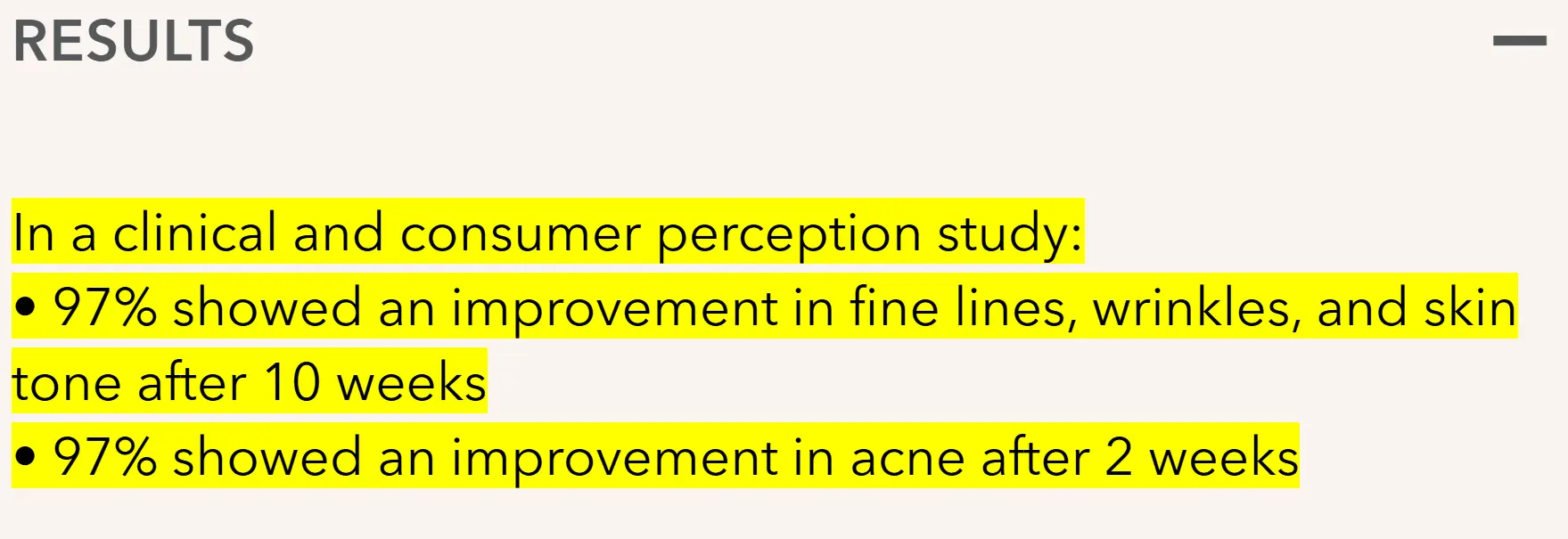
Dr. Dennis Gross publishes two figures: 97% showed an improvement in fine lines, wrinkles and skin tone after 10 weeks, and 97% an improvement in acne after 2 weeks. However, both come from what the product page calls a “clinical and consumer perception study”, so they rest on what participants perceived and not on instrument measurements. That’s a weak study, especially the 2-weeks window on acne…
Irradiance: 1/5
How much light reaches the skin, in mW/cm²? I evaluate this value, as well as how the information is presented, the conditions under which it was measured, and the total dose received in a single session. If the brand does not communicate it, I give it a severe rating.
Read my irradiance guideDr. Dennis Gross doesn’t publish the irradiance of this LED mask anywhere: not on the product page, not in the manual, not in the FAQ. This is a real problem, because irradiance is the light output that reaches your skin, in mW/cm², and without it nobody can calculate the dose a 3-minute session delivers.
- Nooance Elite X600 50
- Nooance Aurion X252 45
- CurrentBody Series 3 30
- Dr. Dennis Gross FaceWare Pro not disclosed
I went looking in the FDA files, where LED mask brands often give the figure they keep off their website. But the summary for this device only says it has a “similar output (mW/cm2)” to older devices, with no number.
Moreover, when the Qure LED mask was filed with the FDA in 2023, with this one as its main reference device, the file had to write “No publicly available” for its power density, for its number of LEDs and for their distribution. You can read it on page 9 of the Qure FDA file, and I come back to that LED mask in my Qure Q-Rejuvalight Pro review (I do not recommend this LED mask either).
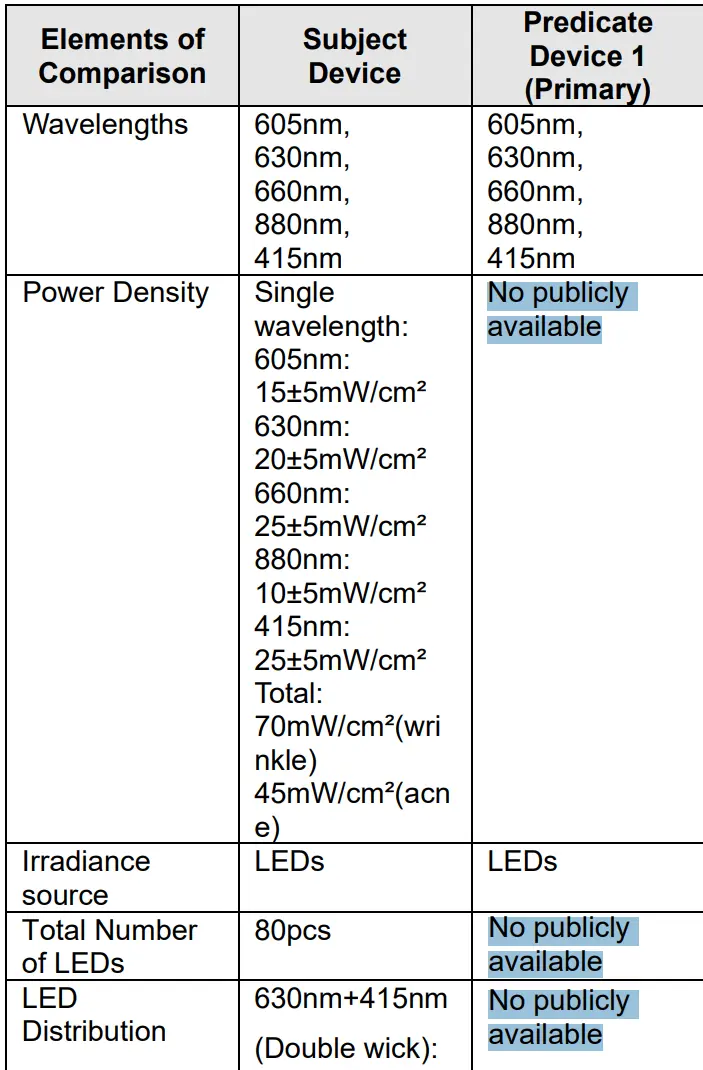
So when Dr. Dennis Gross says that 3 minutes are enough to saturate the skin, there’s no number behind that sentence that I can check. At $455, I find this very concerning.
Coverage: 1/5
How many points of light does the mask actually feature, how evenly are they distributed, and which areas remain uncovered? Note that I am counting “bulbs” and not LEDs, because the number of LEDs often includes two, three or more diodes per bulb, which inflates the apparent coverage area.
Read my coverage guideDr. Dennis Gross LED mask: 160 LEDs or 82 light points?
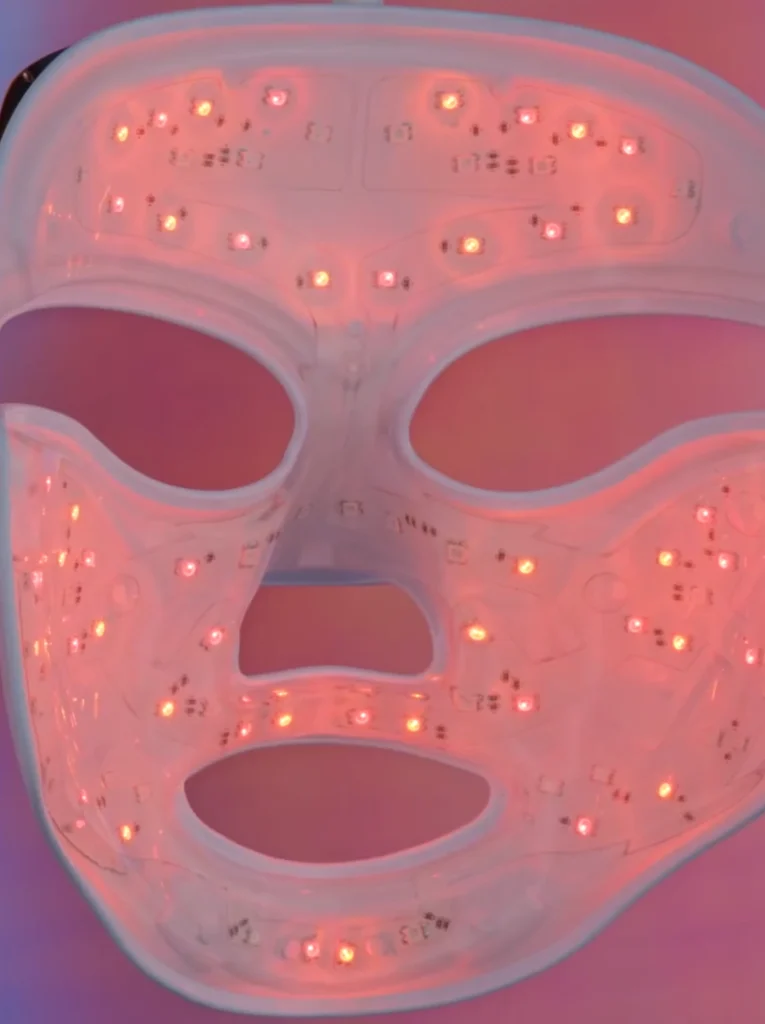
The manual announces 100 red lights and 60 blue lights, while the product page also talks about “a combination of up to 100 lights that can emit red or blue wavelengths”. I counted the light points on the lit LED array, one mode at a time, and I get 48 in red mode, 34 in blue mode and 82 with both on.
Part of the gap comes from infrared. The manual says the 880 nm lights are invisible and look switched off, and I can see small chips on the LED array that never glow.
But Dr. Dennis Gross doesn’t say how many of its 100 red lights are infrared, so 48 is all I can confirm and this is a very, very low number of light density.

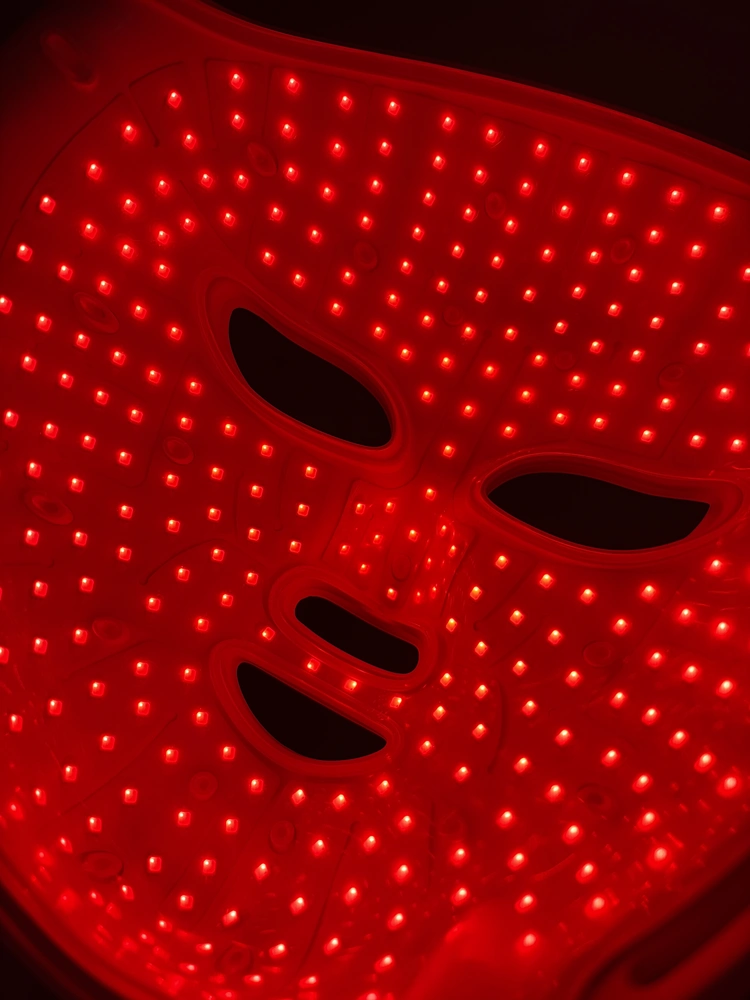
For comparison, the Nooance Elite X600 LED mask has 300 light points for 600 LEDs (my review here), and each one carries a red and an infrared LED. Next to that, 48 light points is ridiculous.
Red and blue aren’t on the same chips
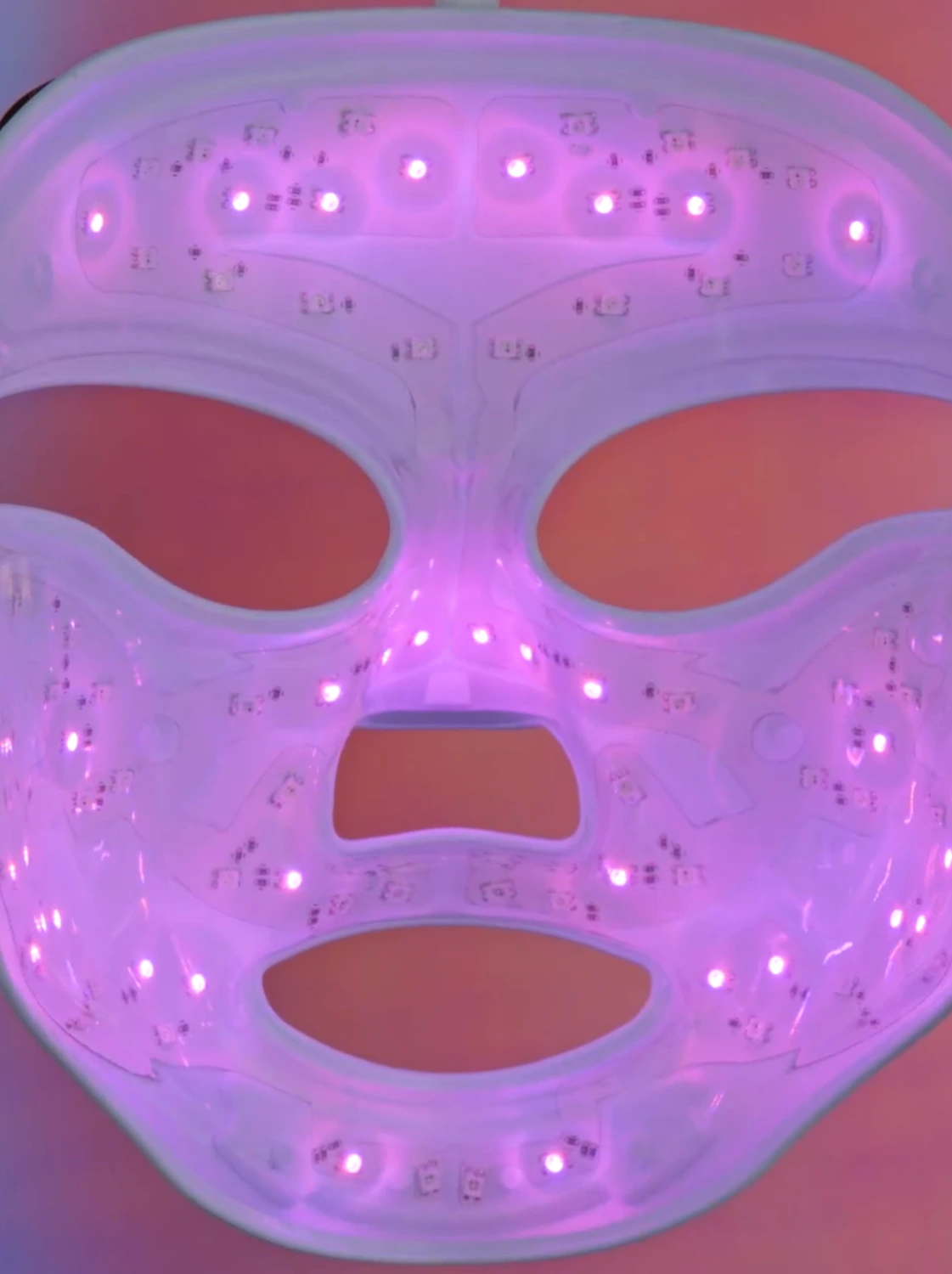
Some LEDs emit red and others emit blue, but never from the same chip. So in red mode every blue position stays dark, and in blue mode it’s the opposite, which leaves huge holes in the coverage. There isn’t a single red LED on the nose, and I see the same kind of gaps on the cheeks, the forehead and the chin.

The LED mask doesn’t sit on the skin
The FDA summary says the unit is “applied directly to the skin to ensure consistent administration of light”, and the product page promises a strap that makes the device sit “flush against skin”.
But that’s not what happens on a face. The shell is rigid and badly molded, so the LED array stays far from the skin, and every millimeter of air between a LED and the skin reduces the light the skin receives, thereby decreasing the effectiveness of this light therapy.
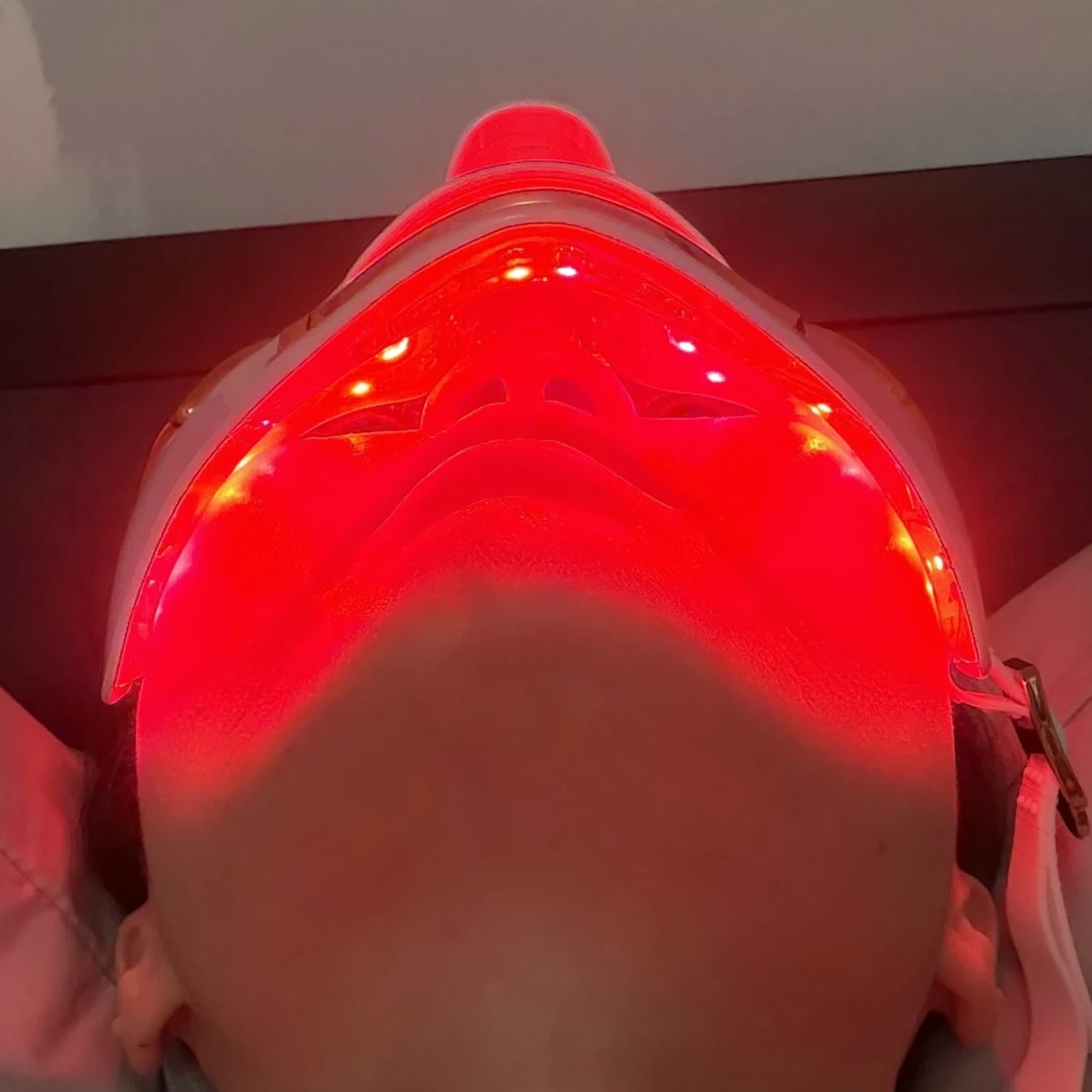
The LED mask is also small. Its shape doesn’t reach the jawline, the chin or the crow’s feet, so those areas get no light whatever the mode. The FDA file gives the figure: a treatment area of 135.8 cm² in wrinkle mode and 81 cm² in acne mode.
Dr Dennis Gross LED mask does not cover the chin either
In one of his own videos, Dr. Gross asks “What about the neck?” and answers by turning the LED mask upside down. It’s true that most LED masks don’t cover the neck. But worn that way, it’s mostly the chin that finally gets some light, and you can see that the shell doesn’t touch the skin at all at the neck level.
Having to flip a $455 LED mask to reach your chin feels cheap.
Real coverage and real light output are what separate a good LED mask from a bad one. For me, the Dr. Dennis Gross LED mask is at the level of the very cheap LED masks sold on Chinese marketplaces, and it’s not normal to still find a design like this at that price.
Proof: 2.5/5
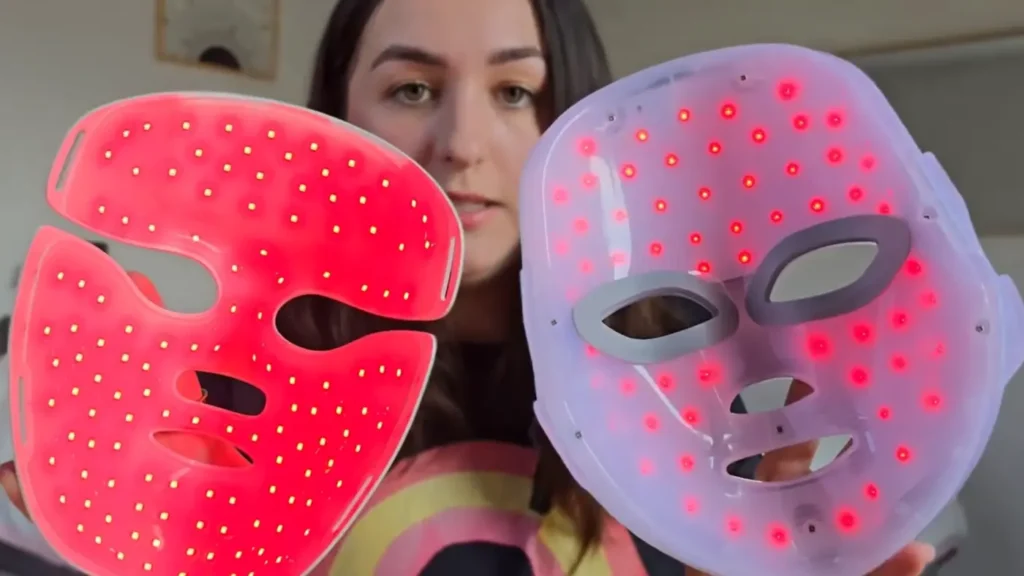
What the brand clearly displays and what I check in the FDA file: wavelengths (in nm), emitted dose, FDA clearance number, product study, safety tests, warranty.
Read my proof guideWhat Dr. Dennis Gross publishes
- Published: Wavelengths in nm: 415, 605, 630, 660 and 880
- Missing: Dose per session in J/cm²: can’t be calculated, no irradiance published
- Published: FDA clearance verifiable: K183247, a number the brand doesn’t print
- Published: Clinical study on this model: claimed on the product page
- Missing: Study documented: no number of participants, no lab named
- Published: Photobiological safety declared: “tested for safety to use without wearing goggles”
- Published: Warranty and support documented: 1 year
Proof: 2.5/5
Is the Dr. Dennis Gross LED mask FDA approved?
No, it’s FDA cleared, which is a lighter process: the device was accepted as equivalent to older devices already on the market. I found it under K183247, cleared on 2019 for a device called dpl Faceware.
The file covers wrinkles and mild to moderate inflammatory acne. It contains no clinical data on the LED mask: its conclusions are drawn from nonclinical tests, plus a usability study on 15 people.
What Dr. Dennis Gross won’t tell you
The marketing leans on one argument: this LED mask comes from a dermatologist. But a dermatologist’s name says nothing about the technical quality of a device, and when I look at the technical criteria, they’re bad compared with the rest of the LED mask market as you can already see above.
As for the 97% figures, Dr. Dennis Gross gives neither the number of participants, nor the lab, nor the instruments used, and I couldn’t find the study published anywhere.
For comparison, Nooance has published a study of its Aurion X252 LED mask, conducted on 20 women over 90 days, including a list of the instruments used and close-up photographs that allow for an evaluation of the before-and-after results.
Comfort: 2/5
Fit, weight, heat, eye comfort and minor inconveniences: straps, timer, battery. A mask that becomes a chore to wear several evenings a week scores poorly in these areas, as using it should be a pleasant experience!
Read my comfort guideThe strap feels cheap. It’s a single silicone band, like on swimming goggles, so it pulls on my hair, it isn’t pleasant to put on, and it doesn’t press the LED mask flat against the face.
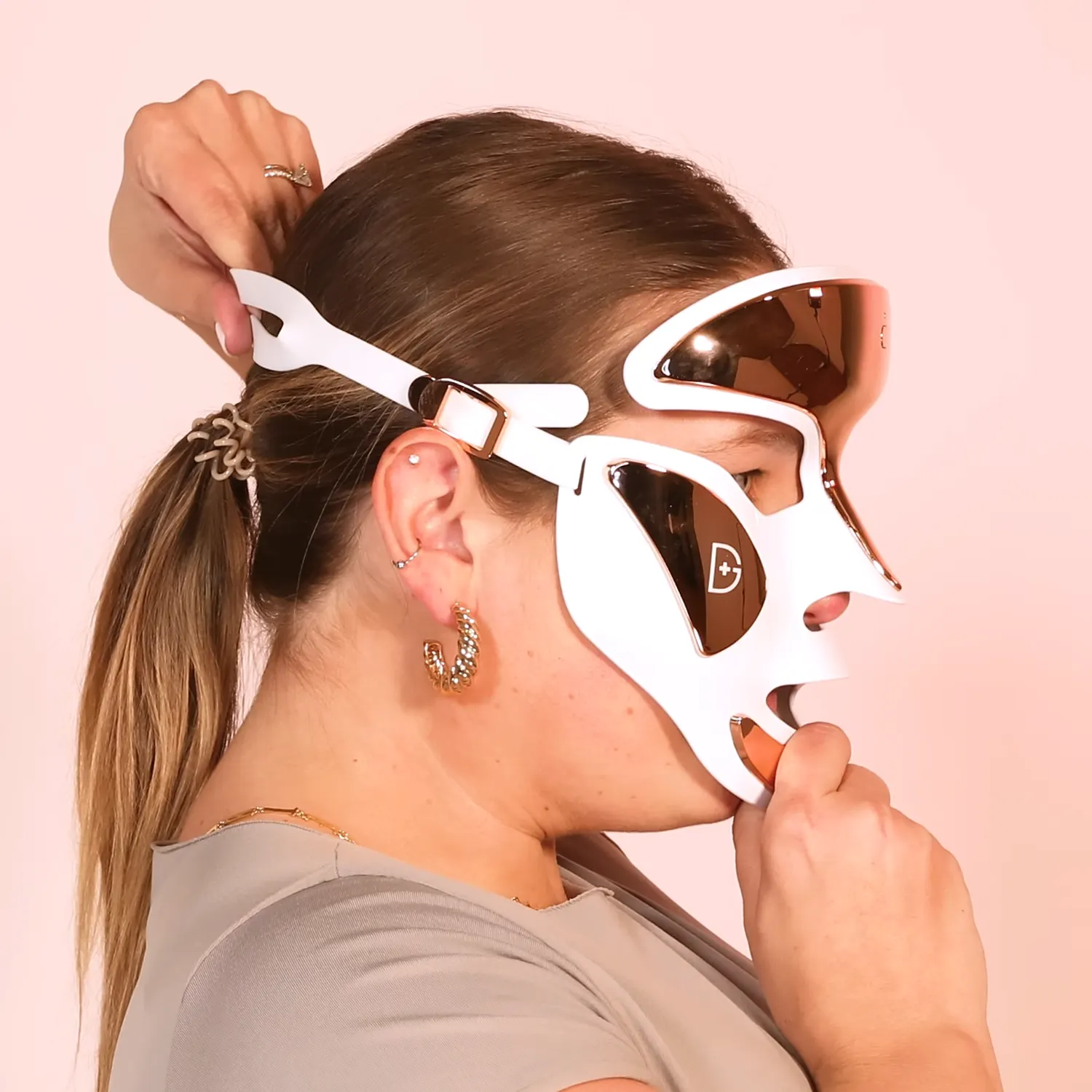
The automatic shutoff after 3 minutes also got in my way, since I had to restart the LED mask twice to hold my 9 minutes. On the plus side, it’s cordless, and a full charge gave me about 10 cycles of 3 minutes, which matches the 8 to 10 the manual announces.
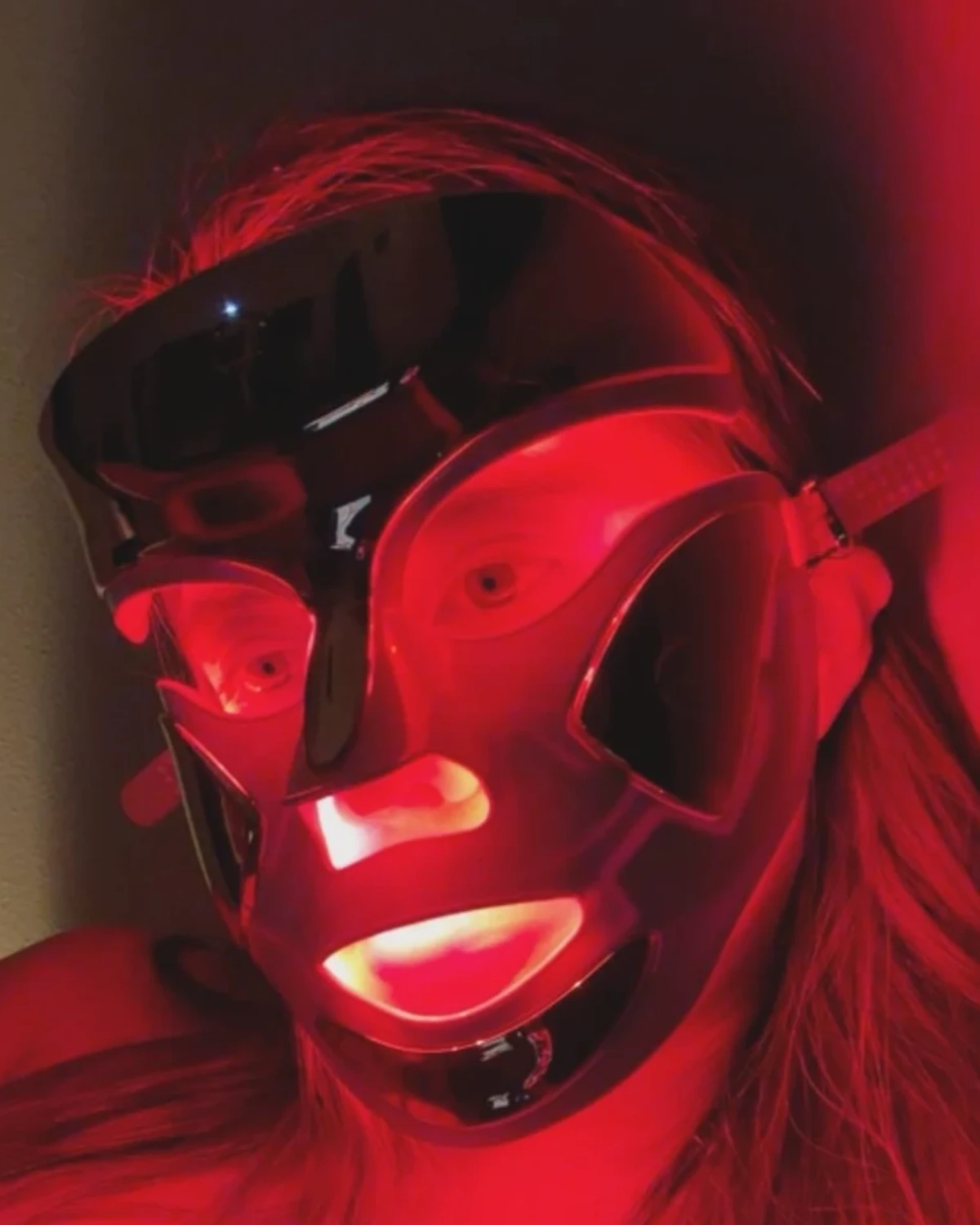
Eye comfort: no eye protection in the box
The eye openings are wide and Dr. Dennis Gross supplies no eye shields. With my eyes open, I get the same visual discomfort as with every LED mask I’ve tested without eye protection: the light tires my eyes, and it gets in the way when I try to watch TV or do something else during the session.
Value: 1/5
The price I paid, when viewed in the context of the results achieved and compared to other masks I have tested, both within this price range and at different price points.
Read my value guide$455 for 48 red light points, no published irradiance and a LED array that doesn’t touch the skin: I can’t defend that price. I think this product is outdated, since it was manufactured in 2018, and in recent years, the latest LED masks have offered better technical specifications at lower prices.
For $449, the Nooance Aurion X252 LED mask (my review) gives you 126 light points that each carry a red and an infrared LED, a published irradiance of 45 mW/cm², eye shields and a 24-month warranty. I scored it 84/100. It is the lowest score on this site, and the bottom of my ranking of the best LED masks is where the FaceWare Pro sits.

Safety & support: 2/5
Eye protection, build quality, warranty, returns, responsiveness of customer support, and the mask’s ability to remain functional over time.
Read my safety & support guideThe manual of the Dr Dennis Gross LED mask says “Do not look directly into the lights”, and as I showed above, the mask doesn’t fit the face perfectly. So I personally kept my eyes closed during my tests, but you can also wear opaque glasses.
The FDA summary doesn’t list IEC 62471, the photobiological safety standard… With blue light in 2 of the 3 modes, I’d want eye shields in the box.
On the support side, the warranty lasts 1 year, and only if you register the device within 30 days of purchase. Furthermore, the manual describes the battery as “not accessible and not serviceable”, so a dead battery can’t be swapped.
Who shouldn’t buy the Dr. Dennis Gross LED mask
Skip this one if you recognize yourself
- You want to work on your jawline, your chin or your crow’s feet. The shell doesn’t reach them, and there’s no red LED on the nose either.
- You want to know what you’re buying. No irradiance, no study size, and a LED count I couldn’t match on the LED array.
- You want to watch or read something during your session. There’s no eye protection, and the light tired my eyes every time.
- You want latest LED masks with better specs More LEDs, better molded flexible shell…
Am I still using the Dr. Dennis Gross LED mask?
Updated November 2026. No. I stopped after 4 weeks and 20 sessions. I don’t recommend to buy the Dr Dennis Gross LED mask.
If you want the short list instead of a 31, my LED mask picker sorts every mask I tested by score, and the top of it is a long way from this one.
What I still want to know about the Dr. Dennis Gross LED mask
3 numbers would change how this LED mask can be judged:
- its irradiance, with the distance it was measured at,
- how many of its 100 red lights are infrared,
- An independent clinical study conducted on Dr. Denis Gross’s LED mask.
Dr. Dennis Gross LED mask: your questions
Is the Dr. Dennis Gross LED mask worth it?
Not for me. I scored it 31/100 after 4 weeks and 20 sessions with no result, and at $455 it has 48 light points in red mode and no published irradiance.
How many LEDs does the Dr. Dennis Gross FaceWare Pro have?
The manual announces 100 red lights and 60 blue lights. On the lit LED array I counted 48 light points in red mode, 34 in blue mode and 82 with both on. The infrared lights are invisible, and the brand doesn’t say how many there are.
Is 3 minutes a day enough with the Dr. Dennis Gross LED mask?
Dr. Dennis Gross says yes, but it publishes no irradiance, so the dose of a 3-minute session can’t be calculated. I ran 9 minutes per session for 4 weeks and I still saw no result.
Is the Dr. Dennis Gross LED mask FDA approved?
No, it’s FDA cleared, under file K183247. I found it filed by LED Technologies, Inc. under the name dpl Faceware, and cleared on March 14, 2019 for wrinkles and mild to moderate inflammatory acne.
Can you keep your eyes open with the Dr. Dennis Gross LED mask?
The brand says the LED mask can be used without goggles, and none are supplied. I kept my eyes open and the light tired them at every session, like with every LED mask I’ve tested without eye protection.
Test log
- Exact model
- Dr. Dennis Gross DRx SpectraLite FaceWare Pro, model number BA567210 on the manual
- How I got it
- Bought at Sephora for $455, no affiliate link
- Test window
- September 2026, 4 weeks
- Sessions
- 20 sessions, 5 evenings a week, 3 cycles of 3 minutes back to back in red + blue mode
- Price and documents checked
- Product page, manual, brand FAQ, FDA summaries K183247, K171386 and K230042

About Emilie
I have tested LED masks since 2023. I buy the devices, use them for weeks, and read the spec sheets nobody reads, because this market runs on numbers most brands never publish. Not a dermatologist, and I say so whenever a question needs one.