
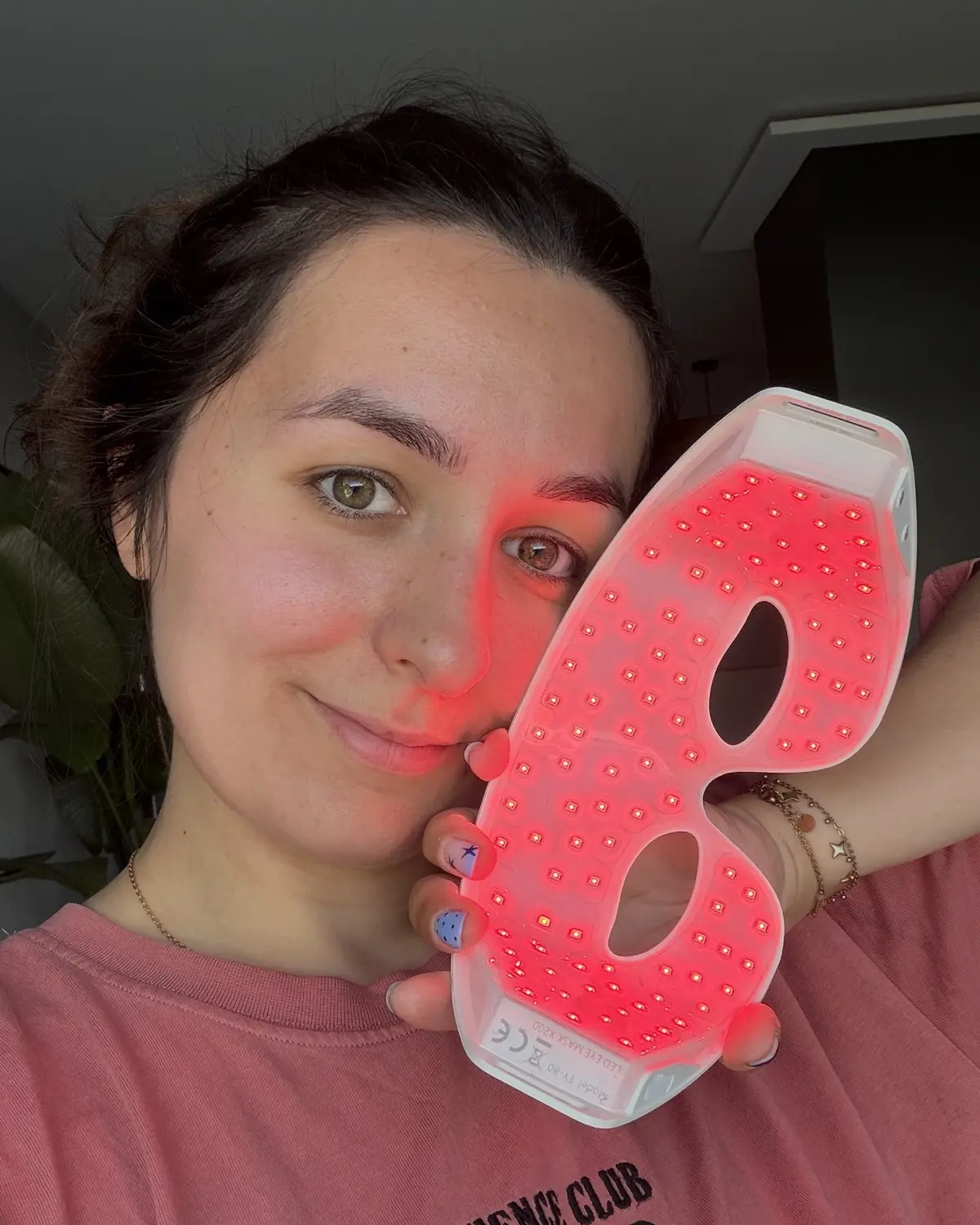
I buy the devices I test unless the article says otherwise. Some links and discount codes on this site are paid links: if you buy through one, I earn a commission. It never changes a score or a verdict.
Safety and support is the part of an LED mask you only discover once you’ve paid: whether the eye shields do anything, what the warranty really covers, whether someone answers your email…
Here’s how I assess the safety of the LED masks I test, including eye hazards, warranties, returns, and more with 4 LED masks I’ve tested.
Safety: One of the 7 criteria on my grid
Safety and support is the lightest of the 7 criteria on my grid, and the one you ask about with the most worry, almost always about your eyes. Rather than answer in every review, I’ve written one page per criterion, this one included. Here are the 7, in the order of my grid from my How I test page:
- Results, 24% of the score
- Irradiance, 16% of the score
- Coverage, 14% of the score
- Proof, 14% of the score
- Comfort, 12% of the score
- Value, 12% of the score
- Safety & support, 8% of the score, this page
Eye protection for LED masks
I never use an LED mask without eye protection, and I’d advise you to do the same. So the first thing I check is what’s in the box:
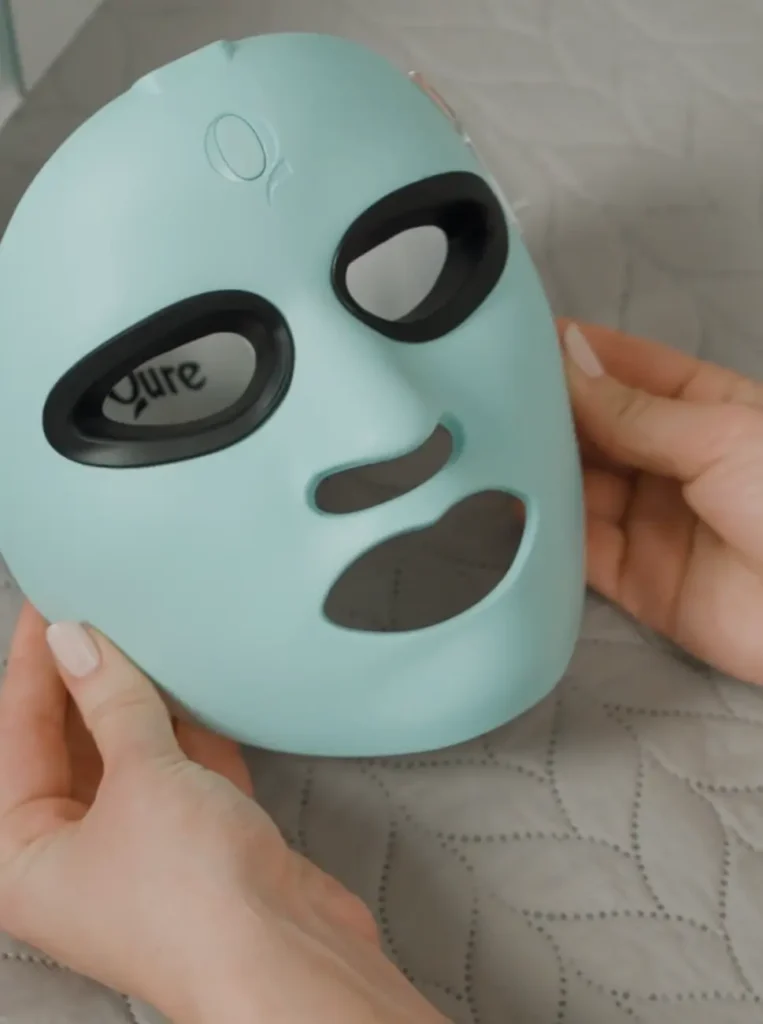
- Nooance, CurrentBody, Shark, Qure and Nanoleaf ship silicone inserts.
- iRestore builds a visor with no LEDs behind it.
- Dermalux molds guards into the shell.
- Omnilux and Dr. Dennis Gross ship nothing, and the Dr. Dennis Gross manual just tells you not to look into the lights…
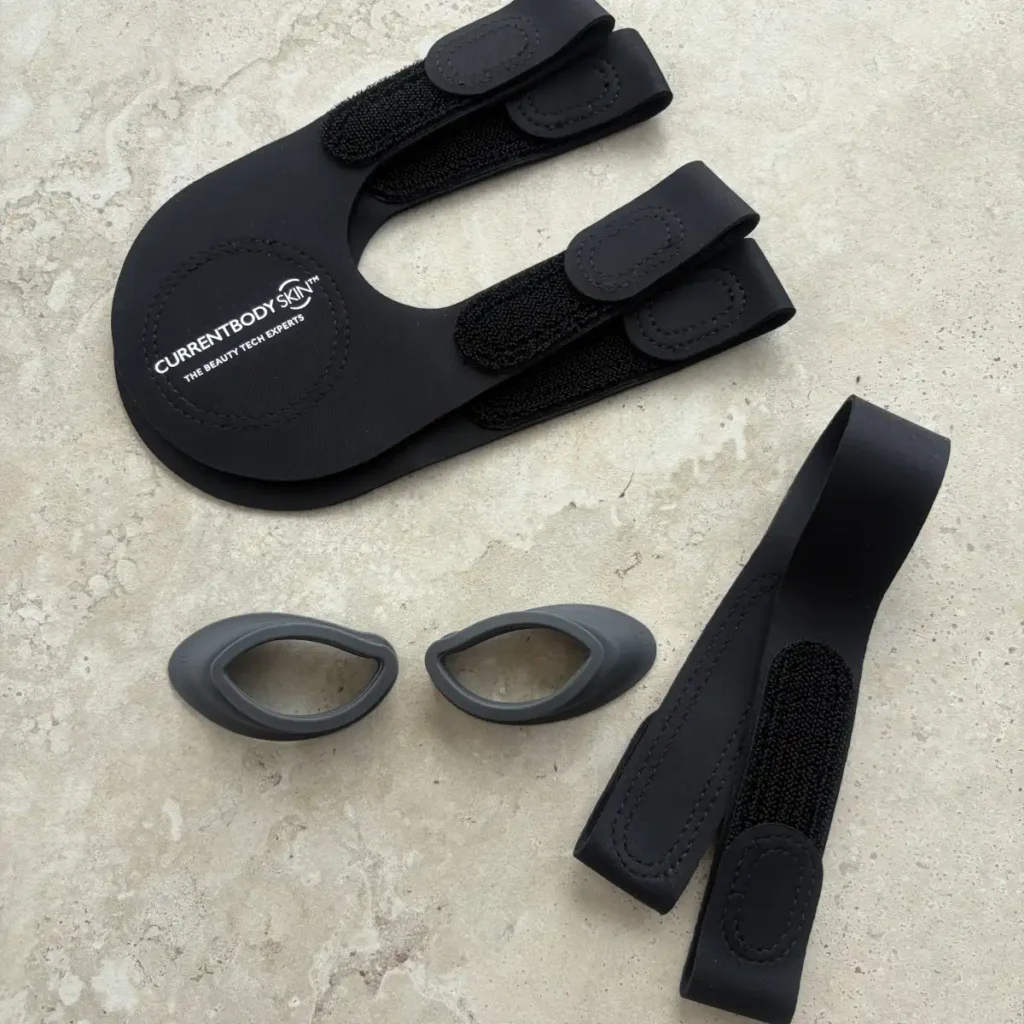
Then I check two more things over the weeks. Do the shields stay in place? CurrentBody’s are thin and work loose, Nooance’s are thicker and snap in, and Qure’s cups block the light completely (the best thing about that mask, to be honest). And what do they cost in coverage? A visor that protects the eyes by blocking out all the surrounding LEDs, or cooling pads placed over the LEDs under the eyes, are solutions, but they drastically reduce the light…
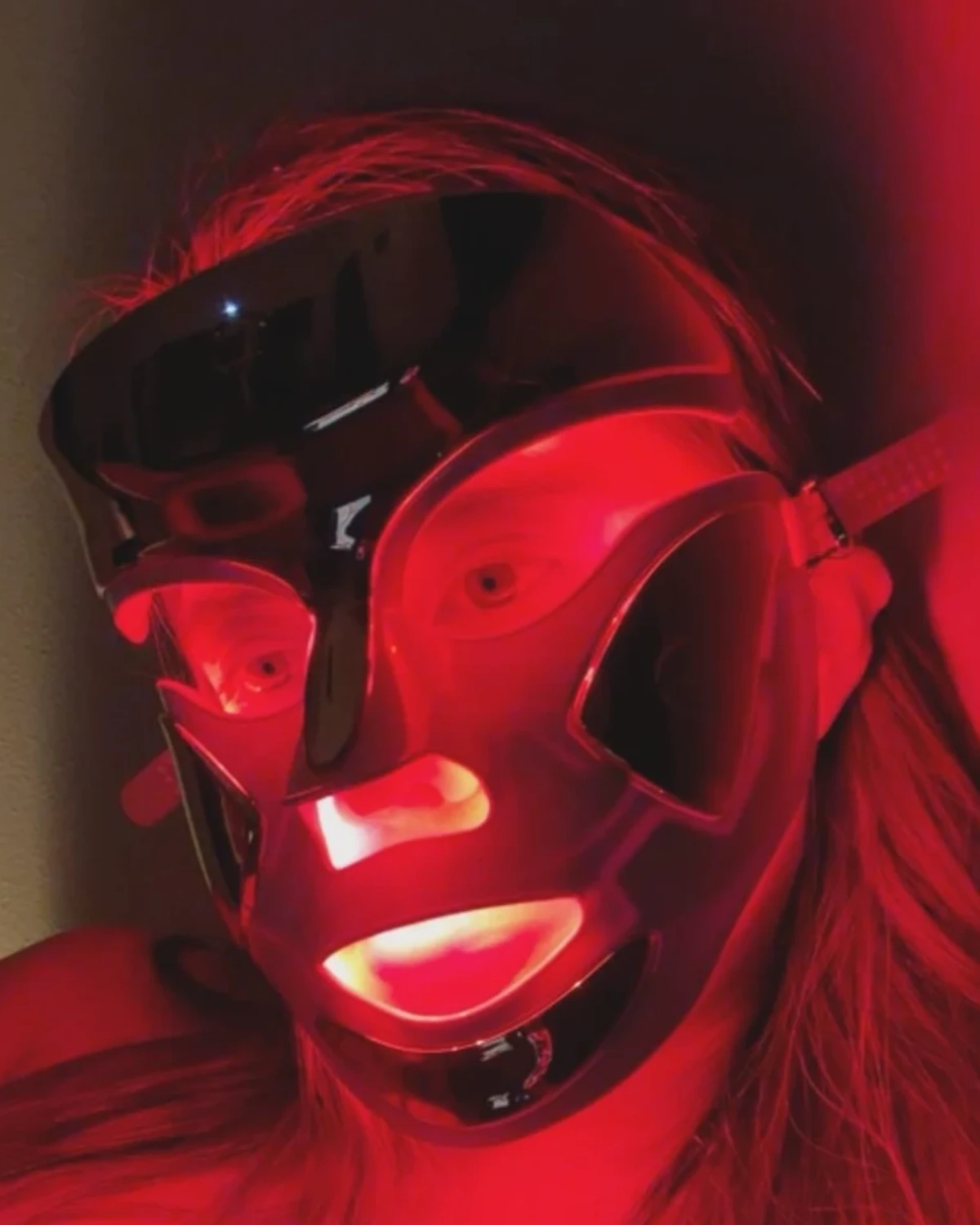
Aside from the risks of direct light on the eyes, I personally experience mostly eye strain without protection. It’s also much more comfortable to spend a session without having my eyes dazzled.
But above all, blue light is a crucial point, because the 415 nm wavelength is the one that, according to photobiological standards, has the worst impact on the retina. A mask with blue light modes and no provided protection is therefore unacceptable.
IEC 62471 standard for LED masks
The IEC 62471 standard classifies light sources into risk groups, from exempt to high, according to their danger to the eyes and skin. In my tests, I look for the standard and the risk group determined by the test. Some brands indicate both the standard and the group, most only the standard, but others neither… For example, Dr. Dennis Gross’s FDA summary doesn’t mention the standard at all.
The warranty and returns of LED masks
Honestly, the warranty is secondary in my testing, even though I expect a 2-year warranty, and most of the brands I like honor it, even the cheapest models. I find one year insufficient for a device costing over $400, and that’s what iRestore, Therabody, Qure, and Dr. Dennis Gross offer…
Return policies are also something I look at, and many brands aren’t so generous. For example, iRestore offers a 100-day money-back guarantee, which is reasonable, while Omnilux only accepts returns within 30 days, provided the box is unopened and unused! So if you try it out, you can’t return it.
4 LED masks I assessed on safety and support
Best: Nooance Elite X600
2 years of warranty, a manufacturer named with a postal address, a 48-business-hour commitment on support, thick shields that snap into the eye openings, the IEC 62471 exempt group printed, no adverse event over the 90 days of its study, and a panel sealed in silicone.
It’s the most complete file I’ve seen: 4.5/5. The manual is quoted in my review of the Nooance Elite X600.
Okay: CurrentBody Series 2
14-day money-back guarantee in case of skin reaction, 2-year warranty, eye patches included, average return policy (10% fee). Two key areas for improvement: the eyes patches, which are too thin and don’t clip securely into the mask, and the IEC risk group classification. I assessed it 4/5, and my CurrentBody Series 2 review has the details.
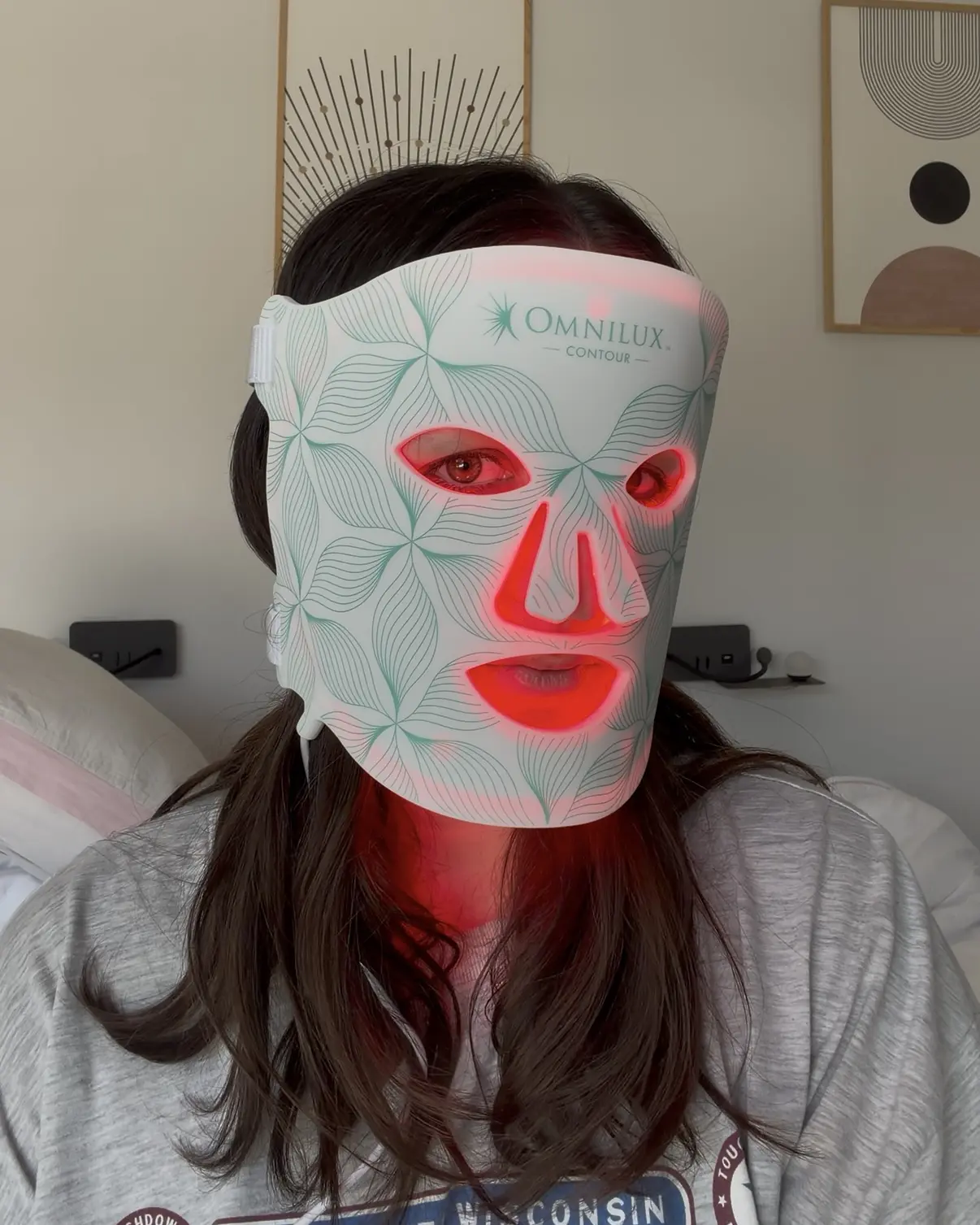
Mid: Omnilux Contour Face
Omnilux guarantees compliance with the IEC 62471 standard (no specific group), a 2-year warranty, and provides a drug interaction sheet. However, no eye protection is included: after only 10 minutes of testing, I experienced eye irritation, similar to staring at a light for too long. As a result, I had to wear opaque glasses starting in the second week. Furthermore, the return policy is inconvenient. 3/5, and the unboxing is in my Omnilux Contour Face review.
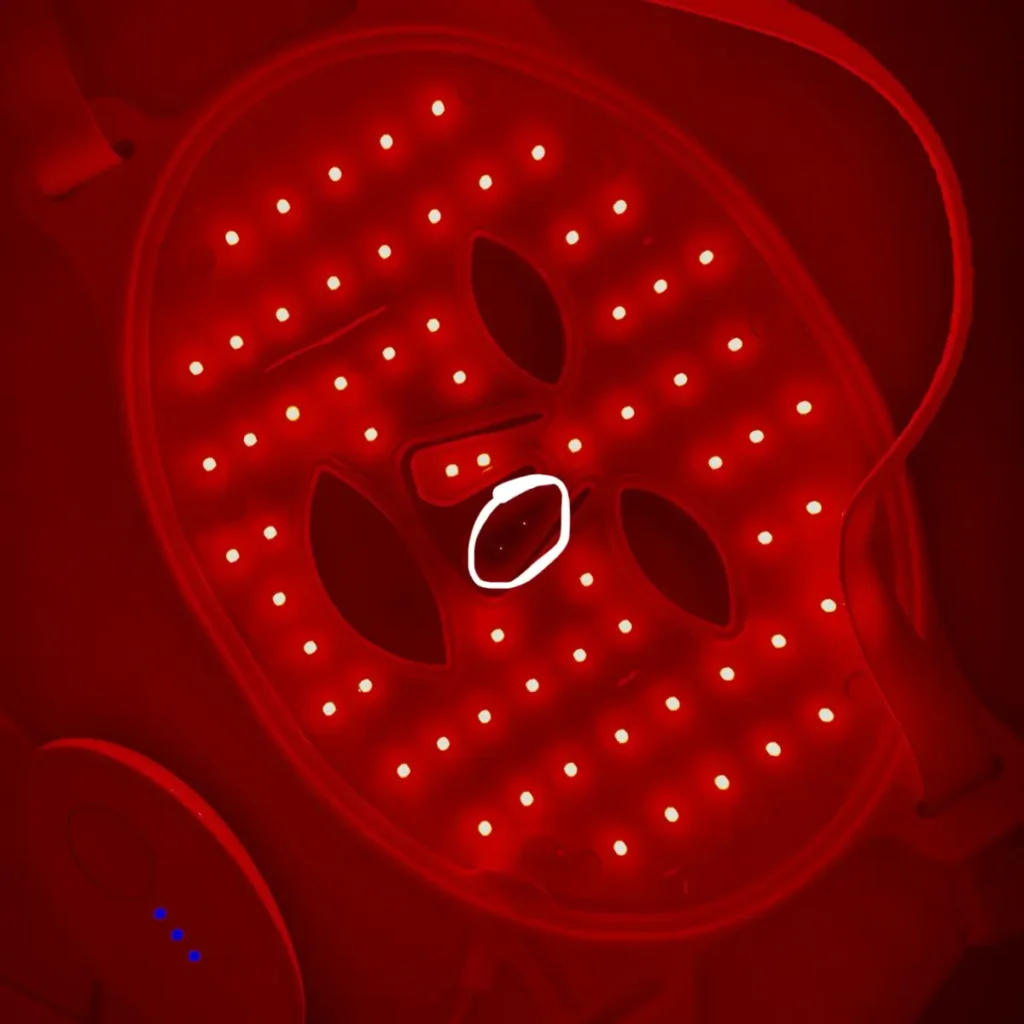
Worst: Dr. Dennis Gross FaceWare Pro
Dr. Dennis Gross manual advises against looking directly at the lights, and the box contains no eye protection, even though the mask emits blue light in two of its three modes. The FDA summary does not mention the IEC 62471 standard. The warranty is one year, provided you register within 30 days, and the battery is described as non-replaceable. The light strained my eyes every time I used it. I give it a 2/5 rating: I do not recommend this LED mask, and you have details in my Dr. Dennis Gross LED mask review.
Those four are a sample. My LED mask picker carries the safety and support score of every mask, and the masks I would actually buy open my ranking of the best LED masks.
The mistakes I see buyers make with LED mask safety
Closing your eyes as protection. Eyelids don’t offer much protection, and a 10-minute session with your eyes open behind a protective covering is much more pleasant than keeping them closed
Trusting the standard instead of the shield. “IEC 62471 tested” tells you a test happened, usually without its result. I wear the protection anyway.
Reading “2 years” without the conditions. Registration deadlines, batteries excluded, repairs replaced by a voucher… The conditions are the warranty.
Reading “30-day returns” as a trial. If the box has to stay sealed, there’s no trial. Look for the words “unopened” and “unused” before you count on it.
LED mask safety and support: your questions
Are LED face masks safe for the eyes?
I wear eye protection with every LED mask and I’d tell you to do the same, especially with blue modes. The brands that document it best print an IEC 62471 risk group, and only Nooance does among the masks I’ve tested. A mask with no shields in the box is one I score down, and I buy opaque goggles before using it.
Should I close my eyes under an LED mask?
Closed eyelids aren’t a shield. Use the inserts or cups the brand supplies, and if there are none, opaque goggles. With a proper shield I keep my eyes open and read for the whole session, which is a lot more pleasant.
Who shouldn’t use an LED mask?
The manual of each mask has that list, and photosensitizing medication is the line that applies to the most people. I’m not a dermatologist, so I point to the manual rather than rewrite it. If a line applies to you, ask your doctor before buying.
Sources
- Documents
- The manuals, warranty and return pages and FDA 510(k) summaries of each LED mask, as read for the review linked above.
- Buyer reports
- Reddit, Trustpilot, Amazon and Best Buy reviews, and the FDA adverse event database, quoted in the reviews with the usage unknown
- Checked
- November 2026

About Emilie
I have tested LED masks since 2023. I buy the devices, use them for weeks, and read the spec sheets nobody reads, because this market runs on numbers most brands never publish. Not a dermatologist, and I say so whenever a question needs one.