I’ve been using and filming LED masks since 2023. For each one, I wear it for weeks, I photograph my skin, then I read what the brand promises line by line and check what it can actually back up.
The grid behind these 7 criteria is public: my LED mask picker puts every LED mask I have tested on one table, with the data and my sub-score in each cell, so you can sort and filter before you read a review.
Everything on this page is about LED masks and how I test them: my grid doesn’t change from one review to the next, so you can compare any masks on this site. Here’s how a test works, and what each of my 7 criteria looks at!
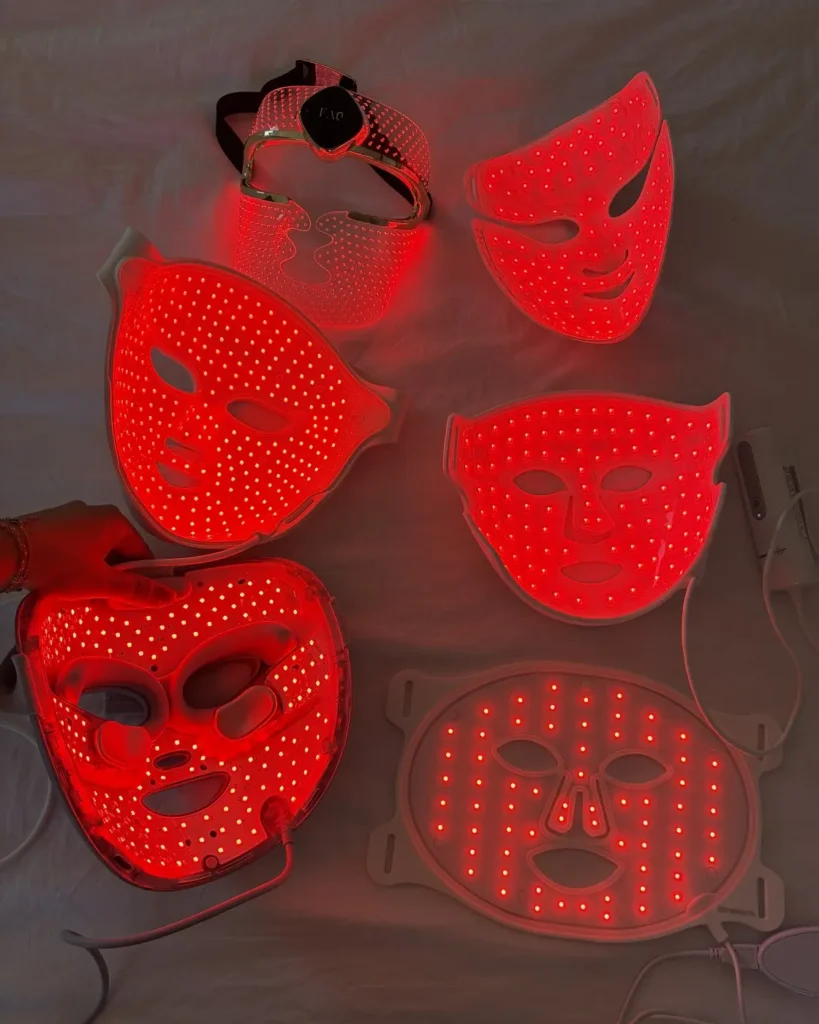
What a test looks like
I test every LED mask for 8 weeks at least, and up to 12 when something starts to change on my skin, since that’s the time of a full skin renewal cycle. If nothing has moved after 8 weeks, I stop there: the answer is already in.
My sessions are in the evening, on clean skin. How many I do per week isn’t my choice, it depends on the irradiance the brand publishes: a weaker mask needs more sessions to give your skin a similar dose over the week.
| Published irradiance | Sessions per week |
|---|---|
| Around 50 mW/cm² | 3 |
| Around 40 mW/cm² | 4 |
| Around 30 mW/cm² | 5 |
| Not disclosed | 5, and the review says the figure was missing |
When a brand keeps its irradiance to itself, I go for 5 sessions a week, because nothing tells me the hidden number is a good one.
My grid of 7 criteria
Each criterion gets a score out of 5, in half points, and then its weight. The weights add up to 100, so the total is the score of the LED mask out of 100.
| Criterion | Weight | What it rates |
|---|---|---|
| Results | 24% | What changed on my face, plus the brand’s before and afters and studies |
| Irradiance | 16% | How much light reaches the skin, and how the figure is published |
| Coverage | 14% | How many light points, how evenly they’re spread, which zones get nothing |
| Proof | 14% | What the brand documents, and what holds up when I check it |
| Comfort | 12% | Fit, weight, heat, eye comfort, straps, timer, battery |
| Value | 12% | The price, against the results and the other masks I’ve tested |
| Safety & support | 8% | Eye protection, build quality, warranty, returns, support, durability |
Below, each criterion in a few lines. I’ve also written a full guide for each one, with the LED masks I’ve tested as examples.
Results
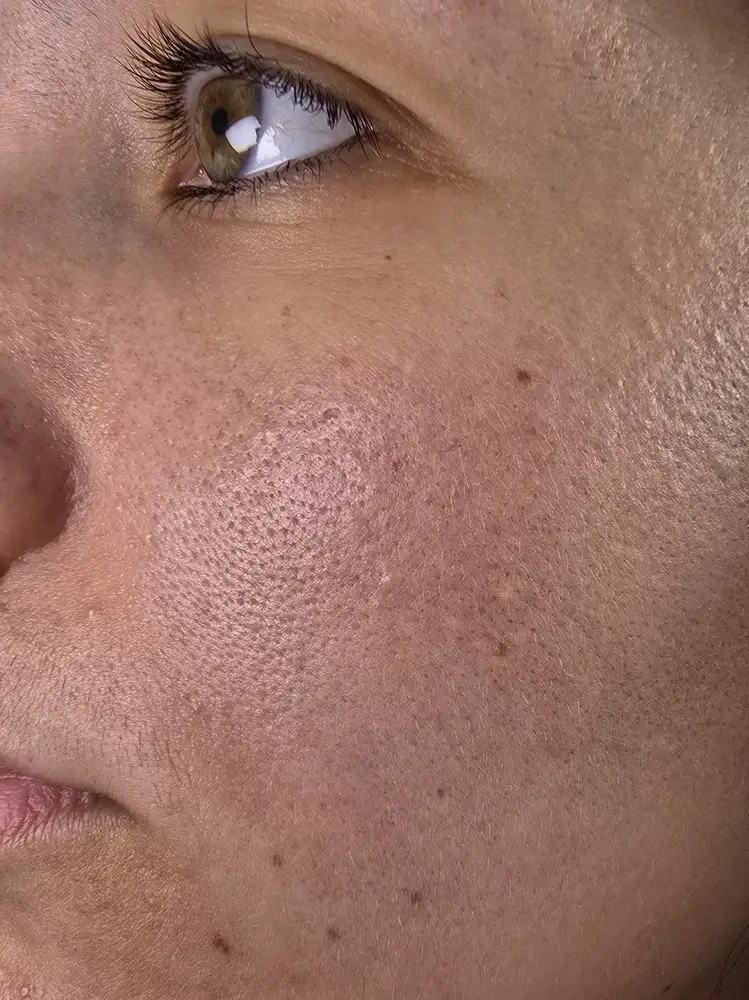
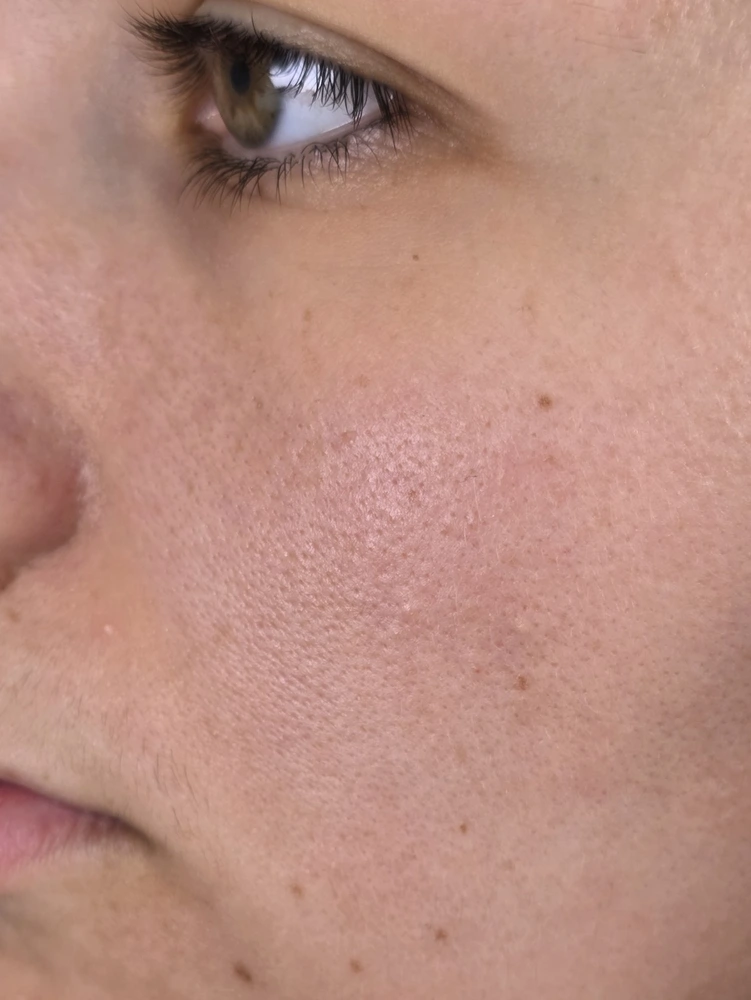
It’s the heaviest criterion, because it’s what you buy an LED mask for. My own face comes first: I take my photos on Sunday mornings, with the same camera, the same lamp, the same distance and no makeup, then I compare the first week with the end of the test.
But my face is only one face, and I don’t have wrinkles to treat yet. So I also look at:
- the before and afters published by the brand, knowing the brand picked them;
- the studies on the mask, especially the ones with instruments (cutometer, ultrasound probe, VISIA) rather than a satisfaction survey;
- the buyer reviews.
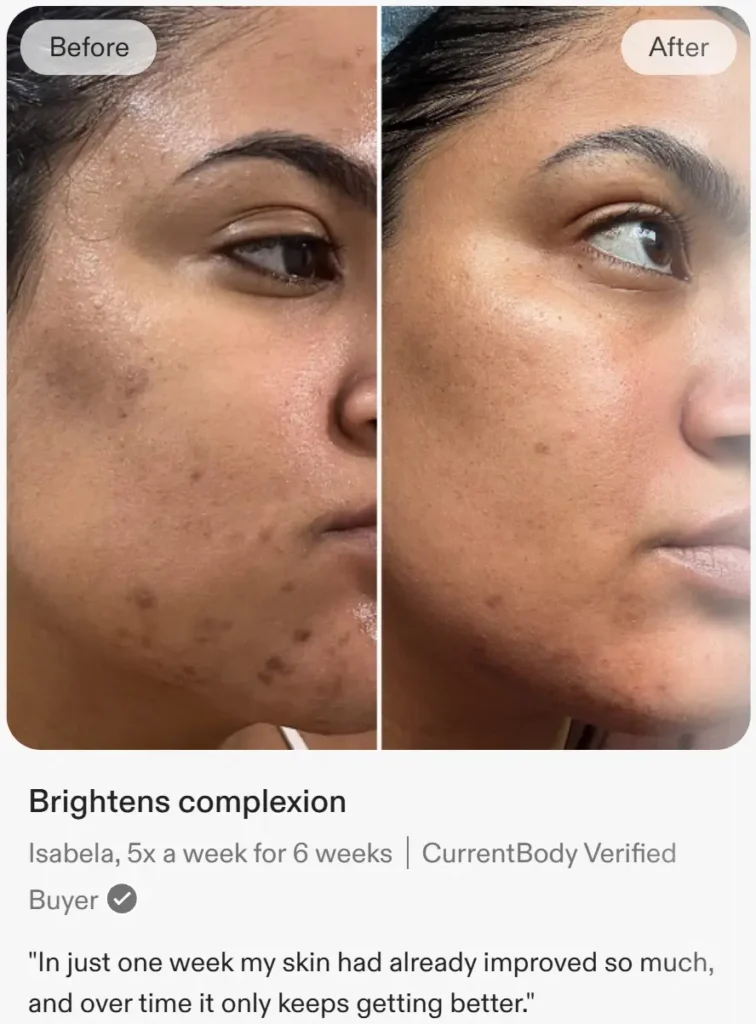
Still, a mask that did nothing on my face can’t go above 3/5 here, and a 4 or more needs a result I’ve seen myself. I show you my before and afters on 4 masks in my guide to LED mask results.
Irradiance
Irradiance is the power of the light that reaches your skin, in mW/cm². Over a whole session, it adds up to the dose in J/cm², the unit studies work with. So it’s the first number I look for on a spec sheet… and one that many brands don’t give!
What I score:
- the figure itself, in the useful band of 30 to 50 mW/cm² (more isn’t better: 10 minutes at 50 already gives about 30 J/cm²);
- where it was measured, because 30 mW/cm² at the LED and 30 mW/cm² on your cheek are two very different masks;
- whether it fits the session time the brand recommends.
If the brand does not publish it, the rating is low because it is a lack of professionalism. I compare the figures of the masks I’ve tested in my guide to LED mask irradiance.
Coverage
Coverage is the real number of light points on a mask, whether they’re spread evenly, and the zones left in the dark (often the sides of the nose, the mouth and the jaw).
Be careful with the number on the box: brands count diodes, and one light point often holds two, three or more of them. The CurrentBody Series 3 says 650 LEDs, and I count about 125 light points on it, while the Nooance Elite X600 has 600 LEDs for 300 points. The shape matters too, since a rigid shell or a flat panel keeps the light further from your skin than a molded silicone mask.
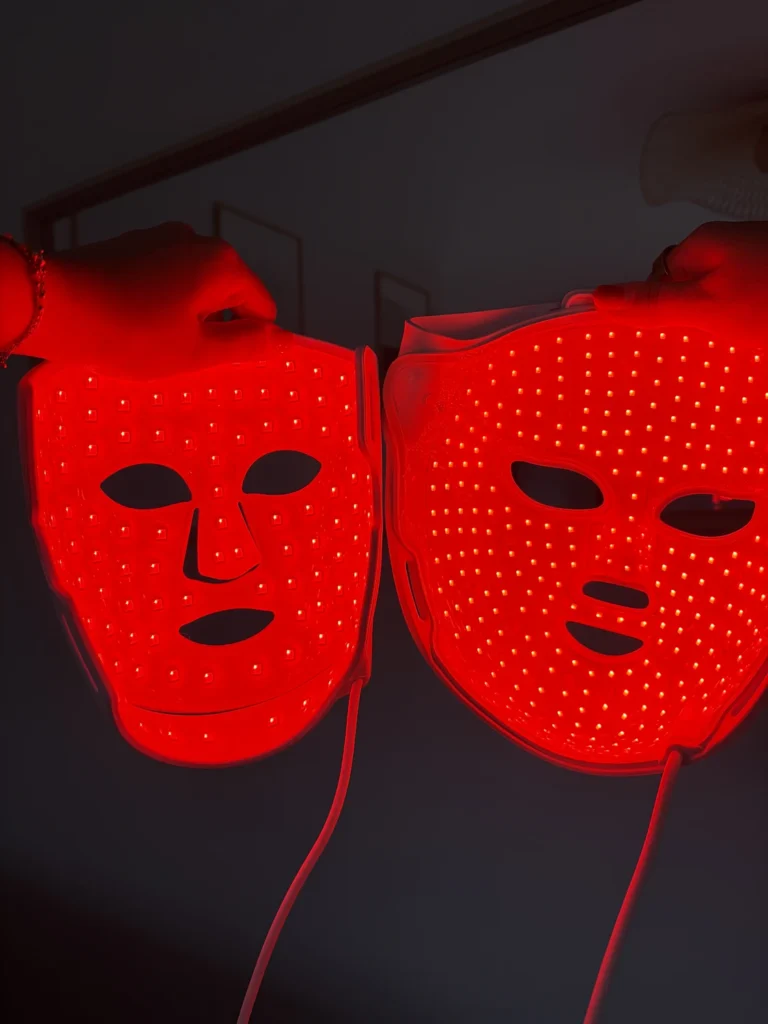
I explain how I count, zone by zone, in my guide to LED mask coverage.
Proof
Proof is what the brand puts in writing, and whether it holds up when I check it at the source, starting with the FDA database. An LED mask can be FDA cleared (which isn’t FDA approved), and the clearance has to cover the exact model you’re buying. I check the same seven points on every LED mask:
- Are wavelengths given in nm, and not just “red light”?
- Can the dose per session be worked out in J/cm² from the published figures?
- Is the FDA clearance number cited, and findable in the database?
- Does the clinical study cited cover this model, or a different device?
- Is that study documented past the headline number: sample size, duration, lab named?
- Is photobiological safety testing declared?
- Are the warranty and support documented?
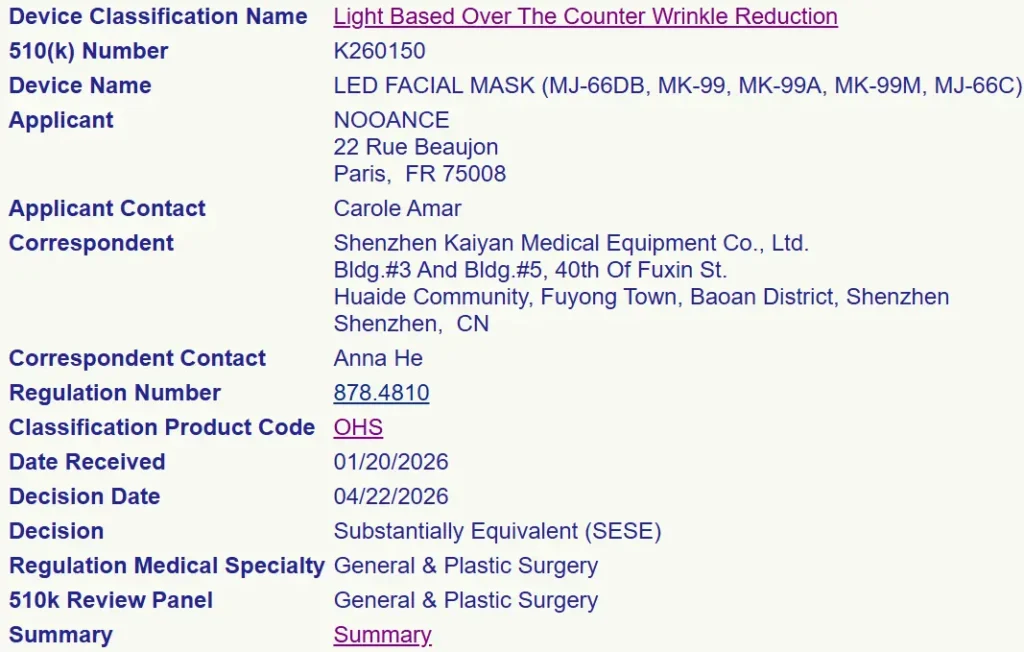
A point the brand doesn’t publish counts as missing. Everything is in my guide to FDA clearance and LED mask proof.
Comfort
Comfort covers fit, weight, heat, eye comfort and all the small frictions: a strap that’s hard to adjust, a timer you have to set on your phone, a battery that runs out too fast… You’ll wear your LED mask several evenings a week for months, so each session should be pleasant! If wearing it feels like a chore, it scores low here, however good its specs look.
In my experience, rigid shells feel heavy by the end of a session and press on the cheekbones, flat masks are more comfortable but stay away from parts of the face, and molded silicone masks follow the face best.

I compare the weight and the fit of every mask I’ve worn in my guide to LED mask comfort.
Value
Value is the price I paid, compared with the results I got and with the other LED masks I’ve tested, at the same price and at other prices. An expensive mask can be good value if it delivers, and a cheap one is money wasted if it does nothing (a few of the masks under $100 I’ve tested showed nothing on my skin after 8 weeks). I put the prices side by side in my guide to whether LED masks are worth the money.
Safety & support
This one covers what you only discover after paying: whether the eye protection really protects, the build quality, the warranty, the returns, how fast customer support answers, and whether the mask keeps working over time (and without its app). Personally, I always wear eye protection during a session, so it’s the first thing I look for in the box.
Eye safety, warranties and returns are detailed in my guide to LED mask safety.
The badge
The badge is the score read at a glance: 65/100 or more is Emilie Approved, under 65 is Shelved.
| Badge | Condition |
|---|---|
| Emilie Approved | 65/100 or more |
| Shelved | Under 65/100 |
| Still testing | The test is running and the mask has no score yet |
My photos and videos
Video shows what a photo can’t: the density of the light, how a mask sits on the face, a flicker, a hot spot… So when I’m judging a behavior rather than a state, I film it, and most of it goes on my YouTube channel before it lands here.
That said, a photo alone proves nothing: light, sleep and hydration change a face as much as most LED masks do. My photos are there so you can see what I saw, and disagree with me if you want!