
I buy the devices I test unless the article says otherwise. Some links and discount codes on this site are paid links: if you buy through one, I earn a commission. It never changes a score or a verdict.
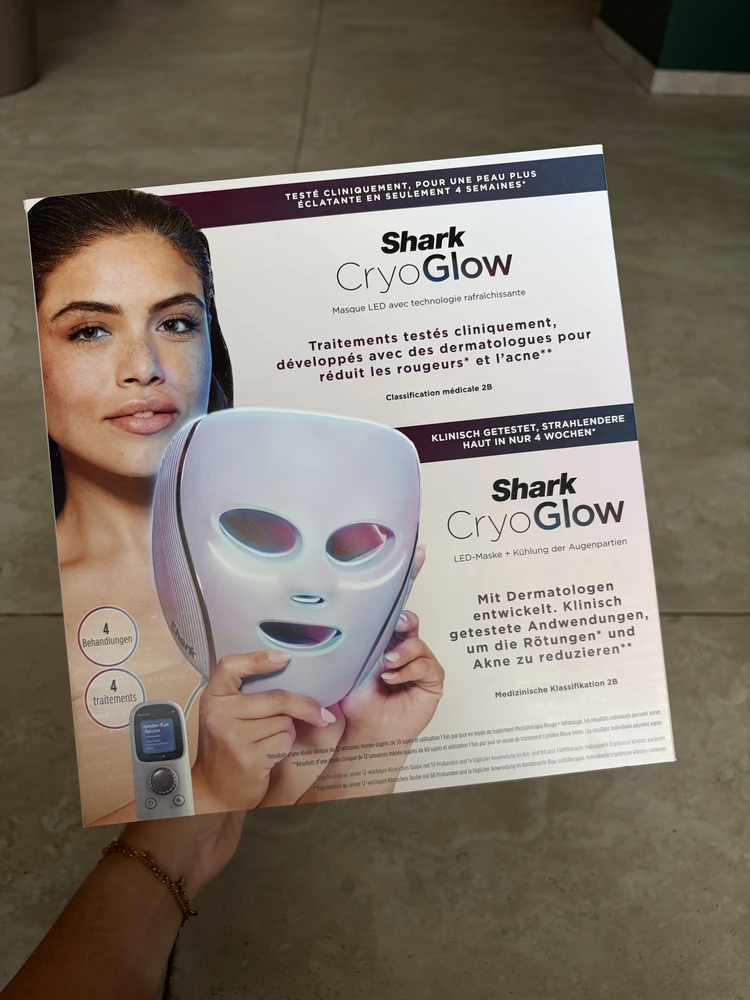
The Shark CryoGlow LED Face Mask puts two powered cooling pads under your eyes, and Shark designed the whole shell around them. The problem is what Shark had to build around it: a deep rigid shell that held much of the LED array away from my skin.
So here’s my full review with a Before & After, the score, and the one sentence on Shark’s own site that changes how you should read its 128 mW/cm².
63/100
Shelved since August 2026After 8 weeks and 32 sessions my skin was slightly worse than when I started, which is a drift rather than a collapse. The build is genuinely good and the remote is the best I’ve used, but the cooling pads take the under-eye area away from the light and push the whole shell off your face. And the 128 mW/cm² Shark publishes is read at the LED, not on your skin, which the brand says itself.
Buy it if
- You want puffy under-eyes calmed in the morning, and you can accept that the light skips that area.
- You want short sessions, 4 to 8 minutes, and a remote that tells you exactly what is running.
- You want a 2-year warranty and a full standards paper trail for $349.99.
Skip it if
- You want LEDs close to your under-eyes, nose, upper lip, jaw and underside of the chin.
- You want the diodes as close to your skin as they can get.
- You want an irradiance figure taken where your face actually is.
What I tested: the Shark CryoGlow LED mask
I bought the original Shark CryoGlow LED Mask from Shark’s US website for $349. I paid for it myself, and there are no affiliate links in this review. This is not the newer CryoGlow Plus.
From May through June 2026, I used the 6-minute Better Aging routine 4 times a week. That mode combines 630 nm red and 830 nm near-infrared light, the wavelengths with the most published evidence behind them. I stopped using my Nooance Elite X600 completely, so the CryoGlow was my only LED mask during the 8-week test.
I turned the Cryo pads on at their coldest setting when I felt like using them, not during every session. I also tried the blue mode occasionally. That was not a controlled routine, and I saw no acne result I could attribute to the CryoGlow.
One thing to hold on to before the results: Shark’s own study used the mask once a day, and I used it 4 times a week. I do not recommand to use any LED mask every day, as this can overexpose your skin. The seven scores below follow my published LED mask testing method.
Results: 2.5/5
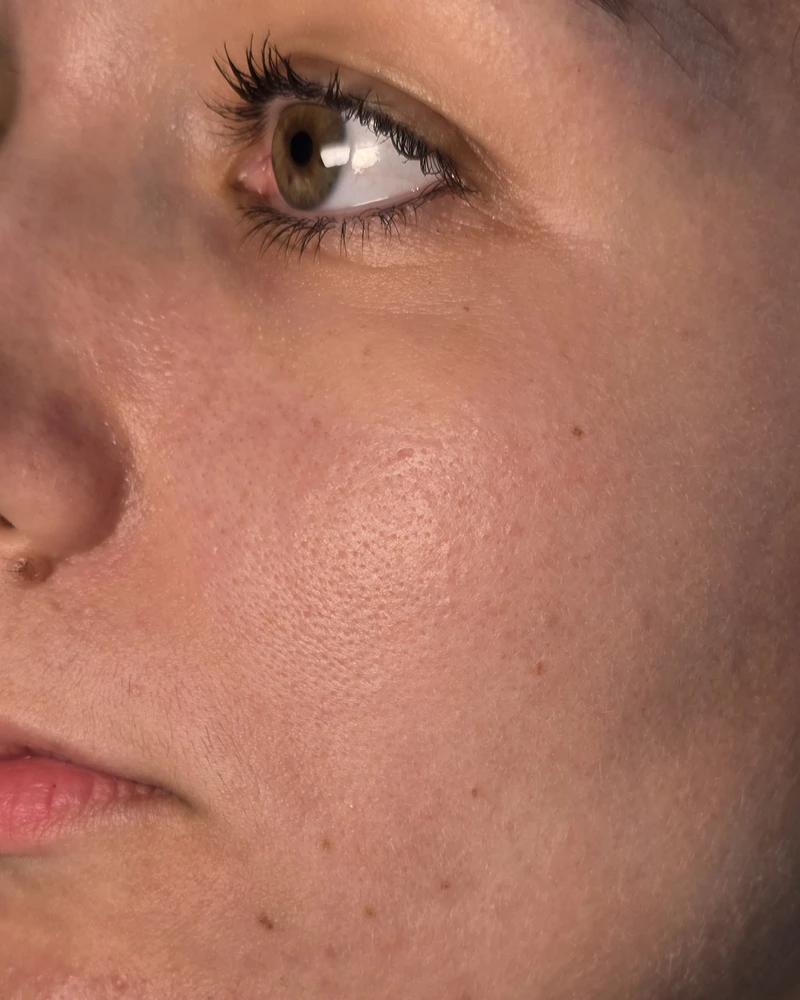
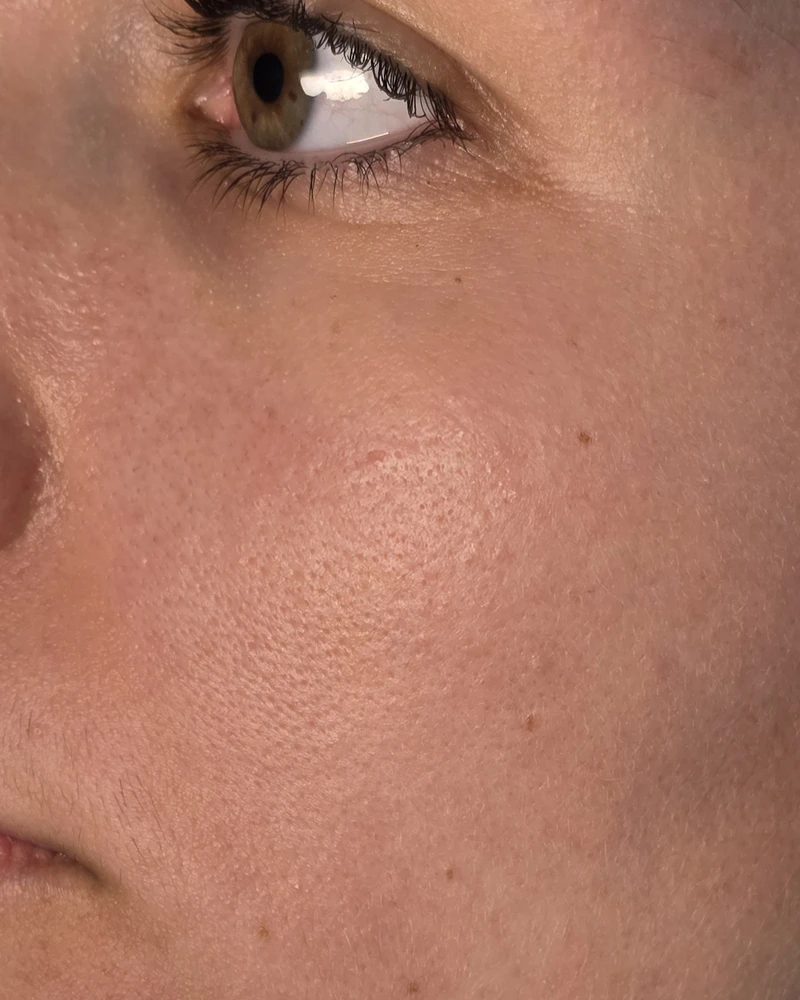
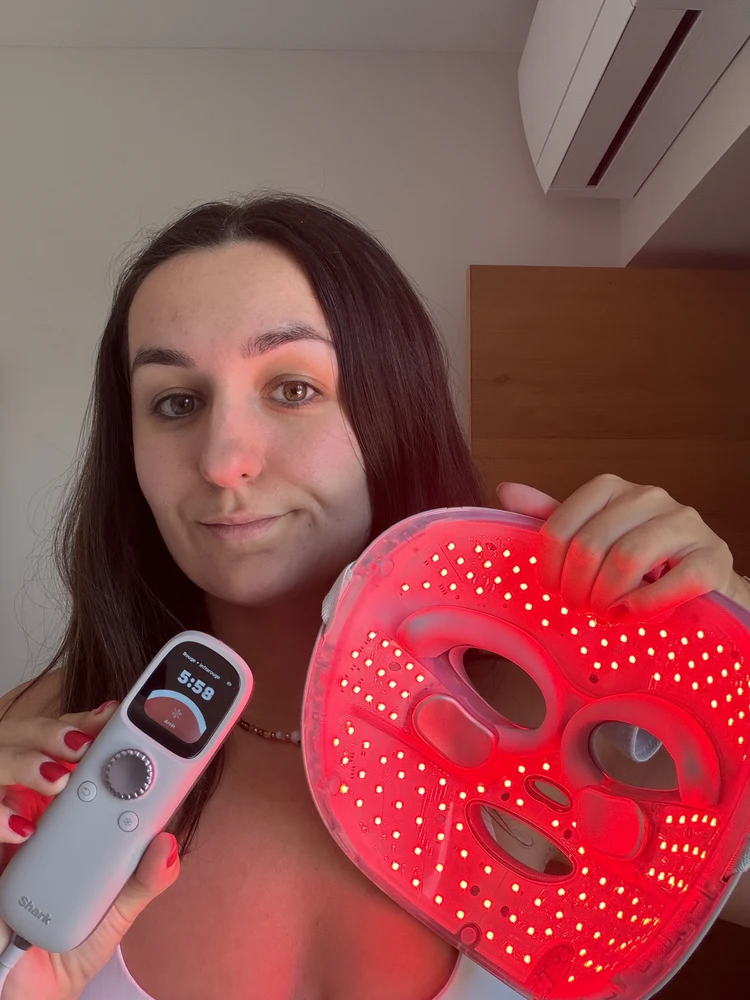
My own before & after Shark Cryoglow LED Mask
Nothing improved in 8 weeks, and a little went the other way. My pores read slightly more open at the end than at the start, and my tone was a touch duller. It isn’t dramatic, and I want to be precise about the size of it, because the honest word is drift, not damage.
I would not call that a dramatic deterioration, especially compared with what has happened when I replaced my usual mask with devices that performed much worse, but I cannot call the CryoGlow effective from my result either. Set against the Omnilux Contour Face or the iRestore Illumina, this was an unremarkable 8 weeks rather than a bad one.
Official Shark Cryoglow Before & After (from trial)
Shark now publishes a summary of its 12-week clinical evaluation. It says 119 adults used either Better Aging or Skin Clearing once daily, with expert grading, participant assessments, standardized photography and instrumental testing. Shark reports visible improvements in fine lines, firmness, radiance and smoothness after 8 weeks in the Better Aging group.
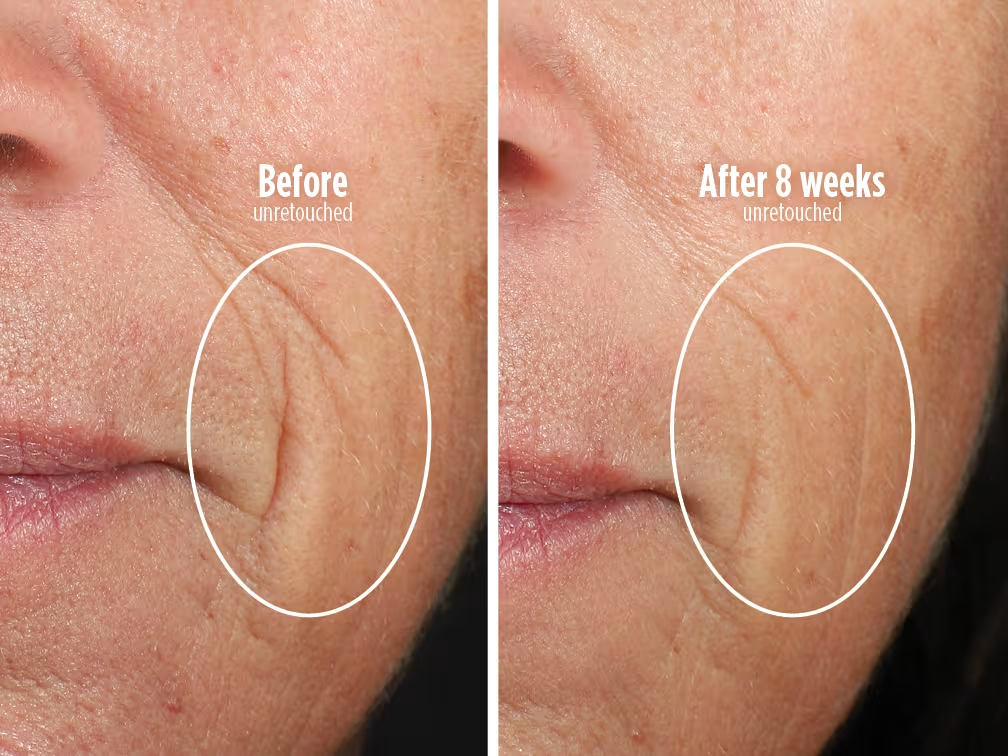
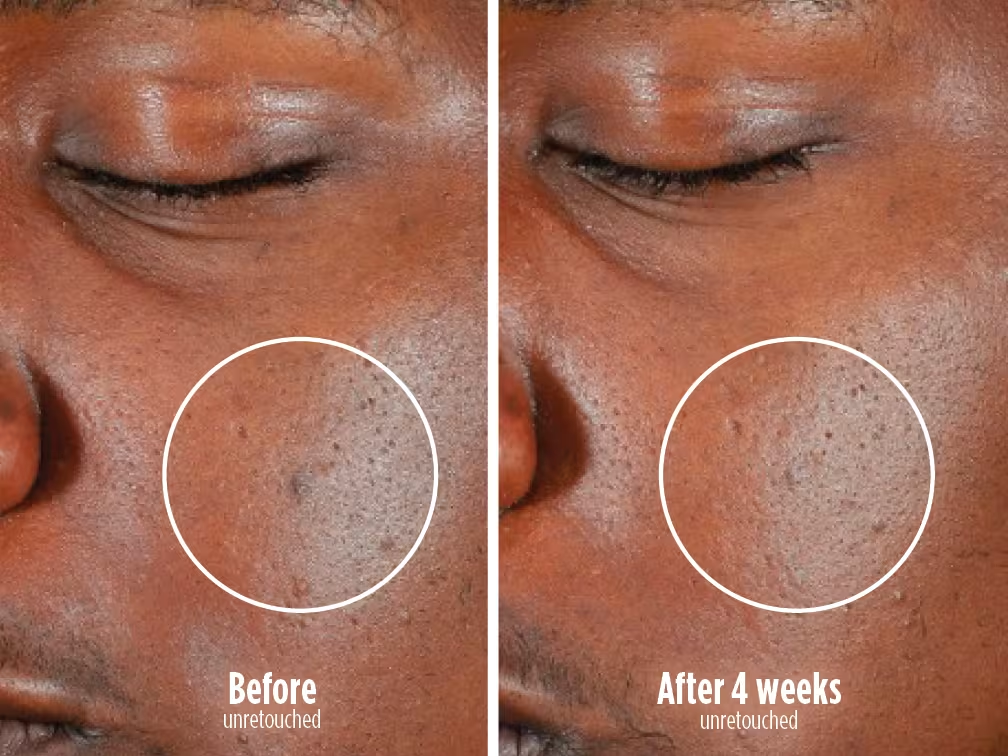
That exact-model study keeps Results above the bottom of the scale. But what is missing is that the public summary does not describe a control group, name the instruments, provide numerical tables or show properly presented paired macrophotographs.
Irradiance: 3/5
Shark publishes 128 mW/cm², which is a high number for a consumer LED mask. Then, on its own science page, Shark writes the sentence that empties it: “This is a measurement of power density of the light at the source of the LED.”
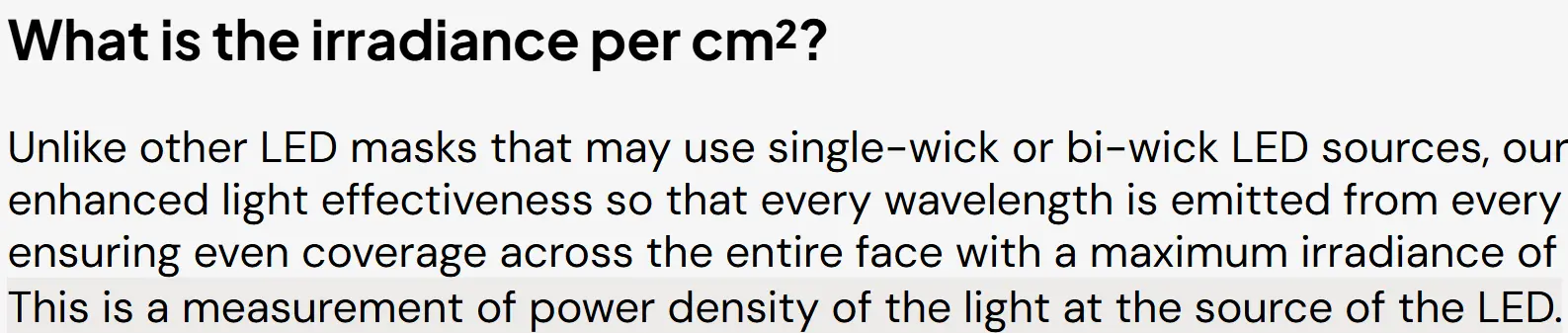
128 mW/cm² describes the diode power, not the dose received on your face. Light spreads as it travels, so the figure at the emitter and the figure at the skin are two different numbers, and this distinction matters on the CryoGlow because the shell sat visibly far from my face.
Shark still deserves credit here, because most brands do less. It stated its measurement condition in writing, and the measurement condition is the single thing that separates an irradiance figure you can reason about from a number on a banner.
The CurrentBody Series 2 prints 30 mW/cm² with no distance at all. So the Shark CryoGlow loses points for a figure that sits far outside the 30 to 50 mW/cm² band my grid treats as useful, and it keeps points for telling you where the reading was taken.
- Shark CryoGlow, Better Aging 64
- Nooance Elite X600 50
- CurrentBody Series 2 30
- Omnilux Contour Face 30
- iRestore Illumina not disclosed
Shark CryoGlow: which of the three modes is worth running?
The Shark CryoGlow has three LED routines:
- Better Aging is red 64 and infrared 64 for 6.4 minutes.
- Skin Clearing runs three phases over 8.4 minutes, cycling blue and infrared, then blue and red, then red and infrared.
- Skin Sustain runs all three at once for 4.3 minutes.
I personnaly sticked to the Better Aging program, as it is the most similar program to the ones used in trials and independent studies. Blue is worth a try against acne and I’m not dismissing it. But acne is multifactorial, so if yours is hormonal no LED mask is going to move it…
Coverage: 2.5/5
Does the Shark CryoGlow have 480 LEDs?
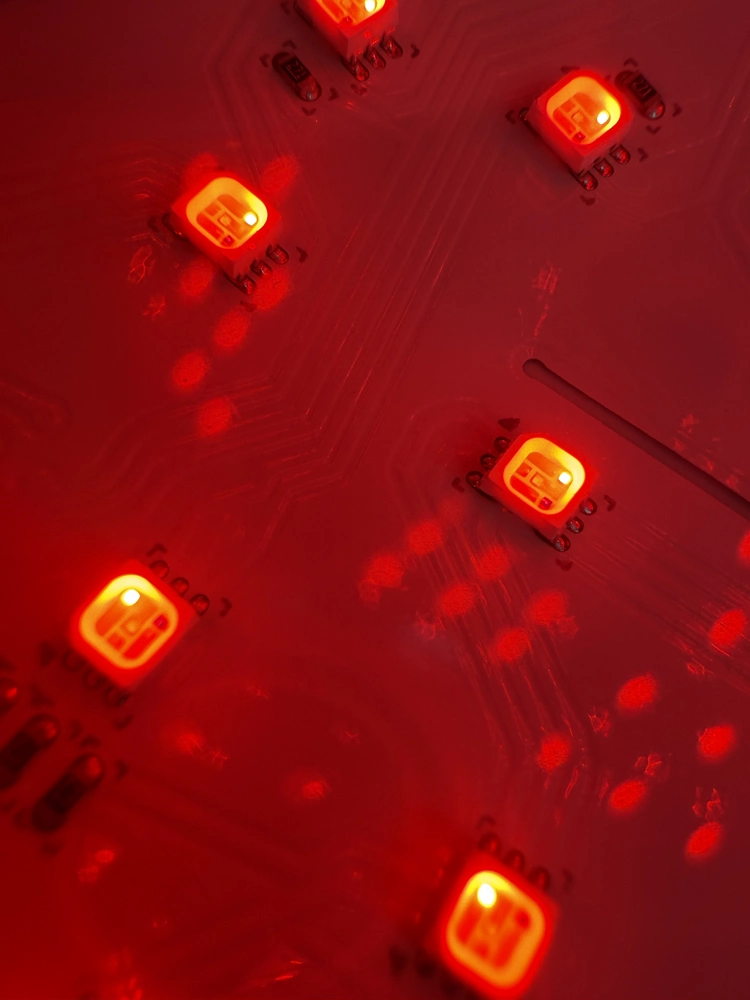
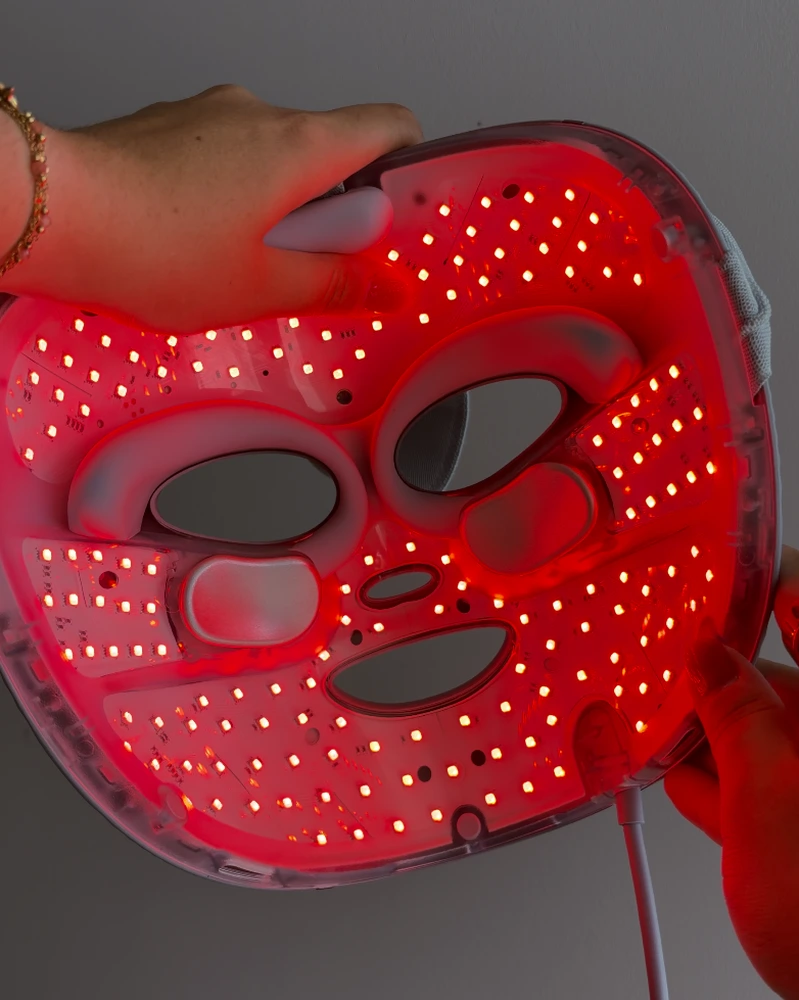
Shark advertises 480 LEDs, and its FDA file says what that means in one line: “The device incorporates 480 LEDs (160 tri-wick packages).” So there are 160 physical light points on this LED mask, each carrying a red, a blue and an infrared die.
160 emitters sits comfortably above the 120 I treat as a floor, the spacing is regular, and the LED sheet inside is one of the better ones I’ve looked at closely. Tri-wick packaging is also the reason no single wavelength climbs past 73 mW/cm²: one drive budget, three dies, three smaller shares.
The Cryo pads replace LEDs in a priority area
There’s nothing under the eyes, because the chill pads occupy that whole strip. There is nothing on the nose, nothing above the upper lip where the smoker’s lines sit, and nothing under the chin, because the shell stops before it gets there. Those aren’t marginal patches, they are some of the first places a face shows its age.
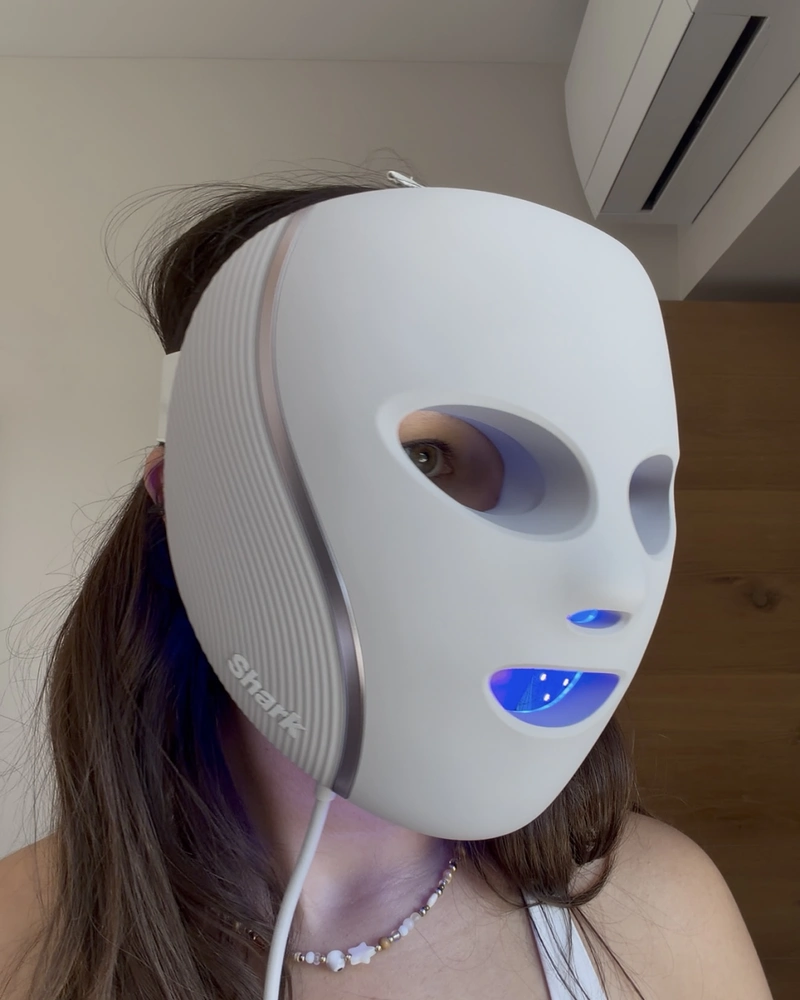
The LED are too far from my skin
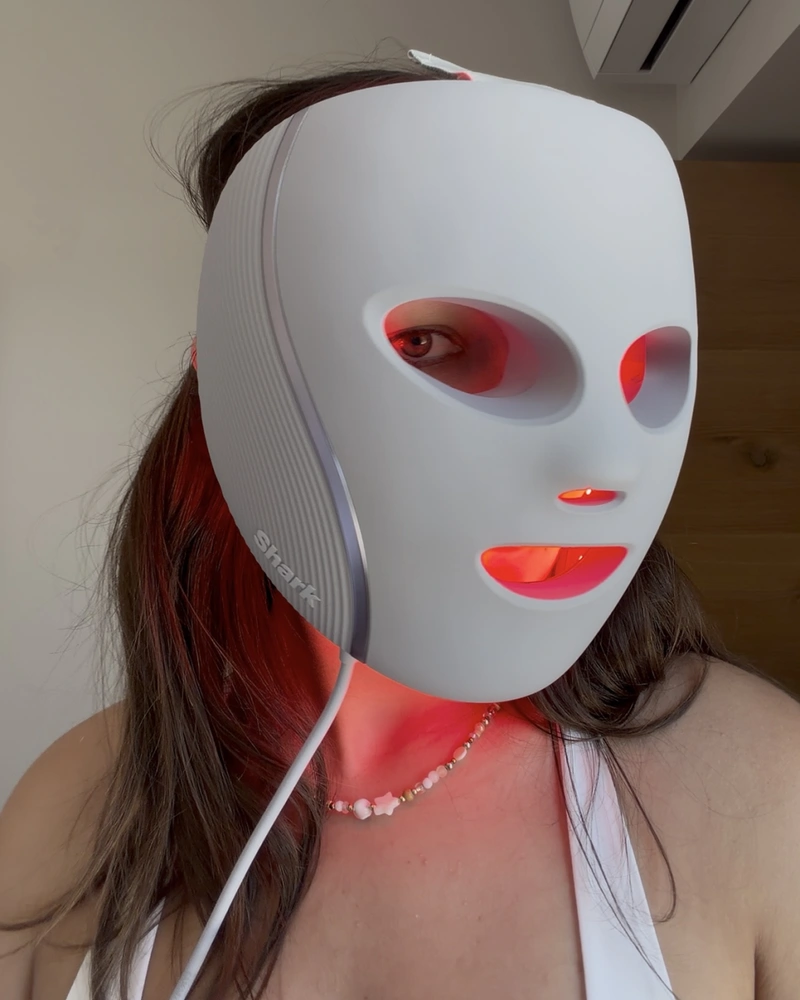
Then there’s the distance, which is the real story of this LED mask. A rigid shell already sits off the skin, and I avoid rigid models for exactly that reason, since light that crosses air arrives weaker than light leaving a diode in contact.
The CryoGlow adds the chill pads on top of that and they act as spacers. Look at my photos and my eyes seem sunk deep inside the shell, and that depth isn’t local to the eyes: the whole face is held back from the light intensity.
Move an emitter back and its beam widens, so neighbouring beams do overlap and the light does even out. But here distance is being presented as coverage engineering when it’s the thing diluting the dose.
Proof: 4/5
This is where the Shark CryoGlow earns its best score, and it deserves it. The 510(k) file is public, unusually detailed, and filed by SharkNinja Operating LLC itself rather than by a contract factory. It still stops at 4/5 because the public clinical evidence is a marketing summary, whereas I want the full instrumental report.
What the brand publishes
- Published: Wavelengths in nm: 415, 630 and 830
- Published: Dose per session calculable, from a full per-mode power table
- Missing: Clearance number printed by the brand
- Published: Clinical study run on this exact model
- Missing: Study fully documented: no laboratory named
- Published: Photobiological safety declared: IEC 62471:2006
- Published: Warranty and support documented
Proof: 4/5
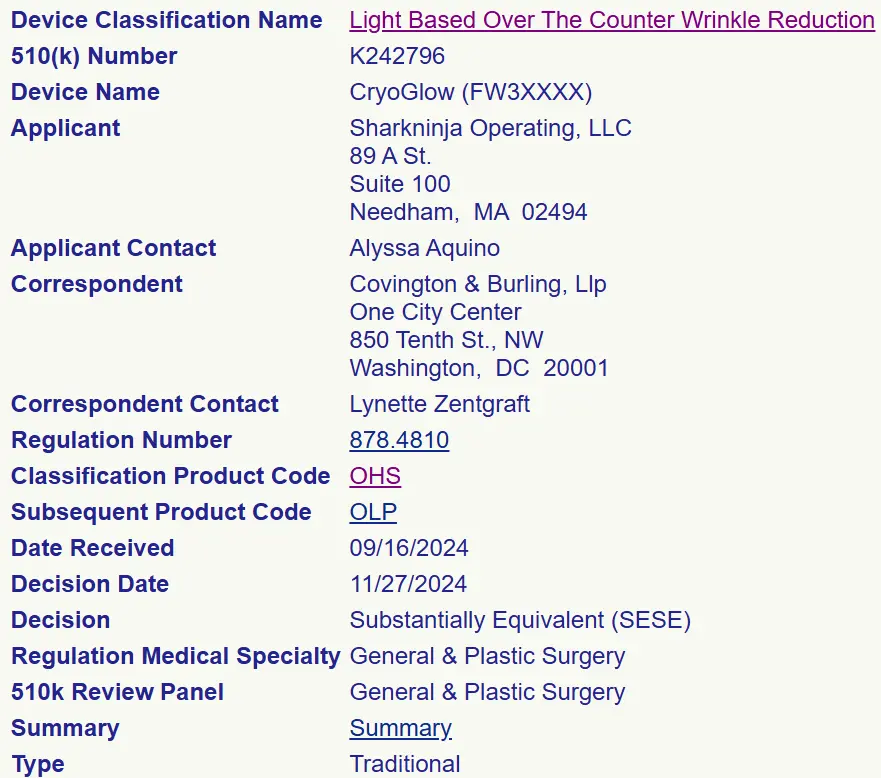
The FDA clearance is exact
The FDA database identifies K242796 as CryoGlow FW3XXXX, submitted by SharkNinja Operating LLC and cleared in November 2024. Its indications cover red and near-infrared energy for fine lines and wrinkles, plus red, blue and near-infrared energy for mild-to-moderate inflammatory acne. But this is FDA cleared, not FDA approved.
Why the study does not earn 5/5
The study summary names dermatologist Zoe Diana Draelos, gives the 12-week duration and describes expert grading, validated five-point scales, instrumental testing and controlled photography. That is enough to verify that Shark did more than run a customer questionnaire.
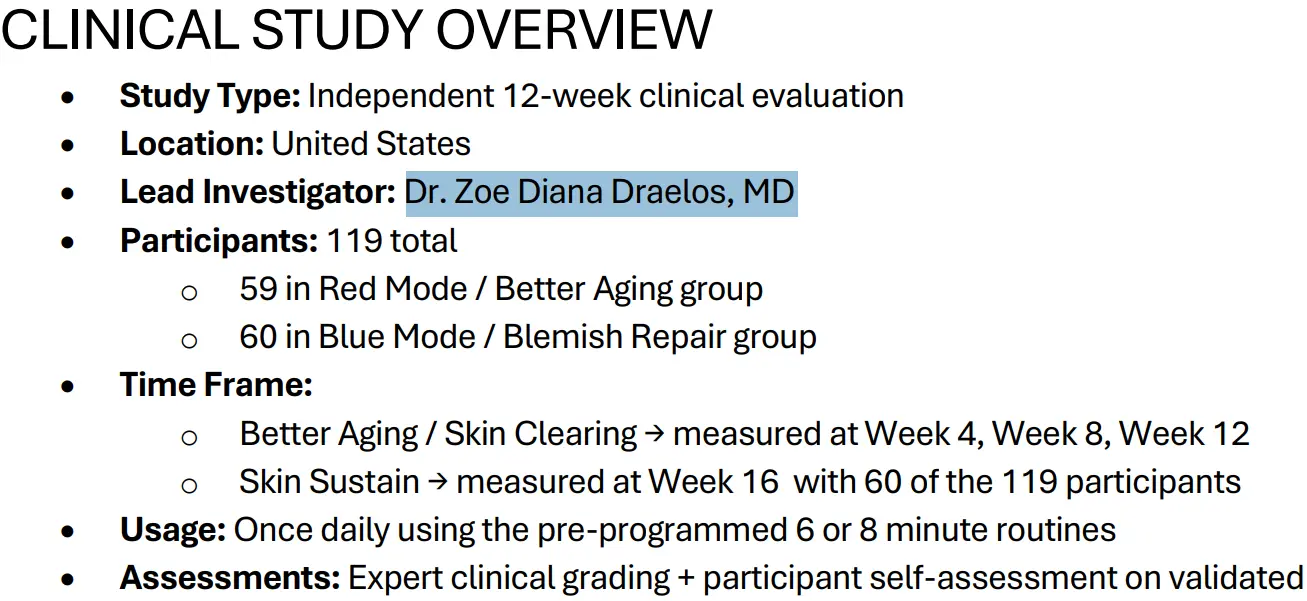
But Shark does not publish the named instruments, full numerical results, statistical method, attrition or a set of standardized macrophotographs at fixed dates. The US product page advertises results such as 24% less visible fine lines and 20% firmer skin, but the downloadable report does not show how those percentages were calculated. Nooance publishes a much more complete instrumental protocol for the Nooance Elite X600 LED mask, which is why I do not give these two evidence packages the same score.
Comfort: 3/5
The strap does its job and the LED mask doesn’t slide, which is more than I can say for several of the rigid models I’ve worn. But at +1.1 lb, it’s heavy on the head, and it’s less comfortable than a flexible mask or than a thin rigid one.
What I didn’t anticipate is that walking around in it genuinely made me dizzy. I think that comes from the depth of the shell, because it changes my field of view far more than the masks I usually wear. So I stopped moving during sessions, which is a real constraint on a device whose selling point is that you can get on with your evening while it runs.
Against all that, the session load is the lightest on this site. Between 4.3 and 8.4 minutes depending on the routine.
Is the Shark CryoGlow remote any good?
It’s one of the best-designed remotes I’ve used on an LED mask. It reacts instantly, you can move through the menu, and it holds charge well. I appreciated that a lot in the first week. But in everyday use, I did not need most of that menu. I still prefer a small battery controller that turns on, starts the routine and shows the remaining time.
Is the under-eye cooling worth having?
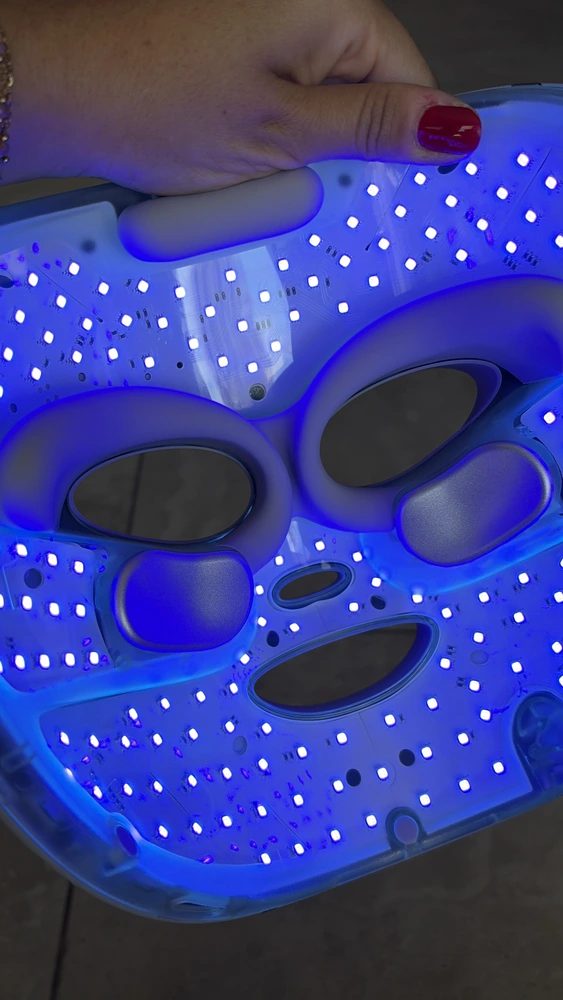
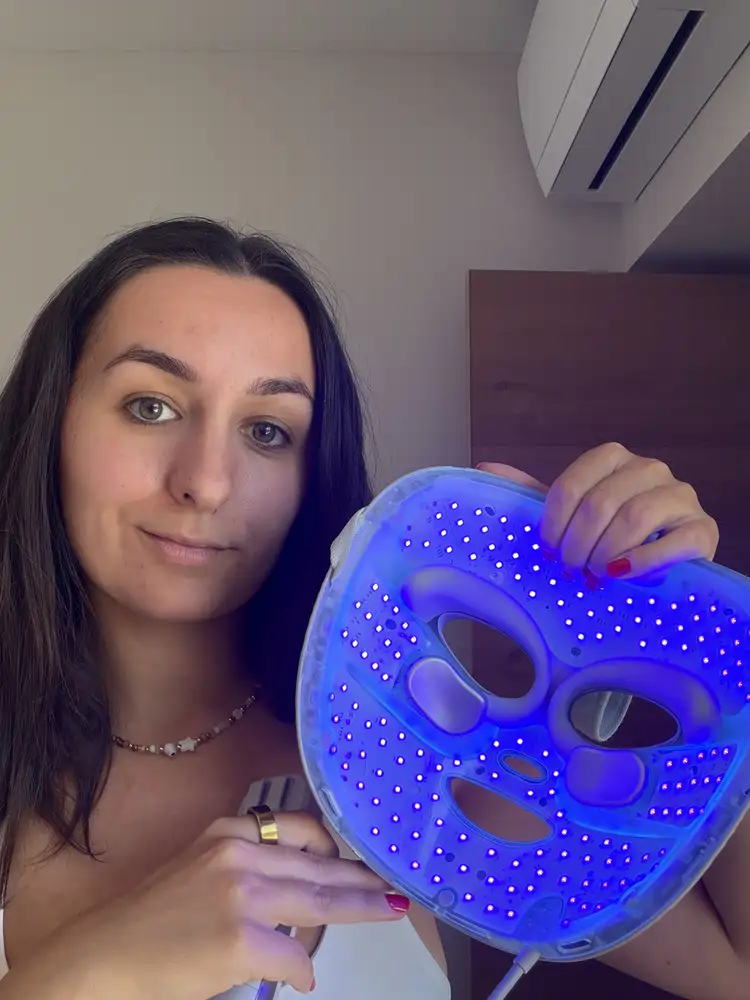
The cooling is the mixed part. At the maximum setting it gets properly cold, and sometimes that felt great in the morning or evening. Other times it was too cold and I left it off. But they also have nothing to do with light therapy, so the pads are a comfort feature that costs you the under-eye diodes and adds the spacing described above.
Value: 3.5/5
At $349.99 the Shark CryoGlow is one of the more accessible full-face LED masks I’ve scored, and you aren’t paying for a thin product. The shell is solid, the LED sheet inside is well made, the diodes themselves are good, and the warranty runs 2 years.
But you are paying a premium for the feature that costs you coverage: the under-eye strip is dark and the shell rides high. Good value for a well-built object, less good value as light therapy.
Safety & support: 4/5
The CryoGlow LED mask has an exact Class II FDA clearance, and its filing records testing to IEC 62471 for photobiological safety, IEC 60601-1 for electrical safety and the relevant biocompatibility standards. The mask also uses silicone eye shields, dims when removed from the face and ends each programmed session automatically.
Shark publishes a two-year limited warranty on the US product page and provides replacement accessories and product support. The device does not depend on an app or account to run a session.
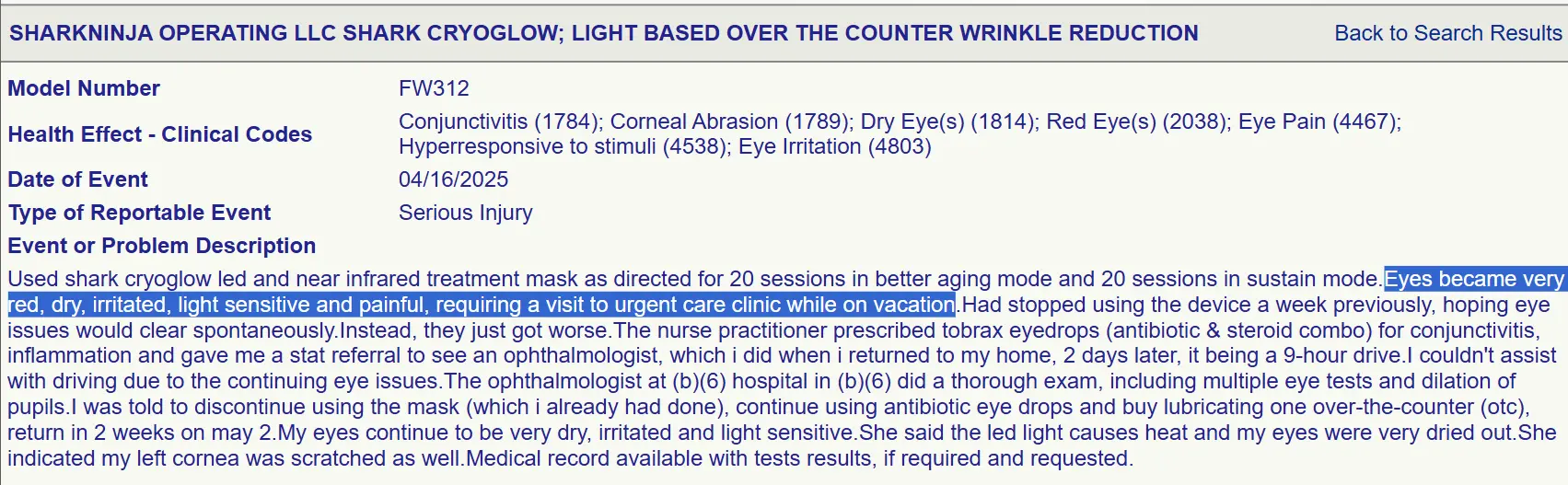
One thing sits against that: the FDA’s public adverse event database carries reports of burning, redness and irritation filed against this LED mask.
Who shouldn’t buy the Shark CryoGlow
Skip this one if you recognize yourself
- You’re buying an LED mask for the eye area. The chill pads occupy exactly the strip you want lit, so this device treats everything except your first concern.
- You already own a flexible moulded LED mask that sits on your skin. You’d be trading contact for cooling, and contact is what decides how much light lands.
- You want to lie down during your sessions. 1.1 lb of rigid shell pressing the pads into the thin skin under your eyes isn’t a position you’ll hold for 8 minutes.
- You were planning to stack two routines a day to speed things up. Shark’s manual says not to run back-to-back LED routines, to avoid temporary dry skin or hyperpigmentation.
Am I still using the Shark CryoGlow?
Updated August 2026. I finished the 8 weeks and went back to my usual LED mask. The CryoGlow has not left the house though, because the cooling pads are still the nicest thing I own for a puffy morning, and that’s the part I’d miss.
What I still want to know about the Shark CryoGlow
The irradiance at the skin, at the distance this shell actually holds. You cannot publish a figure read at the diode and then describe a design whose defining feature is the gap between the diode and the face.
The second thing I want to see is whether the CryoGlow Plus closes the gap or only fills it. More diodes around the eyes, nose and lips is the right correction, but it’s the right correction to the wrong problem if they are shining from the same distance as before.
And the format I would want, honestly, is this one with the pads taken out: a soft moulded shell that follows the face, more diodes on the zones this one skips, and 50 mW/cm² confirmed at the skin rather than at the source. Nooance is doing that with the Elite X600 and, for the moment, no other brand is matching it.
Shark CryoGlow LED mask: your questions
How many LEDs does the Shark CryoGlow really have?
Both numbers Shark uses are true. Its FDA file describes 480 LEDs in 160 tri-wick packages, which means 160 physical light points on your face, each holding a red, a blue and an infrared die.
Is the Shark CryoGlow FDA approved?
No. It is FDA cleared, under file K242796, cleared on 27 November 2024. Clearance means Shark showed the device is substantially equivalent to one already on the market. It is not a finding that the mask works.
Does the Shark CryoGlow treat the under-eye area?
Not with light. The cooling pads sit on that strip, so there are no diodes above the under-eye area. Shark’s own FDA file states that the cooling function is there to refresh and soothe and does not treat lines or acne.
What does 128 mW/cm2 mean on the Shark CryoGlow?
It is the total of all wavelengths running in a mode, and Shark states that it’s measured at the source of the LED rather than at your skin. The maximum for any single wavelength is 73 mW/cm², and in Better Aging the split is red 64 and infrared 64.
Which Shark CryoGlow mode should I use?
Better Aging, if you want the wavelengths with the best evidence behind them. It runs red and infrared only, at 64 mW/cm² each. Skin Sustain drops red to 17 mW/cm² to make room for blue, and that’s the mode Shark asks you to run daily once your 8-week course ends.
Is the Shark CryoGlow worth $349.99?
As an object, yes: solid build, good LED sheet, 2-year warranty, an excellent remote and the best under-eye cooling I’ve used. As light therapy I scored it 63/100 and Shelved, because the pads take the eye area away from the light and hold the whole shell off your face.
Test log
- Exact model
- Shark CryoGlow LED Face Mask, FW312, Blue Frost, US version
- How I got it
- Bought on Shark’s US site, $349.99. No affiliate link, no relationship with Shark, charging stand not purchased
- Test window
- 8 weeks
- Sessions
- 32 in total, 4 a week, Better Aging only, 6.4 minutes each
- Why 4 a week
- The published irradiance is read at the diode, so it cannot set a cadence. I ran the middle of my range
- Photo protocol
- Same camera, same lamp, same distance, no makeup
- Known limitation
- Shark’s own study used the mask once daily. My cadence was lower
- Sources checked
- FDA 510(k) K242796 and its summary, the FW312 user guide, Shark’s US product and support pages, the FDA adverse event database

About Emilie
I have tested LED masks since 2023. I buy the devices, use them for weeks, and read the spec sheets nobody reads, because this market runs on numbers most brands never publish. Not a dermatologist, and I say so whenever a question needs one.
1 thought on “I Tested the Shark Cryoglow Mask LED for 8 weeks: FULL REVIEW”