
I buy the devices I test unless the article says otherwise. Some links and discount codes on this site are paid links: if you buy through one, I earn a commission. It never changes a score or a verdict.
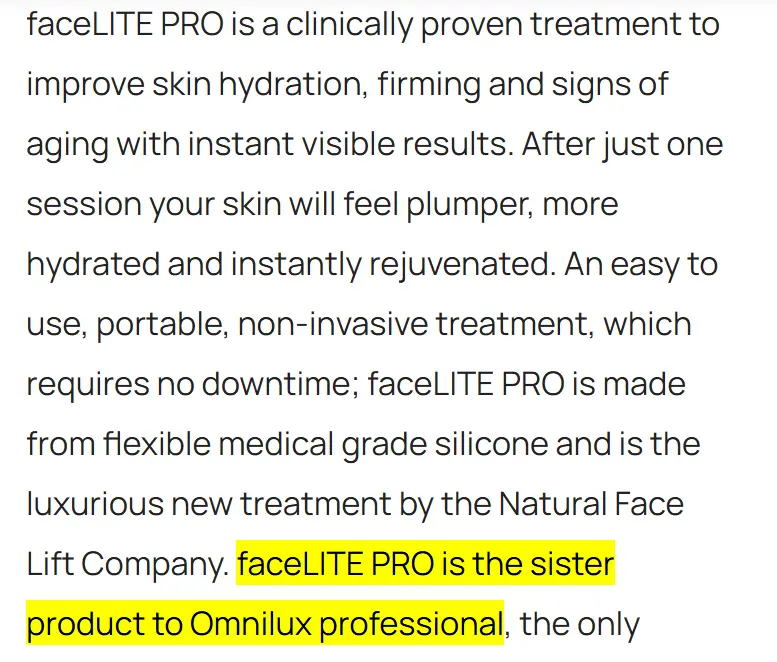
The faceLITE PRO is the new LED mask from the British brand faceLITE: 5 wavelengths of red and near-infrared light, an FDA clearance, for £395 on the brand’s shop. faceLITE even calls it the “sister product to Omnilux professional“, and once you’ve worn both, the family resemblance is hard to miss.
Below, the 62 light points and its face coverage, what the FDA file says, and my score.
52/100
Shelved since November 2026I used the faceLITE PRO for 4 weeks and it felt exactly like the Omnilux Contour on my face: a flat panel with only 62 light points, so I wasn’t expecting different results. The 52.1 mW/cm² is a decent number, and the new eye shields are a real step up from the first faceLITE. But the coverage is just too bad, and the study has low results on wrinkles.
Buy it if
- You want an flat flexible panel with eye shields in the box and more light output than the original faceLITE.
Skip it if
- You want even light across your face: 62 light points on a flat panel leave gaps.
- You live in the US: it ships from the UK and the import duties are on you.
- You want precise wavelengths: the FDA file allows ±10 nm on each one.
What I tested: the faceLITE PRO LED mask
I tested the faceLITE PRO, the 5-wavelength version, not the original 2-wavelength faceLITE. I bought it on the brand’s shop for £395, but if you live in the US like me, I don’t recommend it: you’ll have to pay duty fees, whereas we have better LED masks for less in the US. There’s no affiliate link to faceLITE on this page.
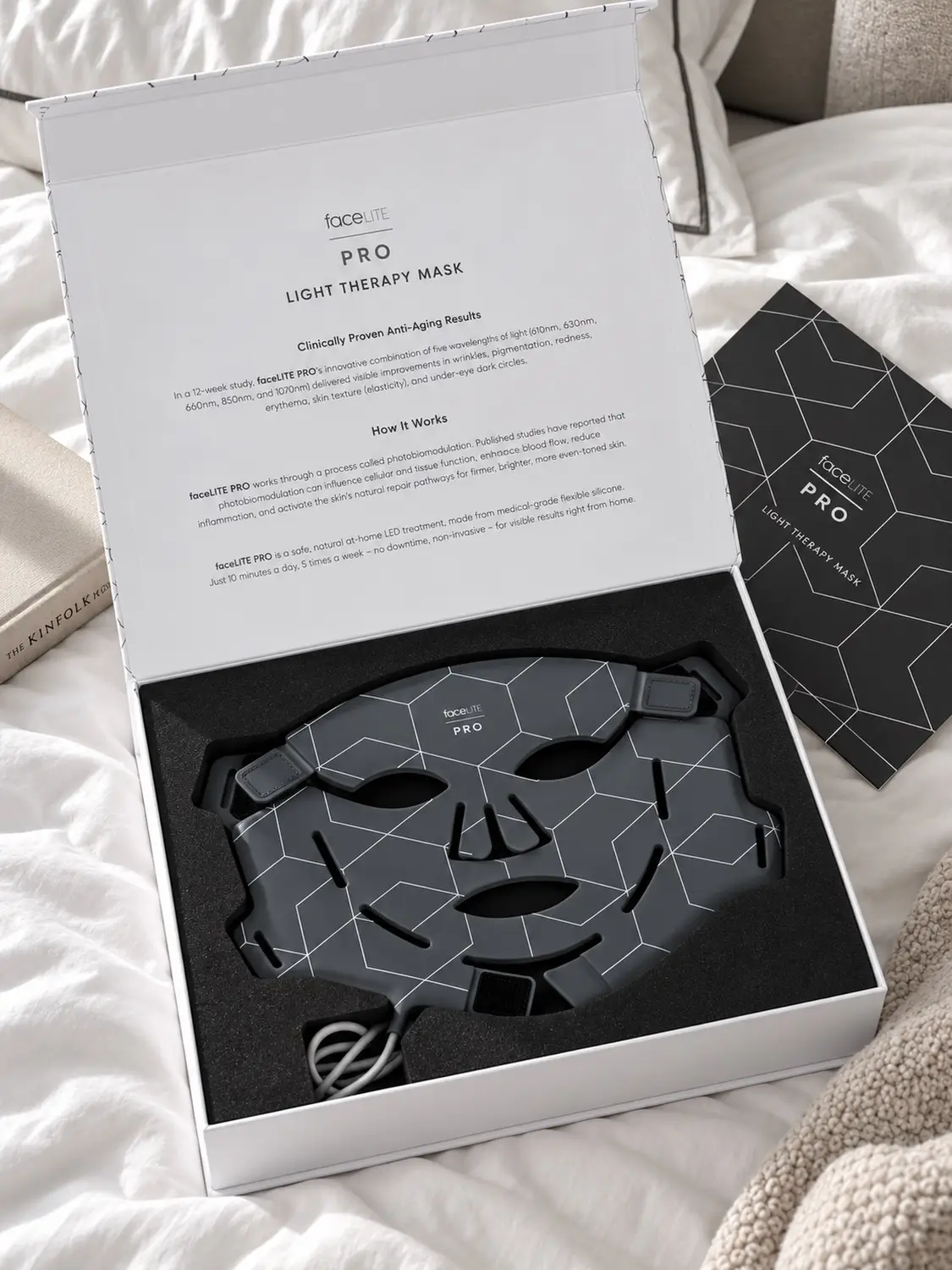
I used it 3 times a week for 4 weeks, 10 minutes each time, with the eye shields on. I didn’t go through 5 sessions a week because faceLITE publishes a maximum irradiance of 52.1 mW/cm²: if the light output is really that high, there’s no point overdosing, even though I doubt it reaches every part of the face evenly.
I stopped at 4 weeks because the faceLITE PRO felt exactly like the Omnilux Contour Face (my review) on my skin. Same kind of flat panel, same weak coverage…
Results: 2.5/5
What changed on my face following my test, including my before-and-after photos. I also evaluate the “before-and-after” examples provided by the brand being tested, as well as the results of any studies that may have been conducted on the mask.
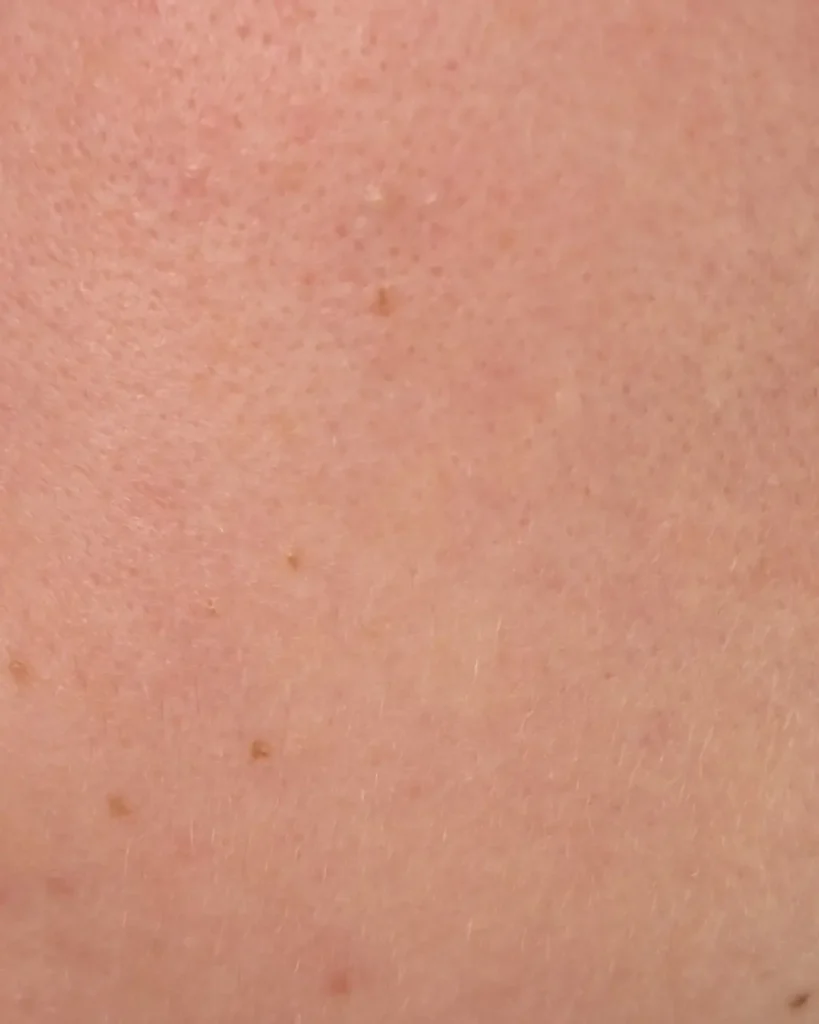
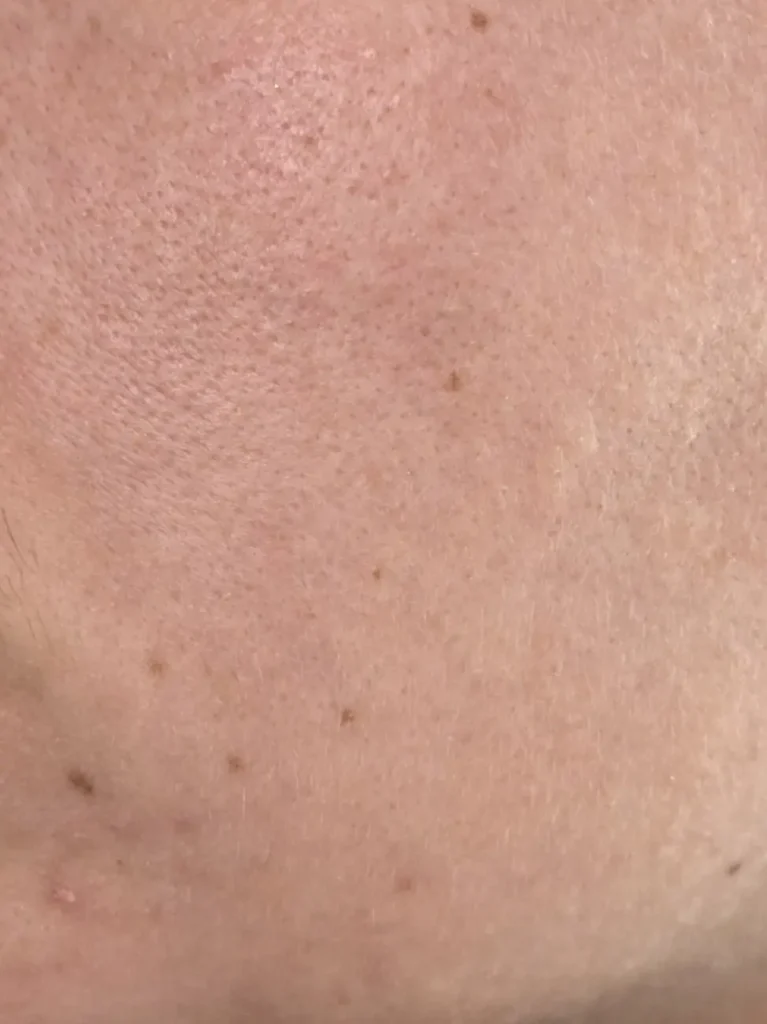
Read my results guideMy own results with Facelite Pro LED mask
I saw no change on my skin after 4 weeks, and to be honest I wasn’t expecting any, given its characteristics. I show you my before&after on my skin.
Facelite Pro LED mask results from the brand
On its side, faceLITE publishes before-and-after photos and the results of a 12-week study on 24 people:
- 79% of them improved by at least one wrinkle grade, according to the brand.
- 87% for pigmentation,
- 71% for dark circles
- 67% for redness
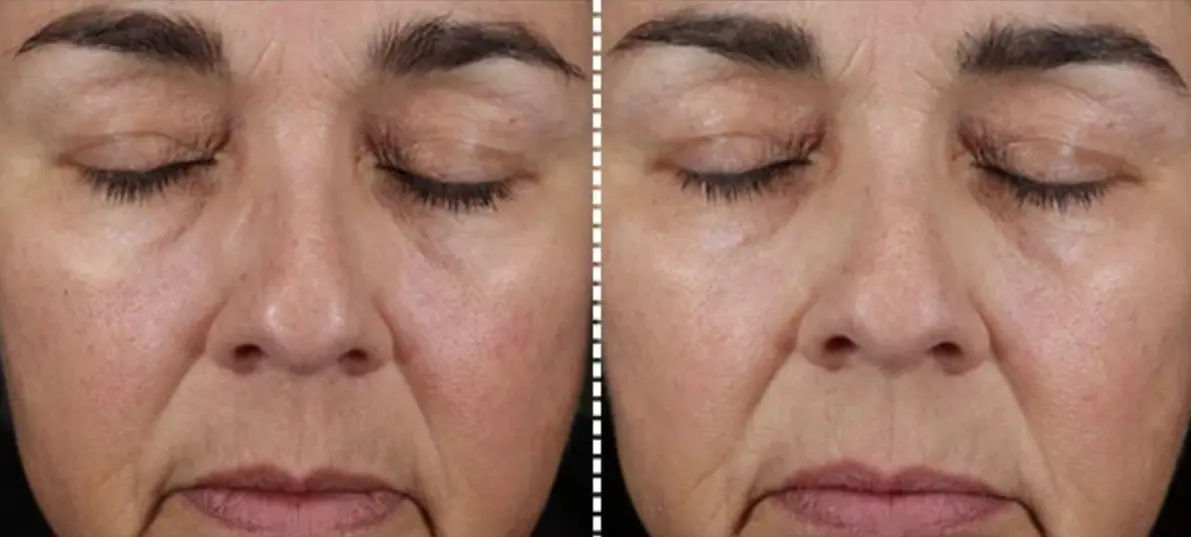
However, there are figures that are not detailed by instrumental tools, and they don’t appear in the FDA summary of the same study, which only reports wrinkles. And the FDA file tells a less flattering story about those wrinkles, which I go through under Proof section below.
Irradiance: 3/5
How much light reaches the skin, in mW/cm²? I evaluate this value, as well as how the information is presented, the conditions under which it was measured, and the total dose received in a single session. If the brand does not communicate it, I give it a severe rating.
Read my irradiance guidefaceLITE publishes 52.1 mW/cm² of irradiance in the PRO’s technical specs, as a “Maximum Operating Intensity“. The word maximum worried me at first.
- faceLITE PRO 52.1
- Nooance Elite X600 50
- CurrentBody Skin Series 2 30
- Omnilux Contour Face 30
- Original faceLITE 30
But the FDA file gives the same 52.1 as the intensity used in the clinical study, and the mask has a single 10-minute program with no modes, so in practice the maximum is the only setting you get, I assume. Honestly, if that number holds for the whole session, it’s a good one, well above the 30 mW/cm² of the original faceLITE.
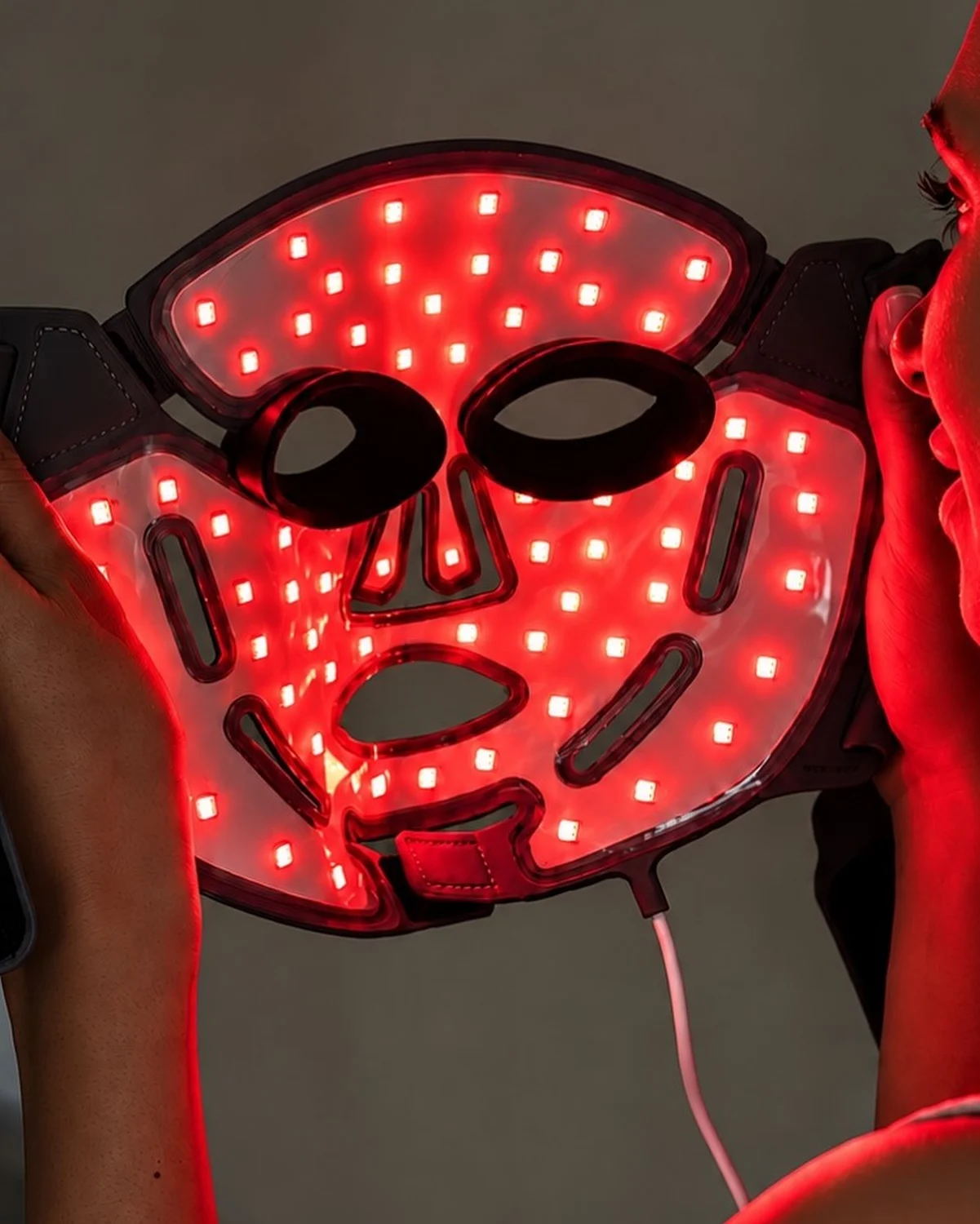
But Facelite doesn’t specify where the 52.1 mW/cm² value is measured: at the LED or on the skin? The distribution across the five wavelengths is also missing, as it’s very likely that it’s not equivalent for each. Nooance does that split in its FDA file for the Nooance Elite X600 (read my full review of Nooance here): 35 mW/cm² of red and 15 of near-infrared.
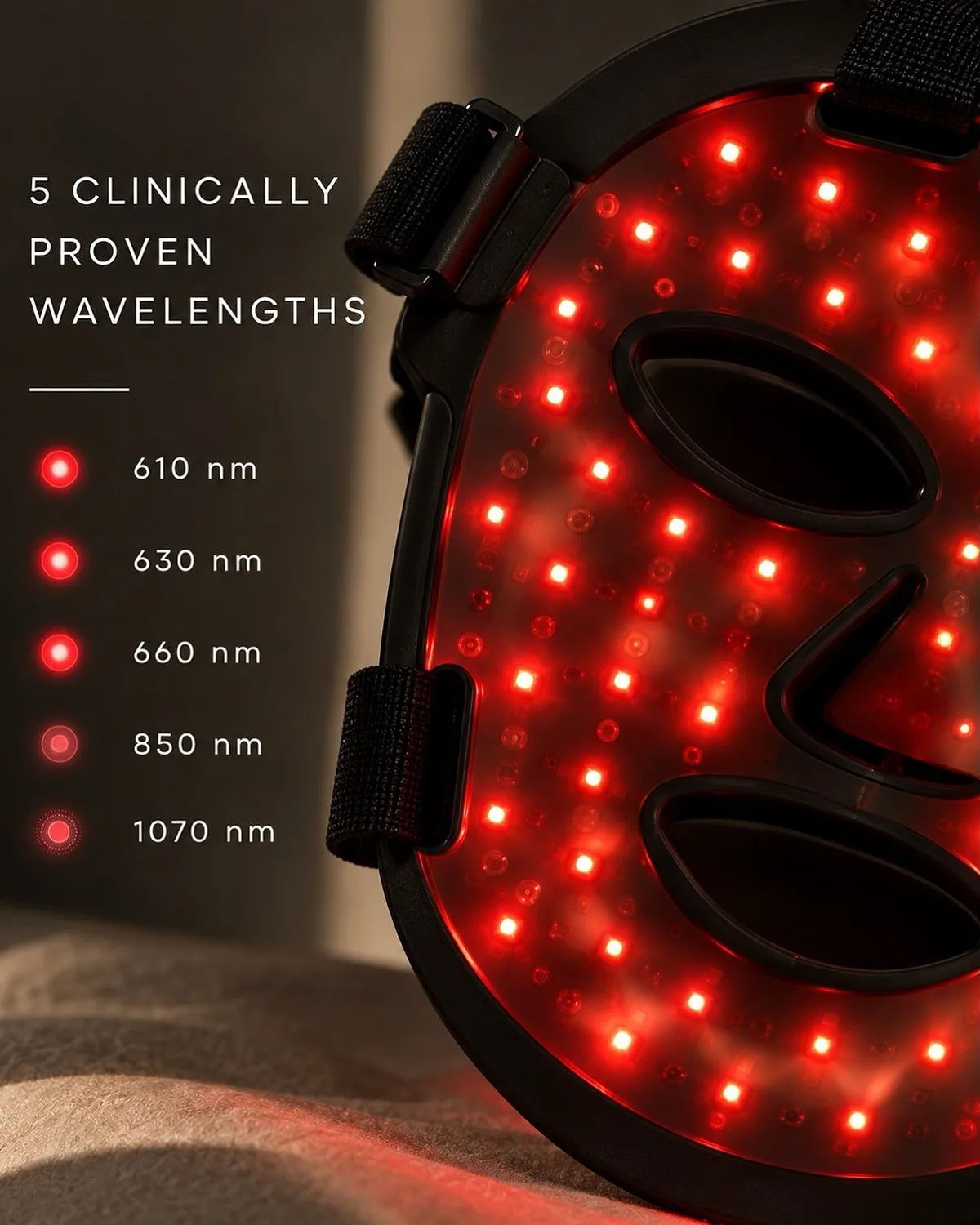
By the way, 5 wavelengths are not an advantage in my opinion. For anti-aging, red light at 630 nm and near-infrared light at 850 nm are more than sufficient, as is the case in clinics and studies. Adding 610, 660, and 1070 nm only serves to inflate the advertised figure, in my view.
Furthermore, the FDA application allows a tolerance of ±10 nm for each wavelength; a “630 nm” LED can therefore emit anywhere between 620 and 640 nm! For comparison, Nooance declares a tolerance of ±2 nm for its LED masks in its FDA applications, which is more reliable.
Coverage: 1.5/5
How many points of light does the mask actually feature, how evenly are they distributed, and which areas remain uncovered? Note that I am counting “bulbs” and not LEDs, because the number of LEDs often includes two, three or more diodes per bulb, which inflates the apparent coverage area.
Read my coverage guideHow many LEDs does the faceLITE PRO have?
faceLITE doesn’t publish the number of LEDs on the product page, or the number of light points. So I counted them on the mask: 62 light points. The chips are big because each one is penta-core, one LED per wavelength, so if you count like most brands do, that makes 310 LEDs. That’s even fewer light points than the 66 of the Omnilux Contour Face…
- Nooance Elite X600 300
- CurrentBody Skin Series 2 110
- Omnilux Contour Face 66
- faceLITE PRO 62
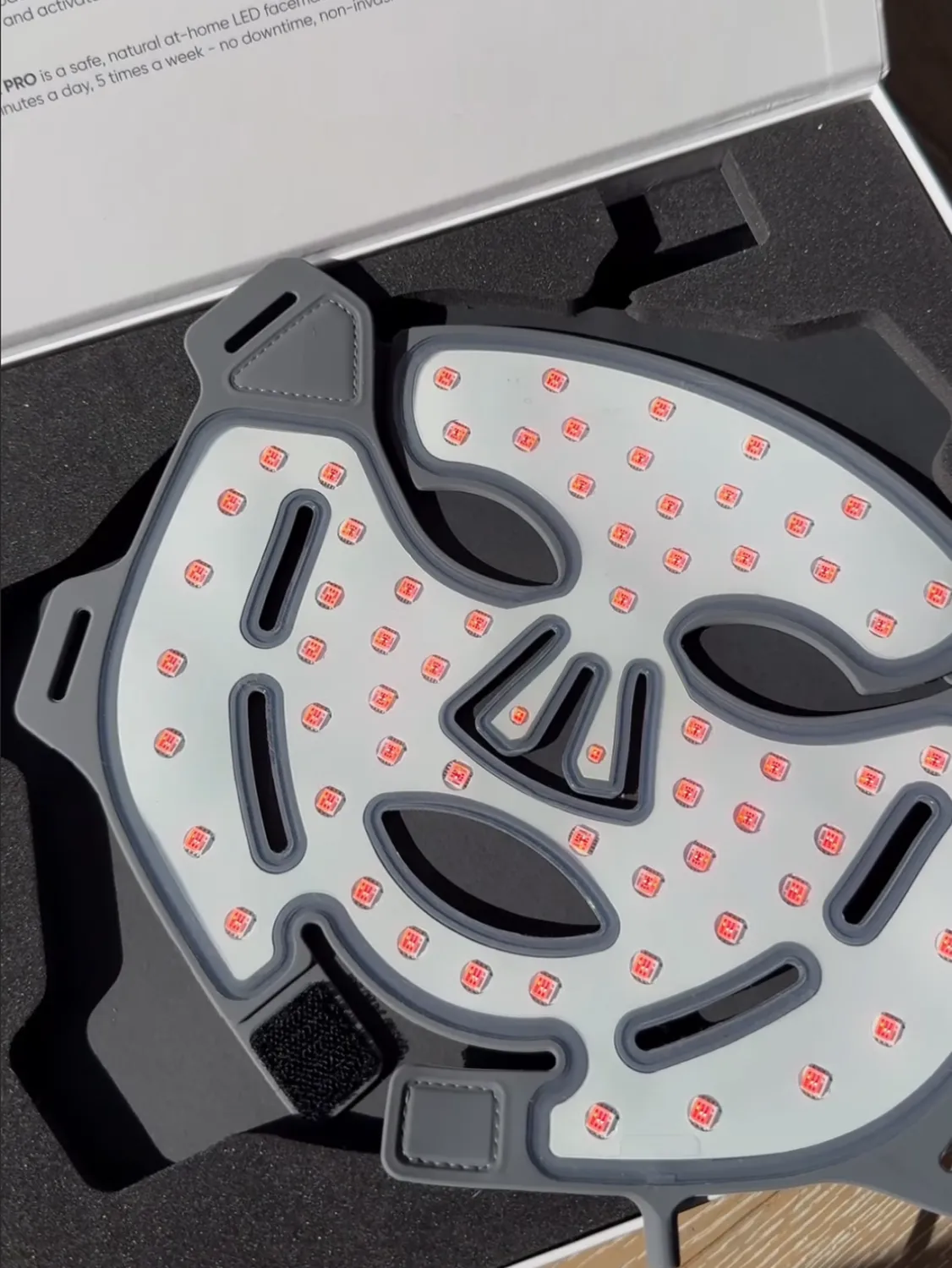
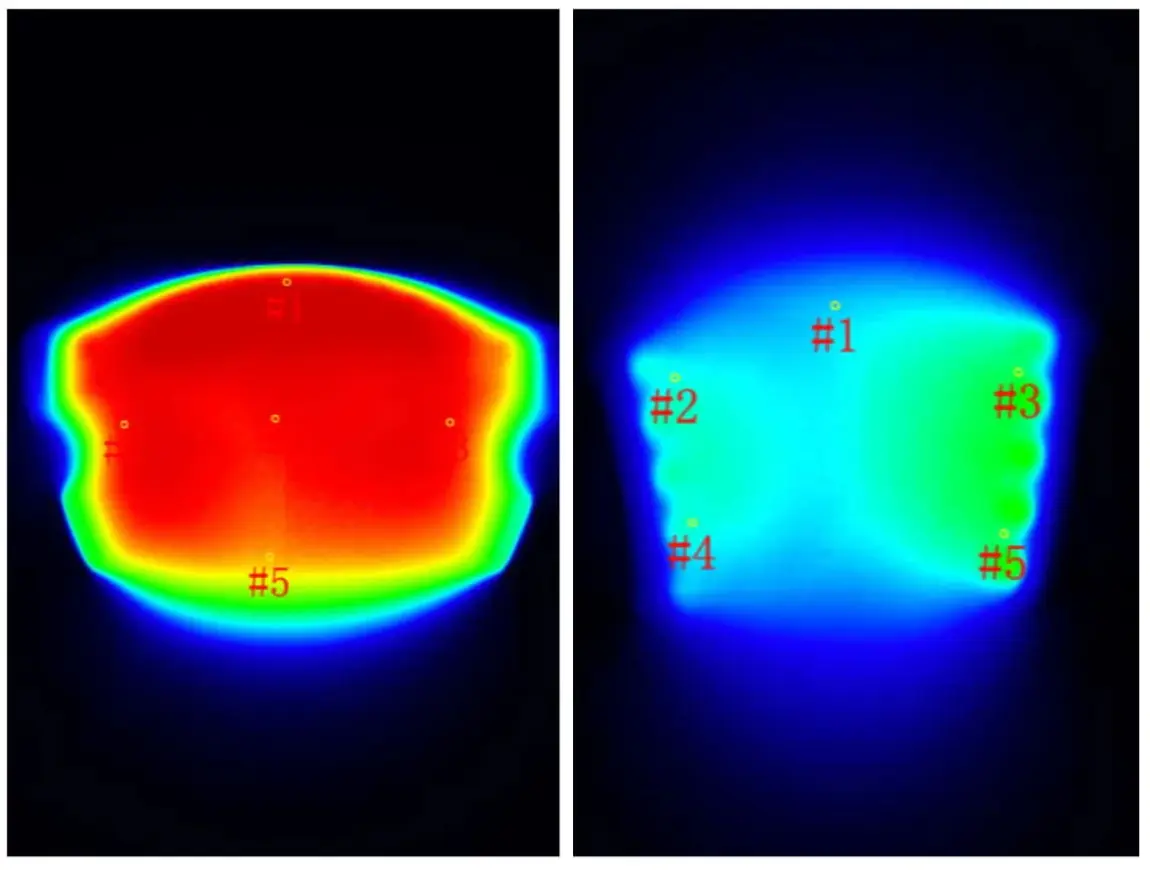
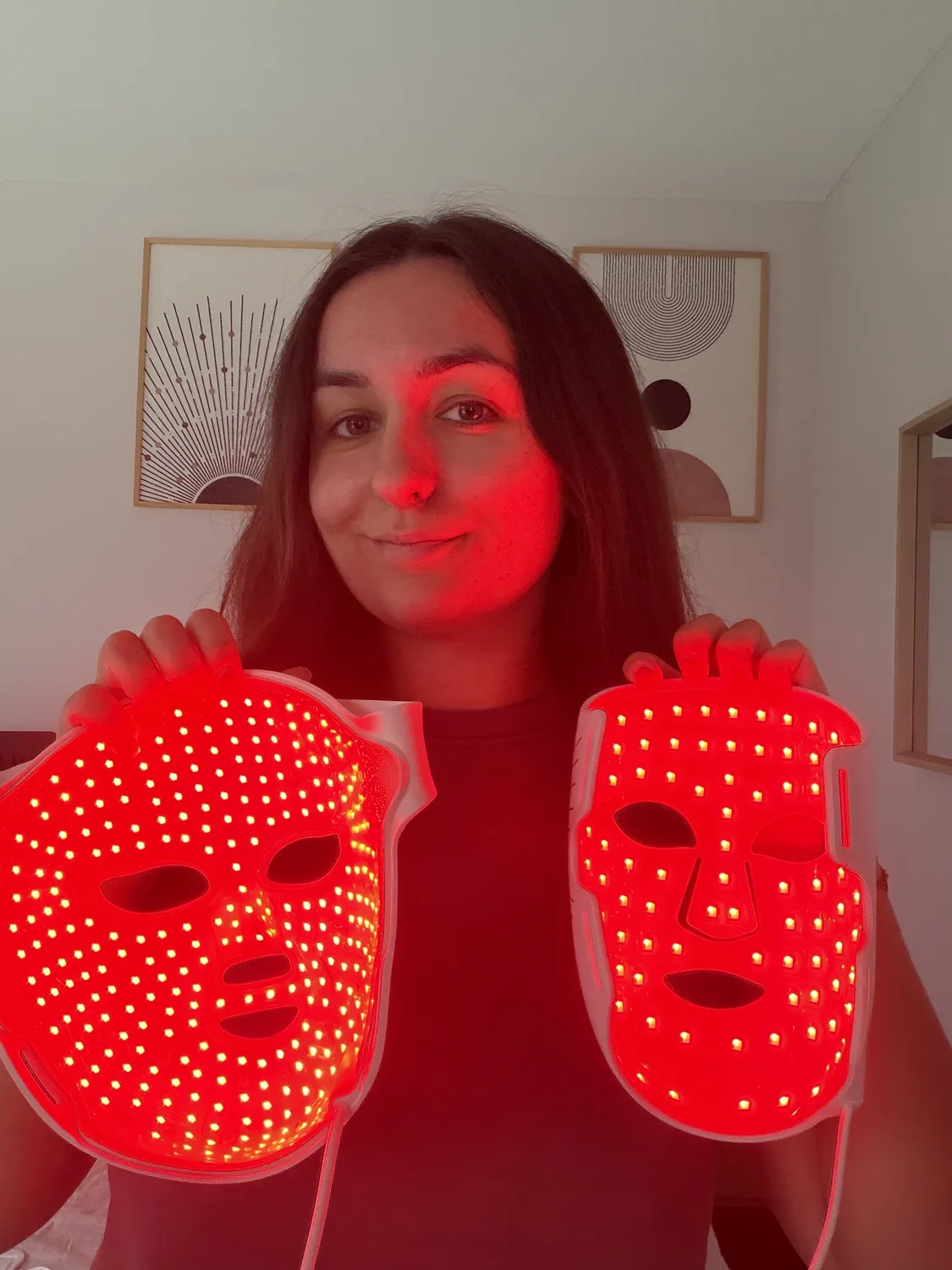
With so few points, the light can’t be even: you get a bright spot in front of each chip and dimmer gaps between them. The image below comes from a study and it shows what I mean by homogeneous coverage compared with a patchy one.
The good news is the shape. Compared with the first faceLITE, the PRO has extensions that reach down to the jaw and the chin, and they do their job. But it’s still a flat panel, so the light crosses a gap of air before it gets to the edges of the nose and the underside of the jaw. A flexible 3D shape molded to the face works much better.
Proof: 4/5
What the brand clearly displays and what I check in the FDA file: wavelengths (in nm), emitted dose, FDA clearance number, product study, safety tests, warranty.
Read my proof guideWhat faceLITE publishes about the PRO
- Published: Wavelengths in nm: 610, 630, 660, 850 and 1070
- Published: Dose you can calculate: 52.1 mW/cm² for 10 minutes
- Published: FDA clearance number, K260598, verifiable in the FDA database
- Published: A study on this model
- Published: Study details: 24 people, 12 weeks, investigator named
- Published: Photobiological safety declared (IEC 62471)
- Published: 2-year guarantee
Proof: 4/5
Is the faceLITE PRO FDA approved?
No, it’s FDA cleared, which is common for LED masks. The clearance is K260598, for full-face wrinkles, and it covers a “5 Wavelength LED Facemask (TN2508)” filed by iSMART Developments. iSMART isn’t a stranger either. Its founder also founded faceLITE, and its FDA establishment listing includes the Omnilux Contour. That explains why faceLITE calls the PRO the “sister product to Omnilux professional” in the product description of is page.
Did the faceLITE PRO study reach its goal?
No, and the FDA file says so. The study’s main goal was an average improvement of at least one grade on the wrinkle scale. It went from 2.1 to 1.4 on average, so 0.7 of a grade, and the summary writes plainly that the mean result “did not achieve the primary endpoint“.
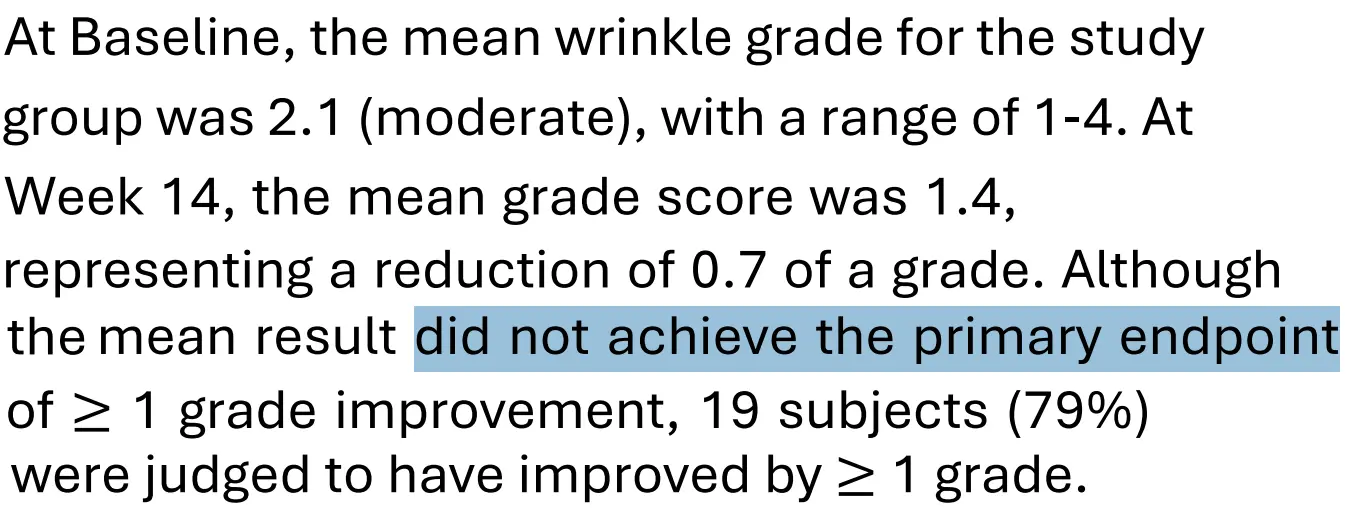
As for the 79% on the product page, it’s the share of people who improved by one grade or more. However, there was no control group, no randomization, and no measuring instrument. Physicians graded the wrinkles by eye, in person and then on blinded photos, and the rest is a questionnaire where “little improvement” counts as an improvement… That’s why I’m taking away a point, because this study is not being conducted properly.
Comfort: 3/5
Fit, weight, heat, eye comfort and minor inconveniences: straps, timer, battery. A mask that becomes a chore to wear several evenings a week scores poorly in these areas, as using it should be a pleasant experience!
Read my comfort guideThe faceLITE PRO is a light, flexible silicone panel, and the Velcro straps hold it in place well for the full 10 minutes. The big change from the first faceLITE is the eye shields, removable silicone cups that sit around the eyes. I much prefer having them, and they protect the eyes well. But they’re surprisingly wide and cover a bit too much of the eye contour, so that skin gets less light.
The chin and jaw extensions work, but to be honest they feel a bit cheap. I’m afraid the connections will break over time.
Does the faceLITE PRO get hot?
A little. I felt a slight warmth during my sessions, like with every LED mask that touches the skin, so nothing worrying. Only the rigid masks that sit away from the face, like the Shark CryoGlow (my review), don’t give me that feeling, but for a bad reason. The product page says there’s “no heat”, though, while the FDA file measured an average rise of 5.1°C (about 9°F) in skin temperature over a 10-minute session.
Value: 1.5/5
The price I paid, when viewed in the context of the results achieved and compared to other masks I have tested, both within this price range and at different price points.
Read my value guideThe faceLITE PRO costs £395 on the brand’s shop, and that’s the only place I found it. If you’re in the US, it ships from the UK in about a week, and the import duties are yours to pay.
But for me the price isn’t the real problem. The faceLITE PRO has the design of the LED masks that came out in 2018: a flat panel, few light points, imprecise LEDs… Recent LED masks have learned from the last few years, with more light points for an even coverage, a shape that sticks to the skin, and more precise LEDs.
In the US as in the UK, the Nooance Elite X600 and the CurrentBody Skin Series 2 (my review) are much better choices for example. Both of them are in my best LED face masks ranking, with their scores.
Safety & support: 2.5/5
Eye protection, build quality, warranty, returns, responsiveness of customer support, and the mask’s ability to remain functional over time.
Read my safety & support guidefaceLITE gives a 2-year guarantee, declares IEC 62471 eye safety testing, and the PRO comes with its eye shields in the box. The original faceLITE had none, and the photo below shows the problem: the light shines straight through the eye openings.
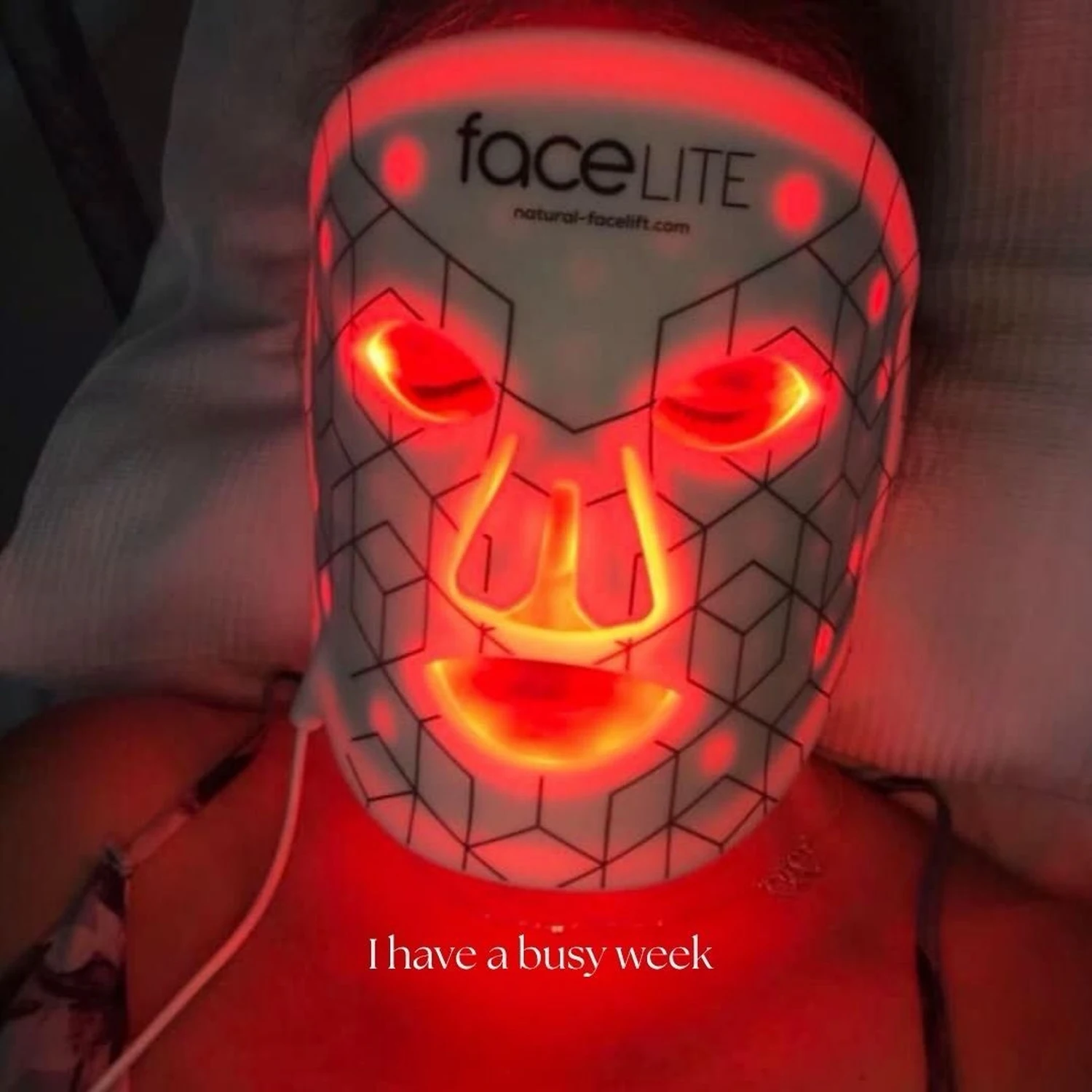
FaceLite says the eyewear is “provided for comfort only” and that wearing it is optional, for the faceLITE and the faceLITE PRO. Yet the PRO’s FDA file calls the same eyewear “mandatory”. Do not skip the eye shields, whatever the FAQ says.
Who shouldn’t buy the faceLITE PRO
Skip this one if you recognize yourself
- You want even light on your whole face. 62 light points on a flat panel can’t give you that.
- You live in the US. It ships from the UK with import duties, and better LED masks are sold at home.
- You already own an Omnilux Contour Face. It’s the same family of flat panel, so don’t expect anything new on your skin.
Am I still using the faceLITE PRO?
Updated November 2026. No. I stopped after 4 weeks and I’m back on my Nooance Elite X600.
I don’t recommend the faceLITE PRO, whatever its price. It’s better than the first faceLITE, but next to the LED masks you can buy today, it’s still a design from another era. If you’re still hesitating, my LED mask picker lines up every LED mask I’ve tested on the same seven criteria, and you can filter by price and shape.
What I still want to know about the faceLITE PRO
I’d love to see how the 52.1 mW/cm² is shared between the five wavelengths, and where on the mask it was measured.
faceLITE PRO LED mask: your questions
Is the faceLITE PRO FDA approved?
No, it’s FDA cleared for full-face wrinkles, under K260598. The file is in the name of iSMART Developments and doesn’t use the faceLITE PRO name, but the specs match.
How many LEDs does the faceLITE PRO have?
faceLITE doesn’t say. I counted 62 light points on the mask, each one a penta-core chip, so 310 LEDs if you count like most brands.
What’s the difference between the faceLITE and the faceLITE PRO?
The PRO has five wavelengths instead of two, 52.1 mW/cm² instead of 30, removable eye shields and extensions for the jaw and the chin. It’s still a flat silicone panel.
Do you need the eye shields with the faceLITE PRO?
Yes. The brand’s FAQ calls them optional, but the PRO’s FDA file calls them mandatory, and I kept them on for my whole test.
Test log
- Exact model
- faceLITE PRO LED Face Mask, Natural Facelift Company (TN2508)”
- How I got it
- Bought on faceliteglobal.com for £395
- Sessions
- 3 a week for 4 weeks, 10 minutes, eye shields on.
- FDA file
- K260598, decided July 24, 2026, iSMART Developments Ltd (Birmingham, UK). 610, 630, 660, 850, 1070 nm ±10 nm, 52.1 mW/cm², 600 s, so 31.3 J/cm². IEC 62471 tested.

About Emilie
I have tested LED masks since 2023. I buy the devices, use them for weeks, and read the spec sheets nobody reads, because this market runs on numbers most brands never publish. Not a dermatologist, and I say so whenever a question needs one.