
I buy the devices I test unless the article says otherwise. Some links and discount codes on this site are paid links: if you buy through one, I earn a commission. It never changes a score or a verdict.
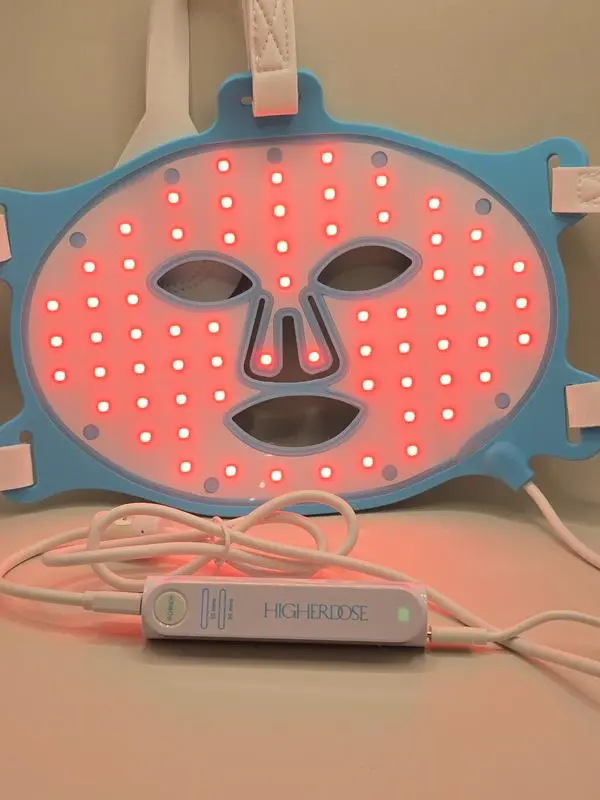
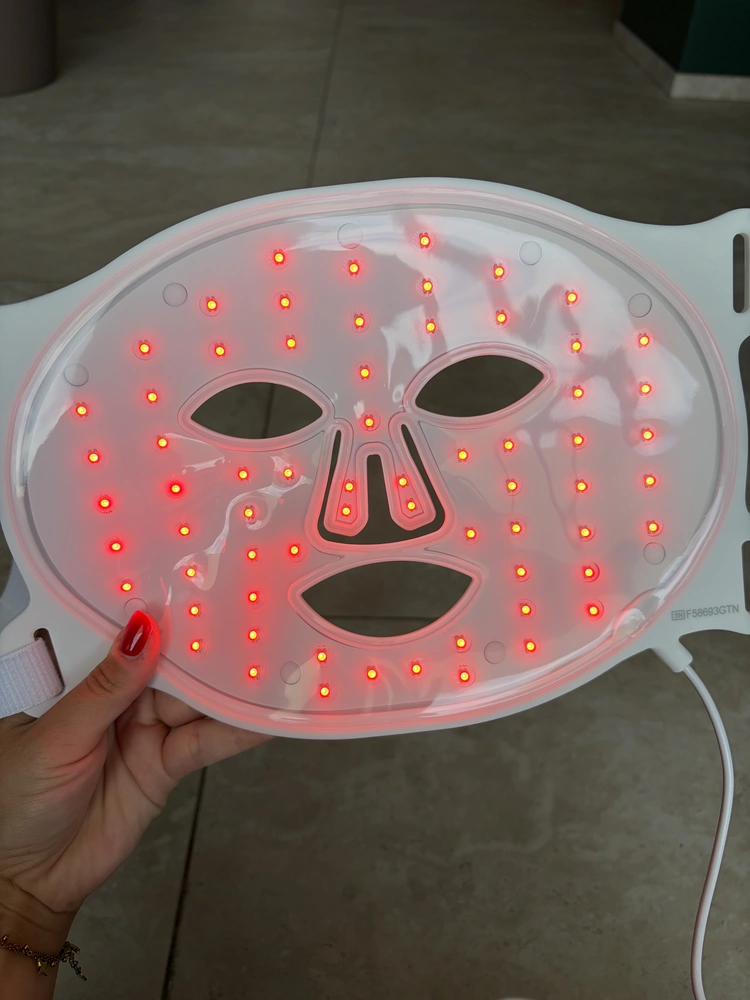
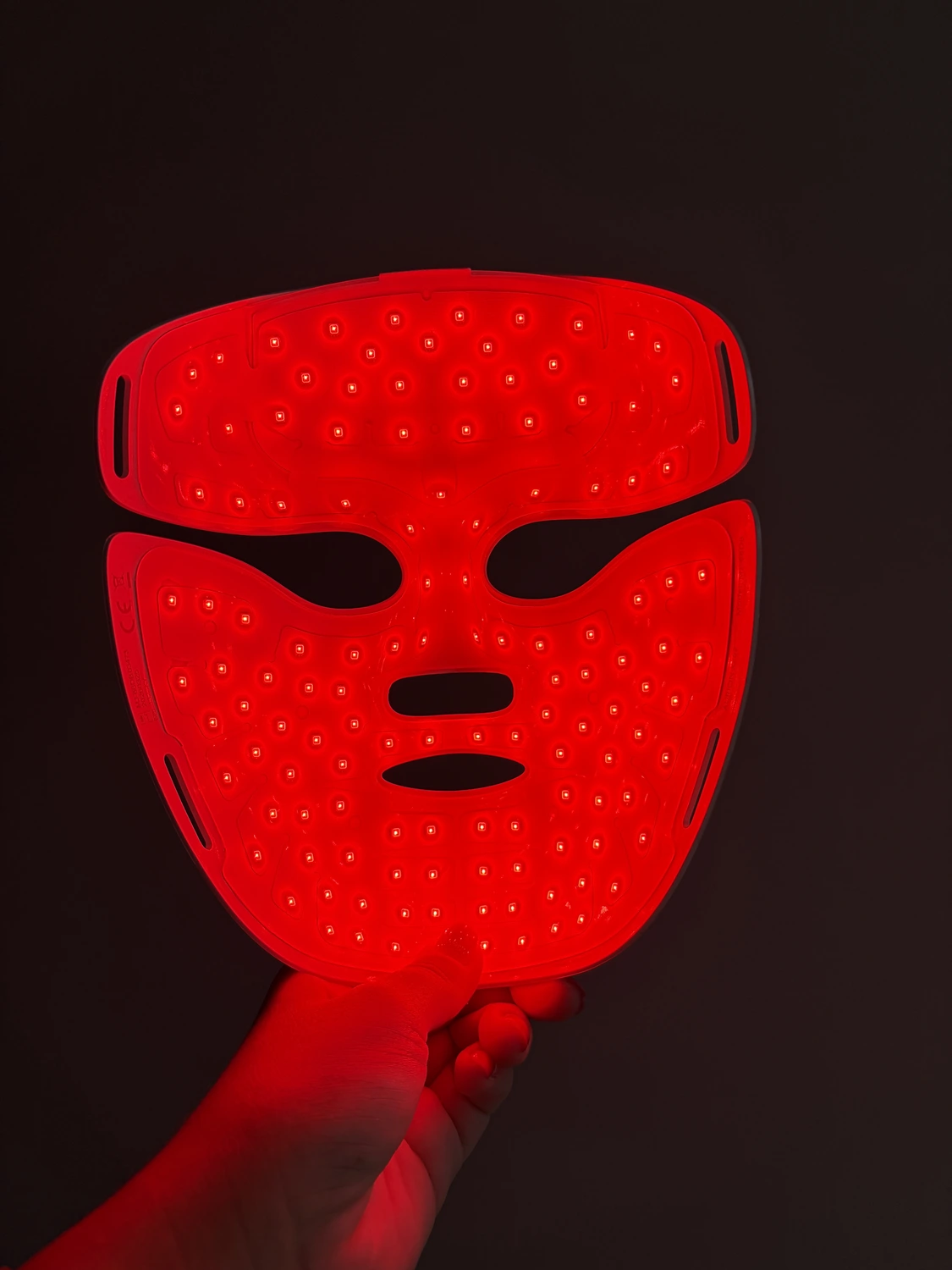
The HigherDOSE Red Light Face Mask is a flexible silicone LED mask sold $349, with 66 light points in red and near-infrared. If that reminds you of another LED mask, you’re right: it looks a lot like the Omnilux Contour Face, a design that dates back to 2019. It’s the same manufacturer, and the same type of flat LED mask that I do not recommend.
Here’s my full review of the HigherDOSE LED mask after 4 weeks of testing, with my score and the LED masks I’d buy instead.
52/100
Shelved since November 2026I used it for 4 weeks, 5 sessions a week, and I saw no result. It’s light and flexible, but it only has 66 light points on a flat panel, like the Omnilux Contour Face from 2019. And with no built-in eye protection, the light tired my eyes too much to read or watch TV.
Buy it if
- You want a light, flexible LED mask that sticks to red and near-infrared.
- You’re fine wearing opaque goggles and doing nothing else for 10 minutes.
Skip it if
- You want to read or watch TV during your session.
- You want light on your nose, your upper lip and your jawline.
- You want an irradiance figure that says where it was measured.
- You already own an Omnilux Contour Face, since it’s almost the same LED mask.
What I tested: the HigherDOSE Red Light Face Mask
I bought the HigherDOSE Red Light Face Mask on the brand’s website for $349. HigherDOSE didn’t send me anything and I have no partnership with them.
I used it for 4 weeks, with 5 sessions a week of 10 minutes each, which is what HigherDOSE recommends. My tests usually last at least 8 weeks (here is how I test LED masks), but to be honest, this is the same LED mask as the Omnilux Contour Face (my review here), which gave me nothing in 8 weeks. So I didn’t want to lose more time on it.
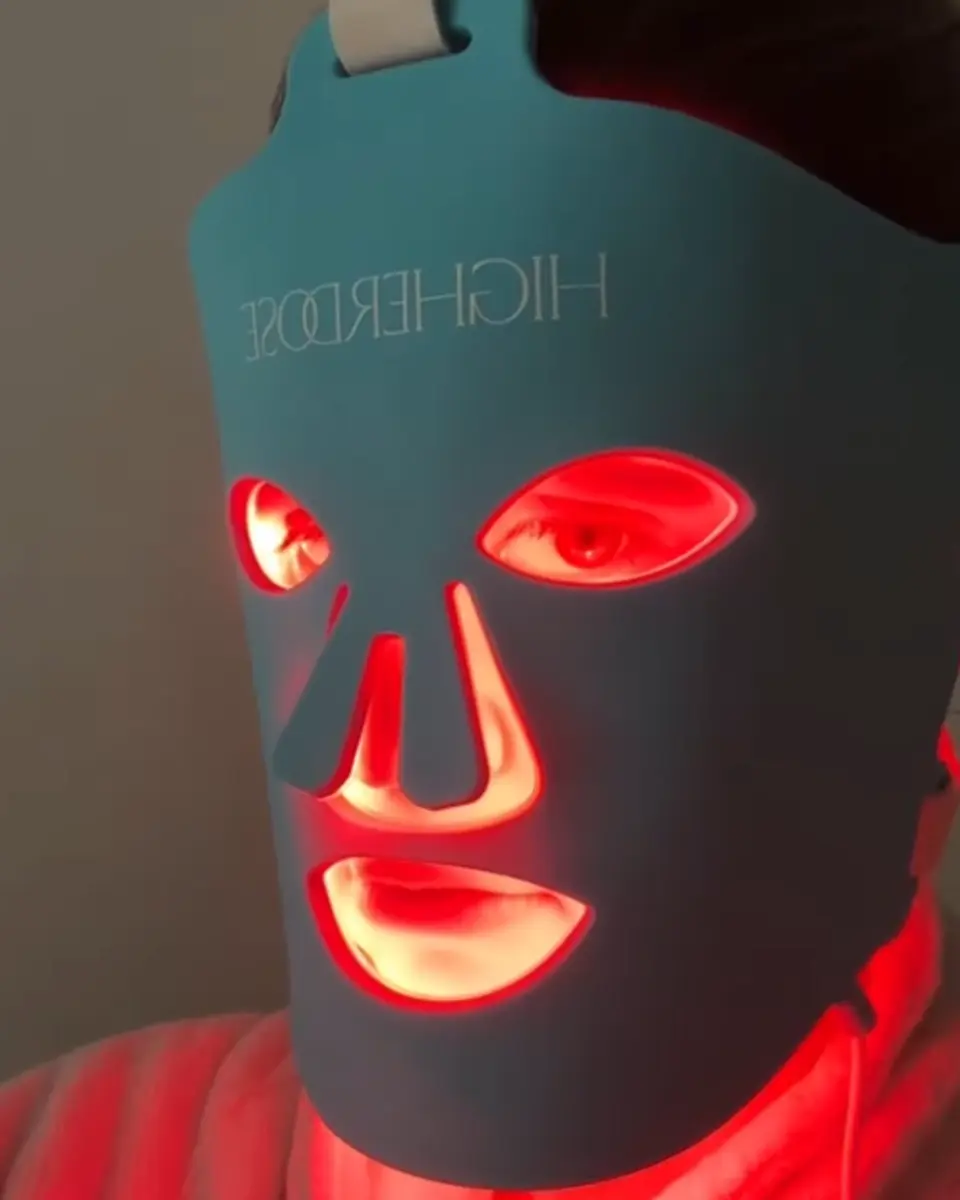
In the box you get the LED mask, its remote, the straps, a charger with travel adapters, a storage bag and a pair of opaque goggles.
Results: 2.5/5
What changed on my face following my test, including my before-and-after photos. I also evaluate the “before-and-after” examples provided by the brand being tested, as well as the results of any studies that may have been conducted on the mask.
Read my results guideMy own results with HigherDOSE Led mask
After 4 weeks, I have no result to show you: no change on my skin tone, my pores or my texture. HigherDOSE writes that most benefits begin to appear after 3 to 4 weeks, so I should have seen at least a first sign.
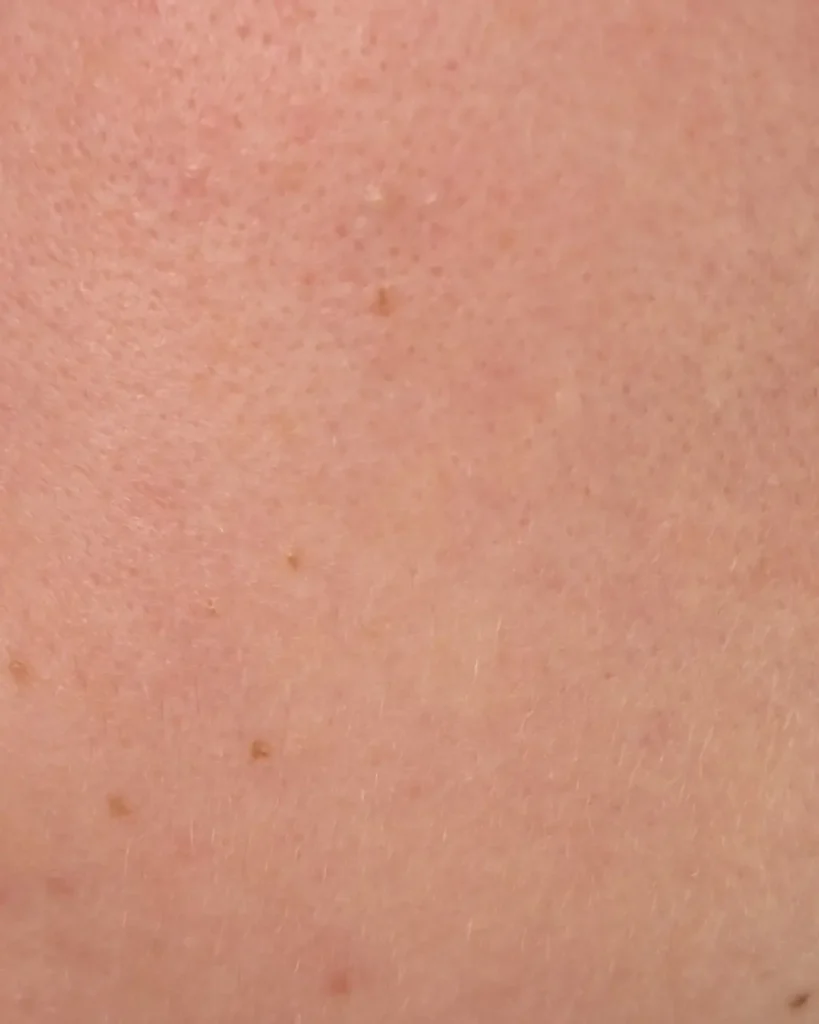
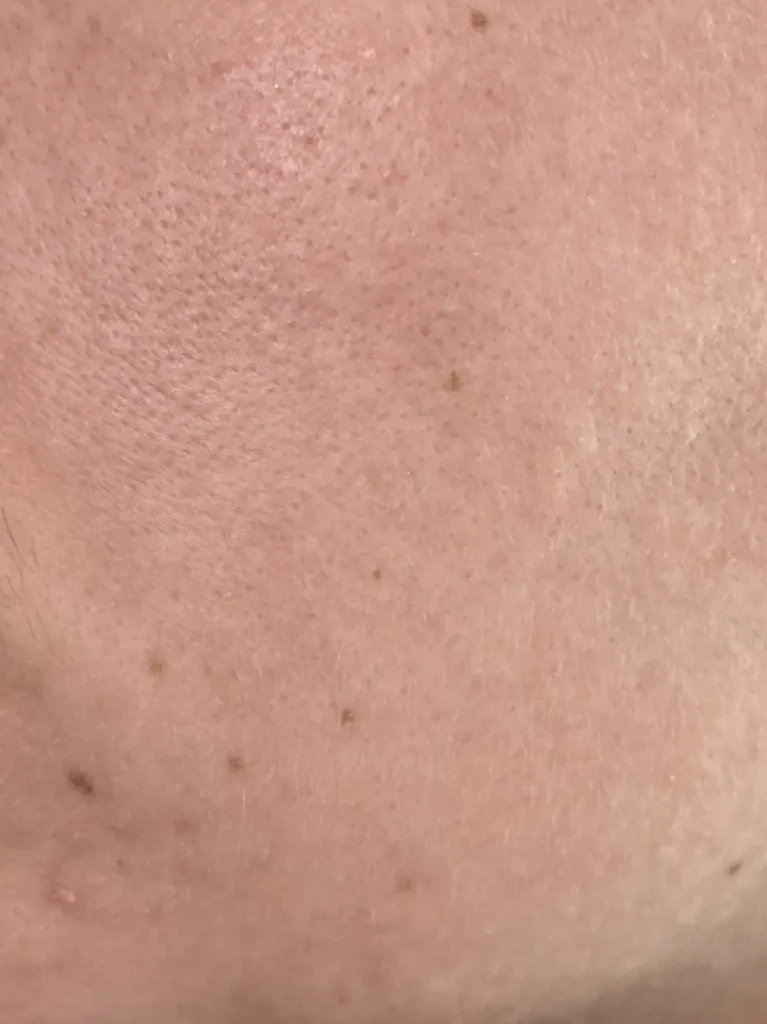
I wasn’t expecting much, because I already tested this design for 8 weeks with the Omnilux, and my skin looked the same at the end. Here are my before-and-after pictures. I even found that my skin had a less attractive complexion at the end of the test, because I was no longer using my usual LED mask.
Higherdose own results
HigherDOSE publishes a real study report on this exact LED mask, and that’s more than many LED mask brands do. It was run by an independent lab (Validated Claim Support, in New Jersey) on 28 women aged 45 to 65, for 8 weeks, with 4 sessions of 10 minutes a week.
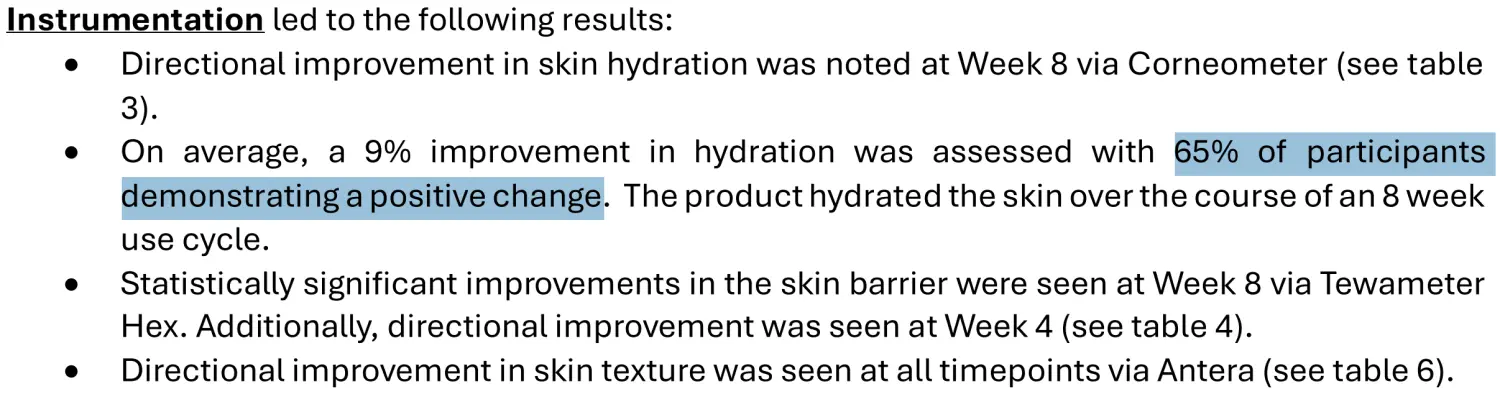
Here is what the study found after 8 weeks:
- Fine lines and wrinkles: -11% on average, graded by an expert, with an improvement for 54% of the women.
- Firmness: -13% and elasticity: -19% on the grading scale (lower is better), graded the same way.
- Skin barrier: -17% of water loss, measured with an instrument.
- 82% of the women said they noticed fewer fine lines, and 93% said their skin felt firmer and smoother (questionnaire).
These numbers are encouraging, but a few points are less convincing:
- There’s no control group, so the study can’t tell what would have happened without the LED mask.
- Hydration (+9%) and skin texture (-4%) aren’t statistically significant, and they were the two other instrument measurements. Yet the product page lists “increase skin hydration” among the clinically proven benefits…
- The “up to 35% reduction in wrinkles” comes from one participant, on a cropped area under one eye.
In my opinion, it’s an honest small study that shows a modest effect on women with established wrinkles (57 years old on average).
Irradiance: 3/5
How much light reaches the skin, in mW/cm²? I evaluate this value, as well as how the information is presented, the conditions under which it was measured, and the total dose received in a single session. If the brand does not communicate it, I give it a severe rating.
Read my irradiance guideHigherDOSE publishes 50 mW/cm² in total:
- 26 for the red light at 630 nm,
- 24 for the near-infrared at 830 nm.
That’s a good number on paper, and I like that the brand gives it for each wavelength. Unfortunately, HigherDOSE doesn’t say where this number was measured: at the surface of the LED, or on the skin? It’s a shame, because it changes everything.
- HigherDOSE (no measurement condition) 50
- Nooance Elite X600 (at the skin) 50
- Nooance Aurion X252 45
- CurrentBody Series 2 30
- Omnilux Contour Face about 30
Personally, I don’t think it’s measured on the skin. At 50 mW/cm², one 10-minute session gives 30 J/cm², which is already the most I’d want in a single session. With the 5 sessions a week that HigherDOSE recommends, you’d reach 150 J/cm² a week, when the dose I aim for is around 90.
So either the recommended routine is too much, or the light that really reaches the skin is lower than 50 mW/cm²… I think it’s the second one.
HigherDOSE LED mask: 10 or 20 minutes?
The remote lets you choose between a 10-minute and a 20-minute session, and it surprised me a lot. A session twice as long means twice the dose! So if 20 minutes is the right dose, 10 minutes isn’t enough, and if 10 minutes is enough, 20 is too much. The FDA file only describes the 10-minute session, so that’s the one I used during my test.
Coverage: 2/5
How many points of light does the mask actually feature, how evenly are they distributed, and which areas remain uncovered? Note that I am counting “bulbs” and not LEDs, because the number of LEDs often includes two, three or more diodes per bulb, which inflates the apparent coverage area.
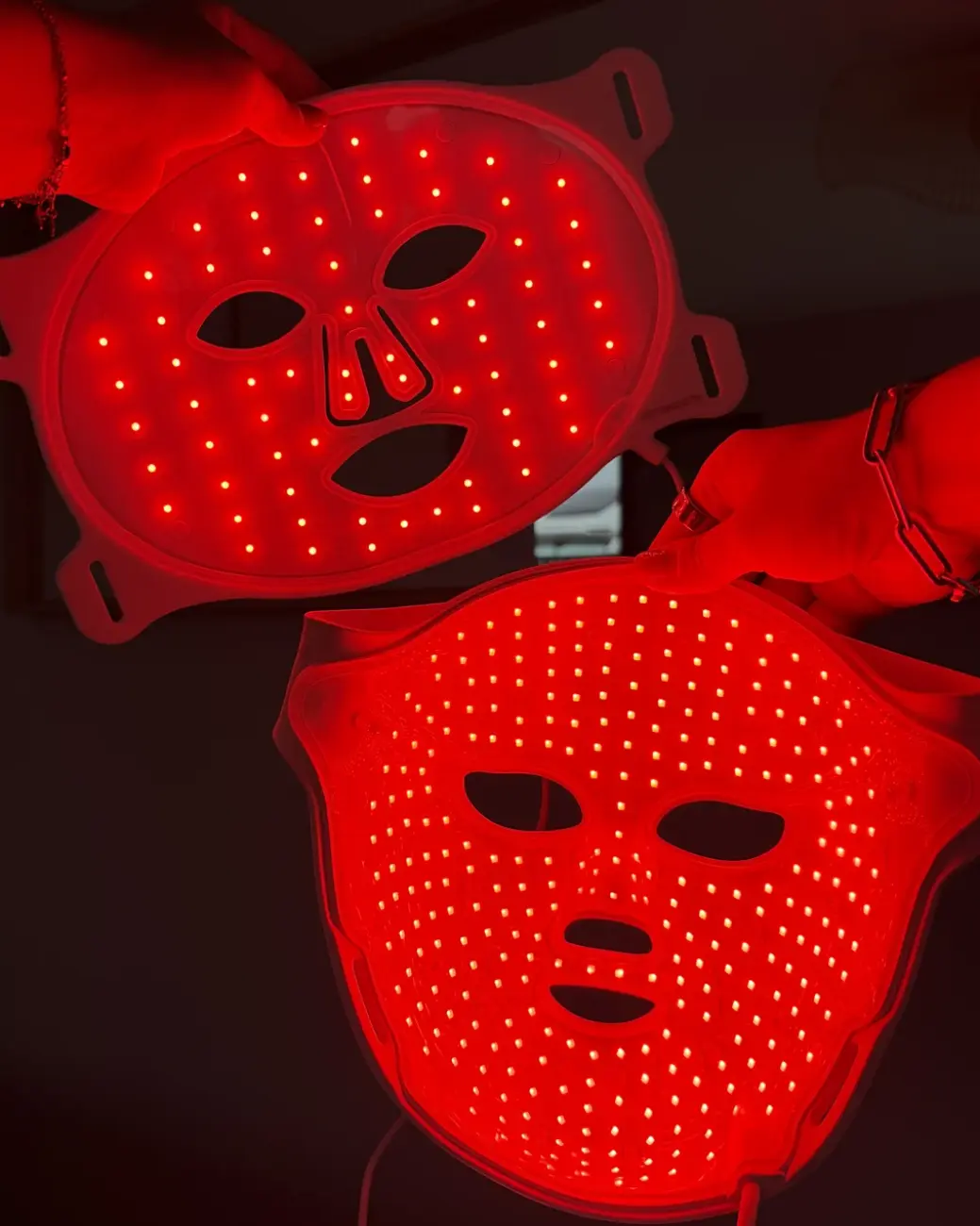
Read my coverage guideThe HigherDOSE LED mask has 66 light points, each one holding 2 LEDs (one red, one near-infrared), which is how the brand gets to 132 LEDs. HigherDOSE says so itself on its page, and that’s honest because many brands do not explain that clearly.
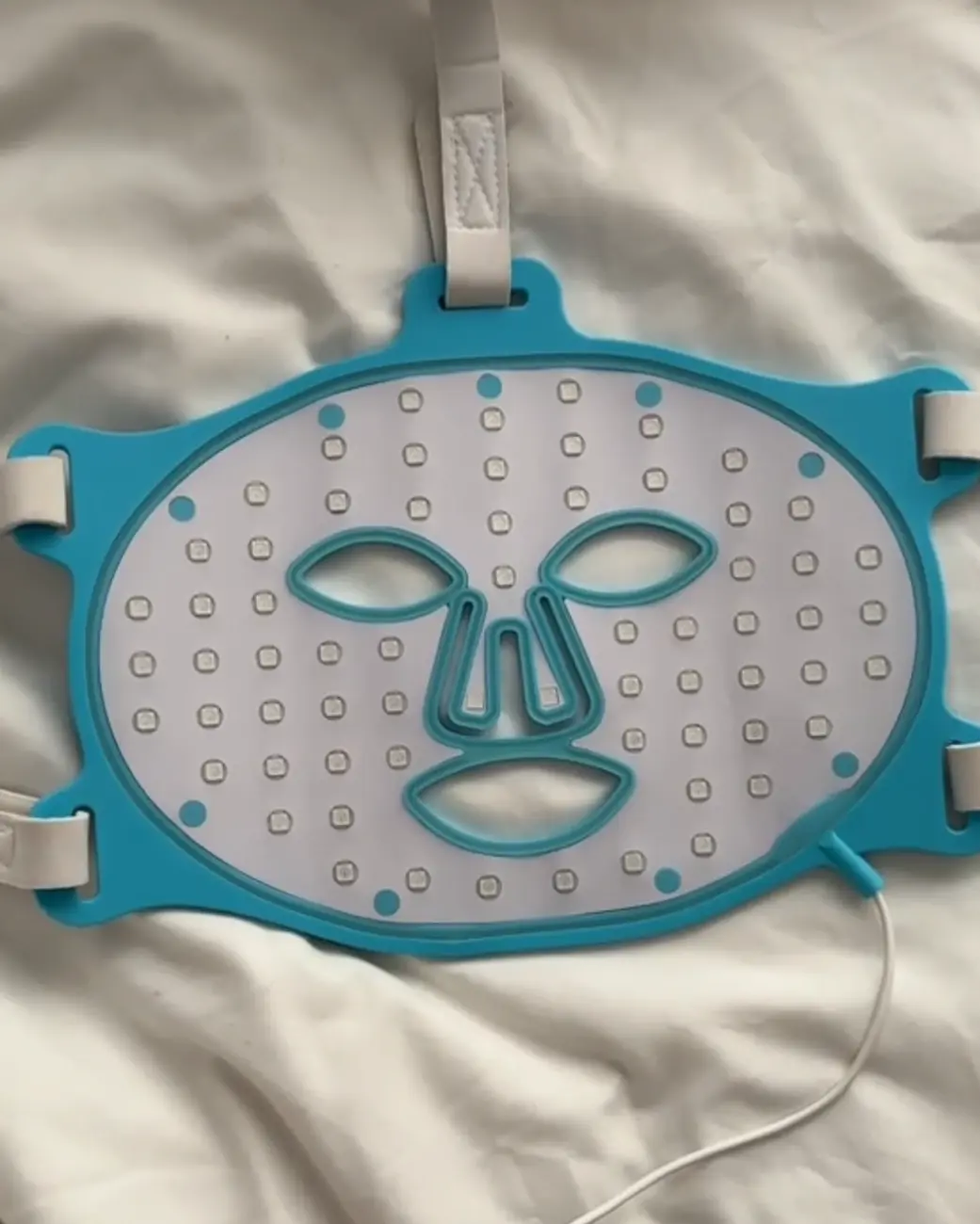
But 66 light points is a very low number for a full face. It’s exactly the count of the Omnilux Contour Face, which I scored 52/100, and I found the same flaws here:
- The nose only gets 2 LEDs, one on each side, and the ridge on top is open, so it receives almost nothing.
- The upper lip has no LED at all, even though it’s one of the first places where lines appear (smoker lines).
- The jawline and the sides of the face are poorly covered, because the panel is flat and doesn’t wrap around the face.
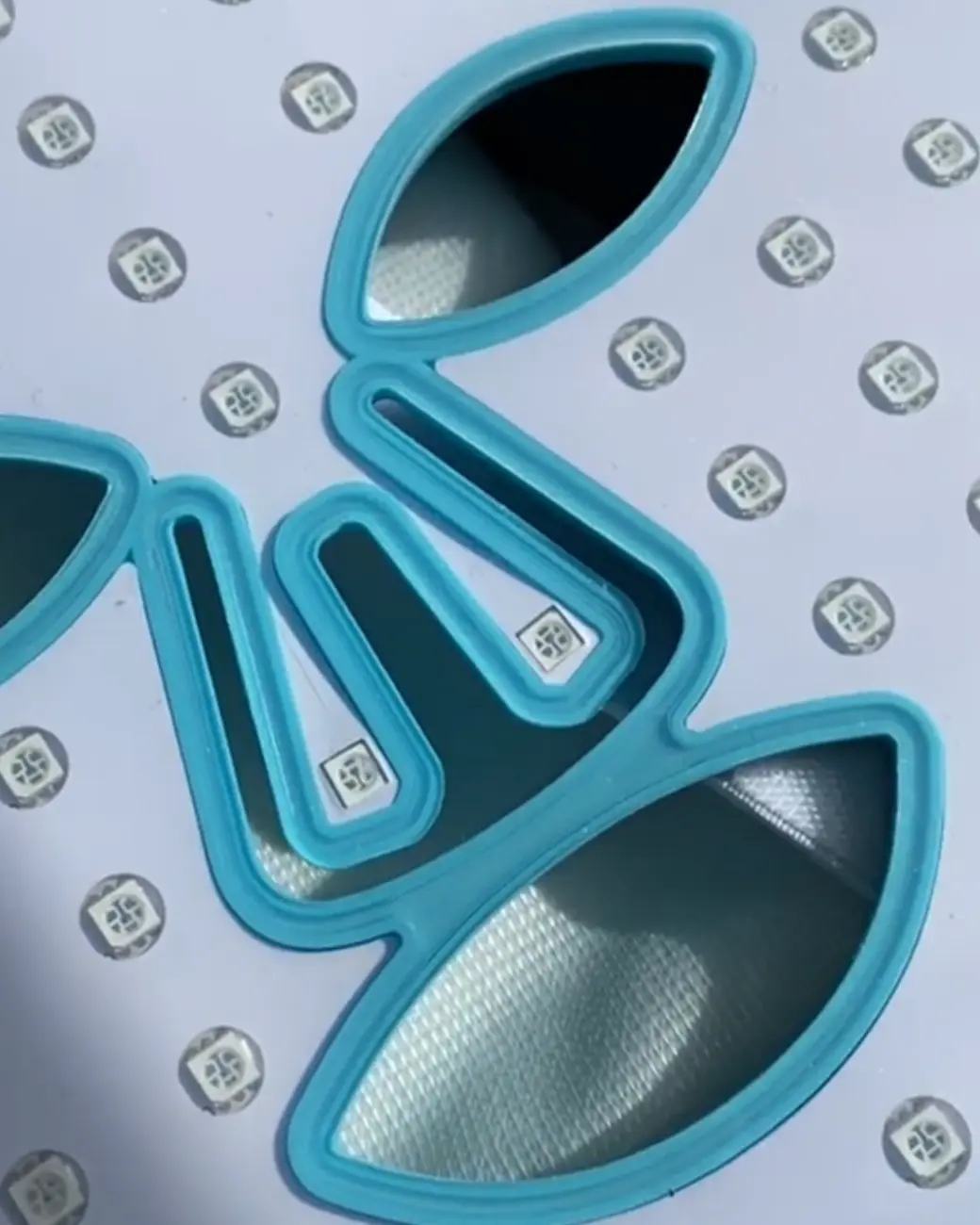
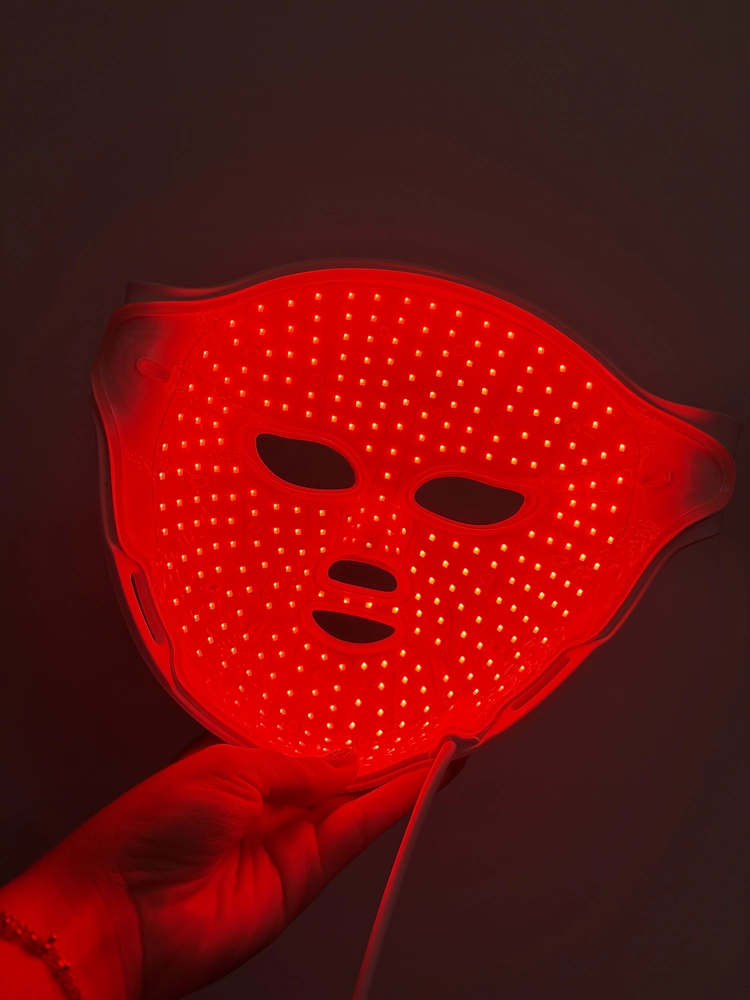
For comparison, the Nooance Aurion X252 (my review) has 126 light points and the Nooance Elite X600 has 300, both on a shell that follows the shape of the face.
Proof: 3.5/5
What the brand clearly displays and what I check in the FDA file: wavelengths (in nm), emitted dose, FDA clearance number, product study, safety tests, warranty.
Read my proof guideWhat HigherDOSE publishes about its LED mask
- Published: Wavelengths in nm: 630 and 830
- Published: Dose per session can be calculated: 30 J/cm² in 10 minutes on the published figure
- Missing: FDA clearance number on the product page (K241933, found in the FDA database)
- Published: Clinical study run on this exact LED mask
- Published: Study documented: 28 participants, 8 weeks, named lab and instruments
- Missing: Photobiological safety test on the product page (it’s only in the FDA file)
- Published: Warranty: 1 year, with a dedicated page
Proof: 3.5/5
HigherDOSE gives the basics: wavelengths in nm, irradiance, session length and a warranty. That’s already more than many LED mask brands.
But the product page says “FDA-cleared” without giving a number. I found the file myself: it’s K241933, and it covers this exact LED mask for full-face wrinkles. The file even lists the Omnilux’s own clearance among the LED masks it was compared to, so the resemblance is clearly stated!
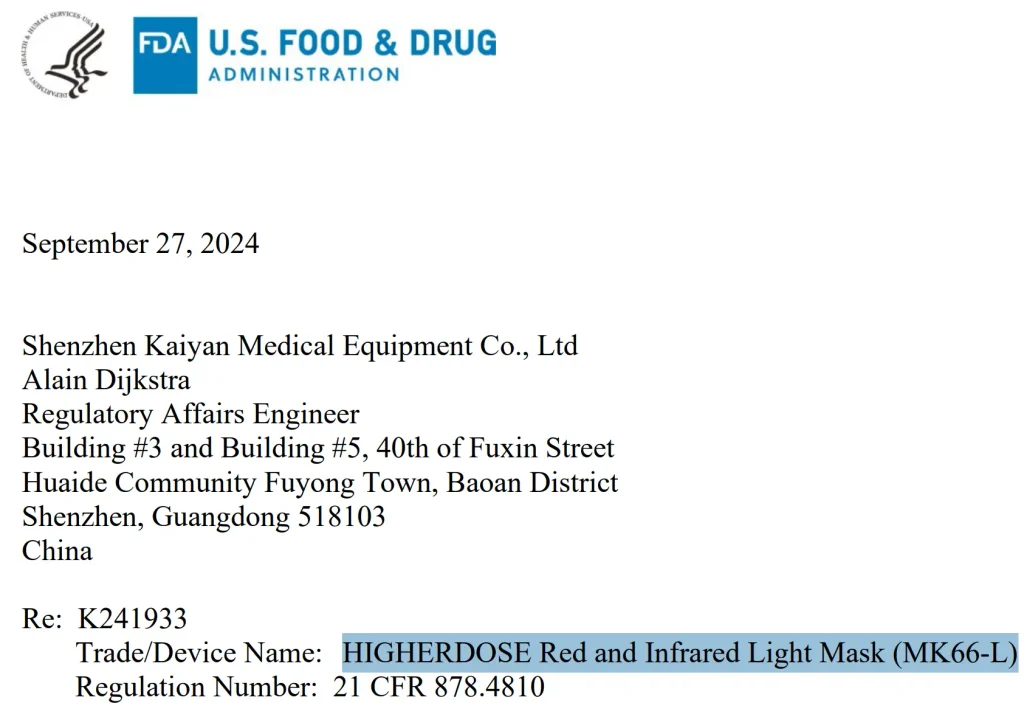
The page also says “clinically proven”. However, the FDA file states that no clinical testing was needed for the clearance, which was granted because the LED mask is similar to older ones. So the claim doesn’t come from the FDA: it comes from the HigherDOSE study I detailed in Results.
Comfort: 2.5/5
Fit, weight, heat, eye comfort and minor inconveniences: straps, timer, battery. A mask that becomes a chore to wear several evenings a week scores poorly in these areas, as using it should be a pleasant experience!
Read my comfort guideThe HigherDOSE LED mask is flat, flexible and light, so it’s more pleasant to wear than a big rigid shell. That’s the good part. The fit is average, though. These are the old straps you find on this type of flat LED mask, and they don’t hold the panel very well on the face.
Do you need eye protection with the HigherDOSE LED mask?
This is the big flaw for me. The HigherDOSE LED mask has no built-in eye protection: the eye holes are simply open, with LEDs all around. HigherDOSE ships opaque goggles in the box, like the ones you wear in a beauty clinic. I used them, but they reminded me too much of clinic sessions, when the whole point of an at-home LED mask is to be comfortable: you can move, read, watch TV… With the goggles on, you can’t see anything, so you lose all of that.
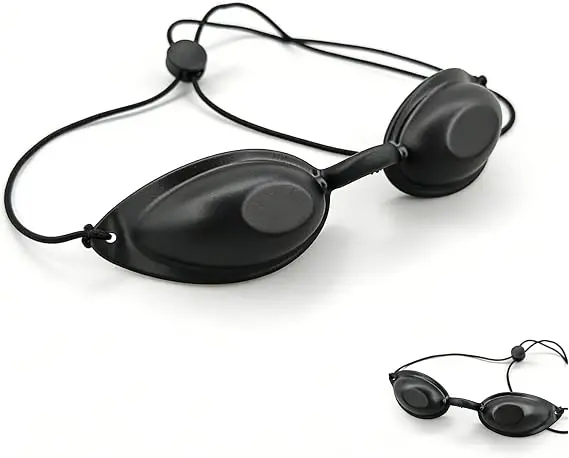
So I often just closed my eyes. Sometimes I kept them open anyway, but only during the day, because at night the contrast with the red light really hurt my eyes. The eye safety of LED masks is a real topic, and I wouldn’t keep my eyes open with this one.
The HigherDOSE remote feels cheap
Honestly, it’s one of the worst remotes I’ve tested. The plastic feels cheap and I doubt it will last for years.
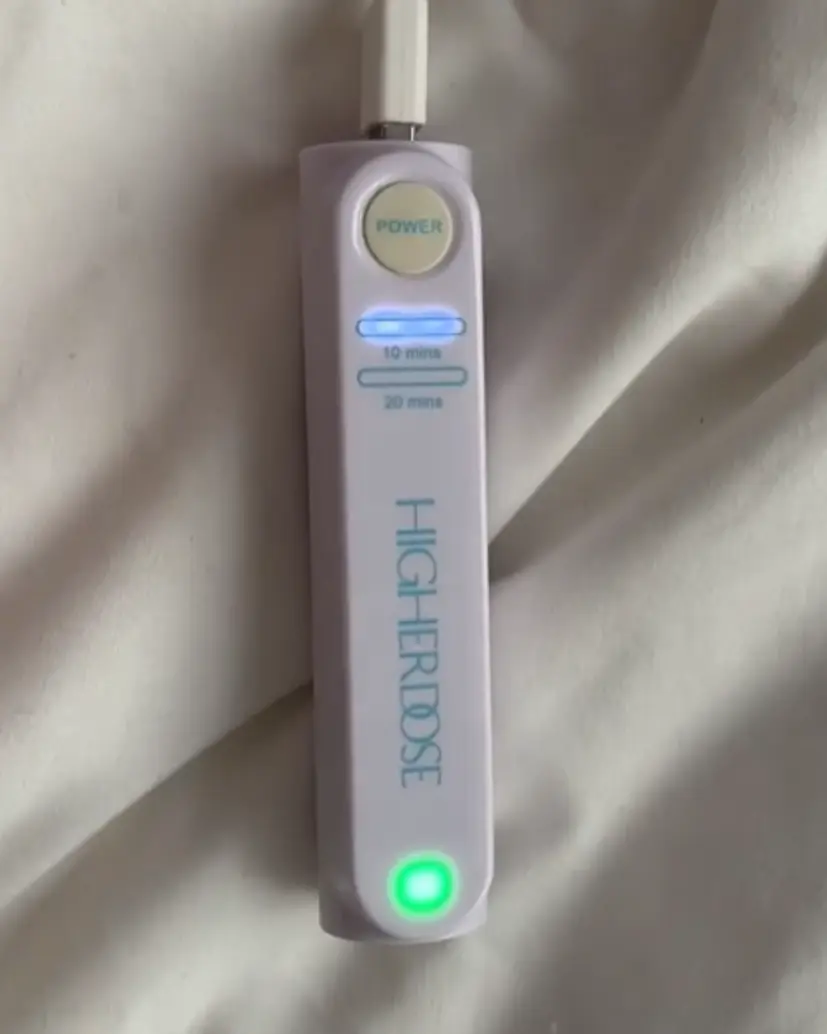
It has no timer display, only two lights for 10 and 20 minutes, so you never know how much time is left. The battery is small too: HigherDOSE announces up to ten 10-minute sessions per charge, and I got about 8. With 5 sessions a week, I was recharging it all the time.
Value: 2/5
The price I paid, when viewed in the context of the results achieved and compared to other masks I have tested, both within this price range and at different price points.
Read my value guideAt $349, the HigherDOSE LED mask isn’t the most expensive one, but you pay for a design from 2019: 66 light points, a flat panel and no eye protection.
For $100 more, the Nooance Aurion X252 costs $449 and gives you almost twice as many light points, a shell that fits the face and eye shields. I scored it 84/100, and it’s a much better use of your money. You can also check my ranking of the best LED masks to compare the prices.
Safety & support: 2.5/5
Eye protection, build quality, warranty, returns, responsiveness of customer support, and the mask’s ability to remain functional over time.
Read my safety & support guideThe goggles are in the box, which is better than nothing, but an LED mask at this price should protect the eyes by itself…
On the support side, HigherDOSE gives a 1-year warranty and shows a 120-day money back guarantee on the product page. That’s correct, but 1 year is short when the remote already feels fragile out of the box.
Who shouldn’t buy the HigherDOSE Red Light Face Mask
Skip this one if you recognize yourself
- You want to do something else during your session. With the goggles you can’t see, and without them the light tires the eyes.
- You want to work on the lines around your mouth or on your jawline. There’s no LED above the upper lip, and the flat panel doesn’t reach the edges of the face.
- You already own an Omnilux Contour Face. Same 66 light points, same wavelengths, same flat shape: you’d buy the same LED mask twice.
- You can spend $100 more. More recent LED masks have better coverage, eye protection and clearer irradiance figures.
Am I still using the HigherDOSE LED mask?
Updated November 2026. No. I put it away at the end of my 4 weeks of testing, and I use the Nooance Elite X600 for my own routine.
I don’t recommend the HigherDOSE LED mask. This design was a good first generation when at-home LED masks arrived, before 2020. Today, it’s better to choose a more recent LED mask with better specs: better coverage, measured results and a clear irradiance figure.
If your budget is around $400, I’d look at the Nooance Aurion X252. And if you’re still hesitating between several models, my LED mask picker lets you filter all the LED masks I’ve tested by price, shape and light colors.
HigherDOSE Red Light Face Mask: your questions
Is the HigherDOSE LED mask FDA approved?
No, it’s FDA cleared, which is common for LED masks. The file is K241933 and it covers this LED mask for full-face wrinkles. I explain the difference in my guide on what FDA cleared proves.
Is the HigherDOSE LED mask the same as the Omnilux?
Almost. Both are flat, flexible silicone LED masks with 66 light points in red and near-infrared, and both left my nose, my upper lip and my jawline poorly covered. The main difference is that HigherDOSE puts opaque goggles in the box.
Should I use the HigherDOSE LED mask for 10 or 20 minutes?
I used the 10-minute session, because it’s the only one described in the FDA file. A 20-minute session gives twice the dose, and HigherDOSE doesn’t explain why you would need it.
Can I keep my eyes open with the HigherDOSE LED mask?
I wouldn’t. The eye holes are open with LEDs all around, and the light tired my eyes, especially at night. HigherDOSE ships opaque goggles in the box, but you can’t see anything with them.
Test log
- Exact model
- HigherDOSE Red Light Face Mask, model MK66-L, 630 nm and 830 nm, 66 dual-core LEDs (132 diodes), remote with a 2,600 mAh battery
- How I got it
- Bought on Higherdose’s online shop for $349, no partnership with HigherDOSE.
- Test window
- 4 weeks, ended in November 2026
- Brand study
- Validated Claim Support (Teaneck, New Jersey), June to August 2024, 30 women enrolled and 28 completed, aged 45 to 65, no control group, 4 sessions of 10 minutes a week for 8 weeks. Expert grading at week 8: wrinkles -11.41%, firmness -13.43%, elasticity -18.66% (all p<0.05). Instruments: water loss -16.64% (p=0.012), hydration +8.56% (p=0.133), roughness -4.06% (p=0.087). Photos on a subset of 5. The report states it is not intended for submission to the FDA.
- FDA file
- K241933, cleared September 27, 2024, submitted by Shenzhen Kaiyan Medical Equipment with HigherDOSE LLC as distributor. Predicates include K191629, the clearance the Omnilux Contour Face is sold under.

About Emilie
I have tested LED masks since 2023. I buy the devices, use them for weeks, and read the spec sheets nobody reads, because this market runs on numbers most brands never publish. Not a dermatologist, and I say so whenever a question needs one.