I buy the devices I test unless the article says otherwise. Some links and discount codes on this site are paid links: if you buy through one, I earn a commission. It never changes a score or a verdict.
The iRestore Laser Face Mask Pro is one of the few LED mask I have tested that also carries lasers: 150 lasers, next to 650 LEDs, inside the same rigid shell as the Illumina I reviewed in August. I wore it for 8 weeks, 3 sessions a week, in the red and infrared mode only.
So here is what 24 sessions did to my skin, what the lasers actually add for a LED mask, and my full review of a mask that costs twice what the previous Illumina model did.
64/100
Shelved since October 2026I saw no change on my skin, in either direction. The iRestore Laser Face Mask Pro increases the number of LEDs and publishes its irradiance, but the shell still hovers off the face, and the lasers don’t change what red light does to skin.
Buy it if
- You want to keep your eyes open during a session, and you accept a band of face with no light over it in exchange.
- You want the densest array iRestore makes, with 378 light points instead of 120.
- You want 100 days to try it on your own face before you commit.
Skip it if
- You expect the lasers to do something red LEDs can’t. The research doesn’t back that up.
- You want a mask that sits on your skin. This one hovers, chin and jaw included.
- You want an FDA clearance for the exact model you are buying. There is none.
What I tested: the iRestore Laser Face Mask Pro
I tested the iRestore Laser Face Mask Pro, item number ID-615, the US version sold on iRestore’s site. I bought it myself, there is no affiliate link or discount code in this article. The mask lists at $1,099 and sells at $799 very often (I paid it that price).
I ran it for 8 weeks, from September to October 2026, 3 evenings a week, 10 minutes each, so 24 sessions. That’s 3 a week rather than the 5 I used on the iRestore Illumina LED mask (my review of this cheaper LED mask), because iRestore now publishes an irradiance, 70 mW/cm² for the red and infrared mode, and my grid sets the frequency from that figure.
I stayed in Mode 1, “Anti-Aging,” for all 24 sessions. I turned on the other 4 modes only to film them, as you can see below, but never during a session, and I’ll explain why “rainbow” LED masks aren’t useful.
Results: 2.5/5
What changed on my face following my test, including my before-and-after photos. I also evaluate the “before-and-after” examples provided by the brand being tested, as well as the results of any studies that may have been conducted on the mask.
Read my results guideNothing changed on my skin in 8 weeks, and nothing got worse either. This is indeed a good thing because I run red light therapy on my face all year and a bad LED mask shows up as a step backwards within a few weeks: dryness, dullness, a few more spots along the jaw…
The Illumina Face Mask Pro did none of that. It held my skin where the Nooance X600 had left it, and that’s a return to neutral.
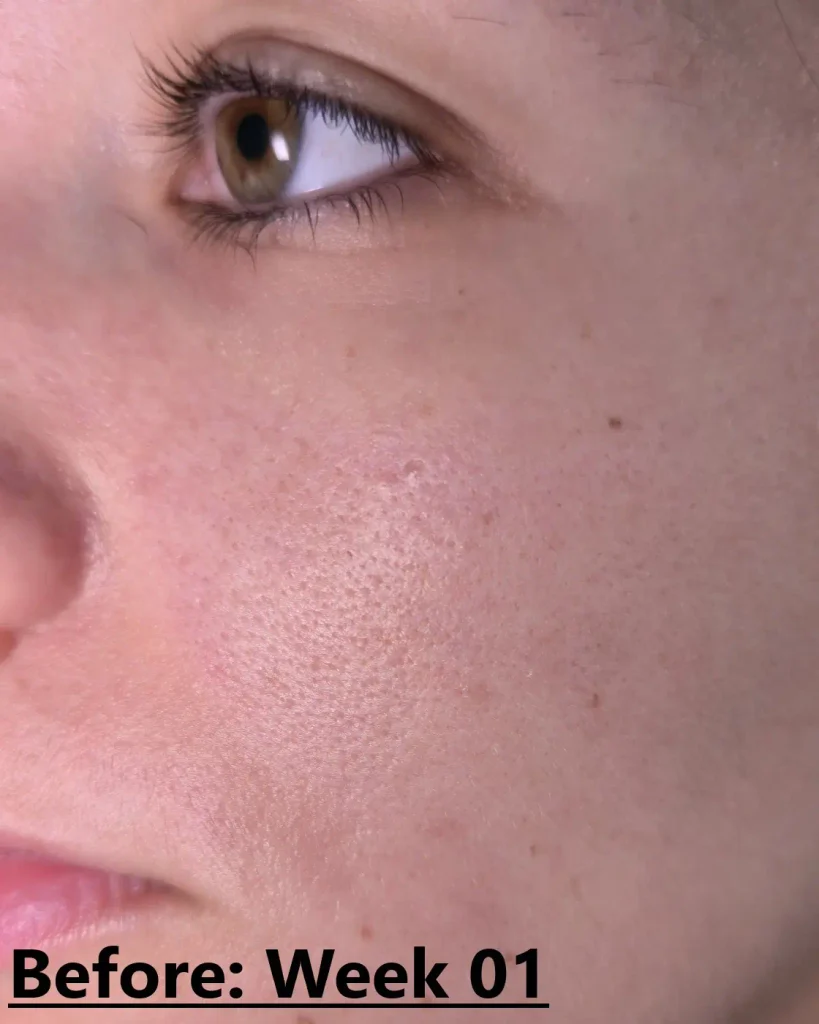
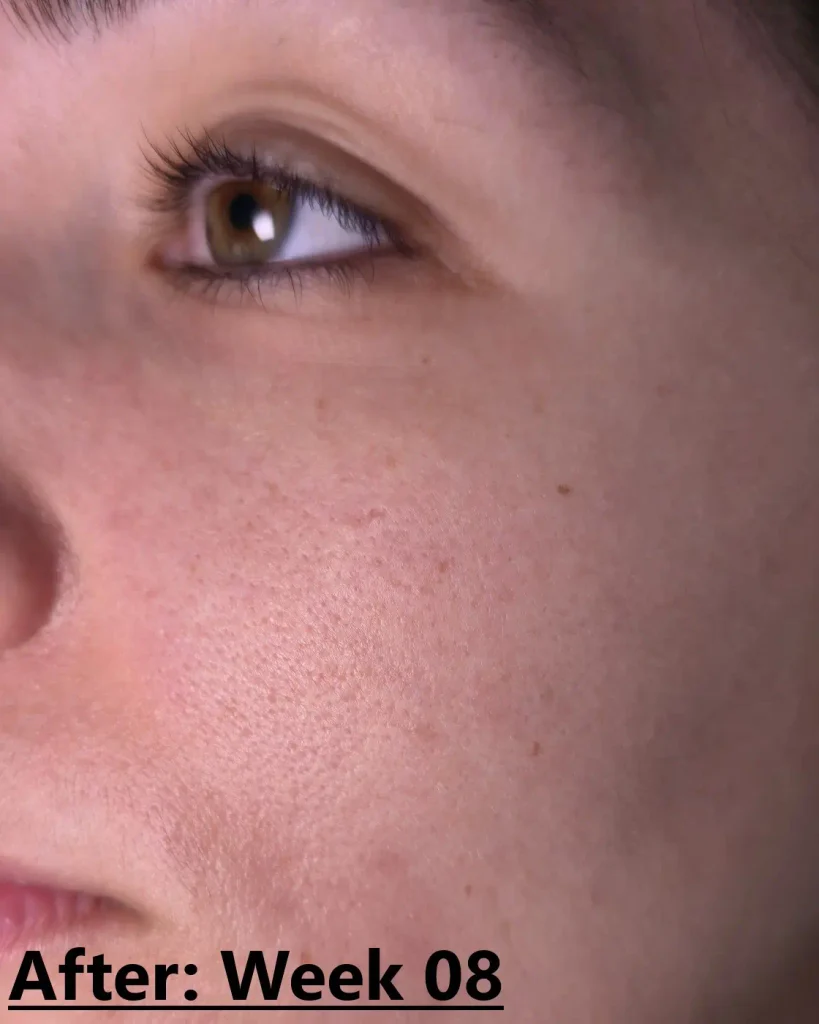
But the rest of the “Results” note comes from what the brand can show, and iRestore is not as good as expected on that point. For this LED mask, iRestore shows nothing of its own.
Every figure on the product page (87% smoother wrinkles, 83% on breakouts…) carries a footnote: based on a study of the Illumina Face Mask and the Neck & Chest Mask, 38 women, 12 weeks. That is the registered study, NCT07025837, I already took apart in my Illumina review…
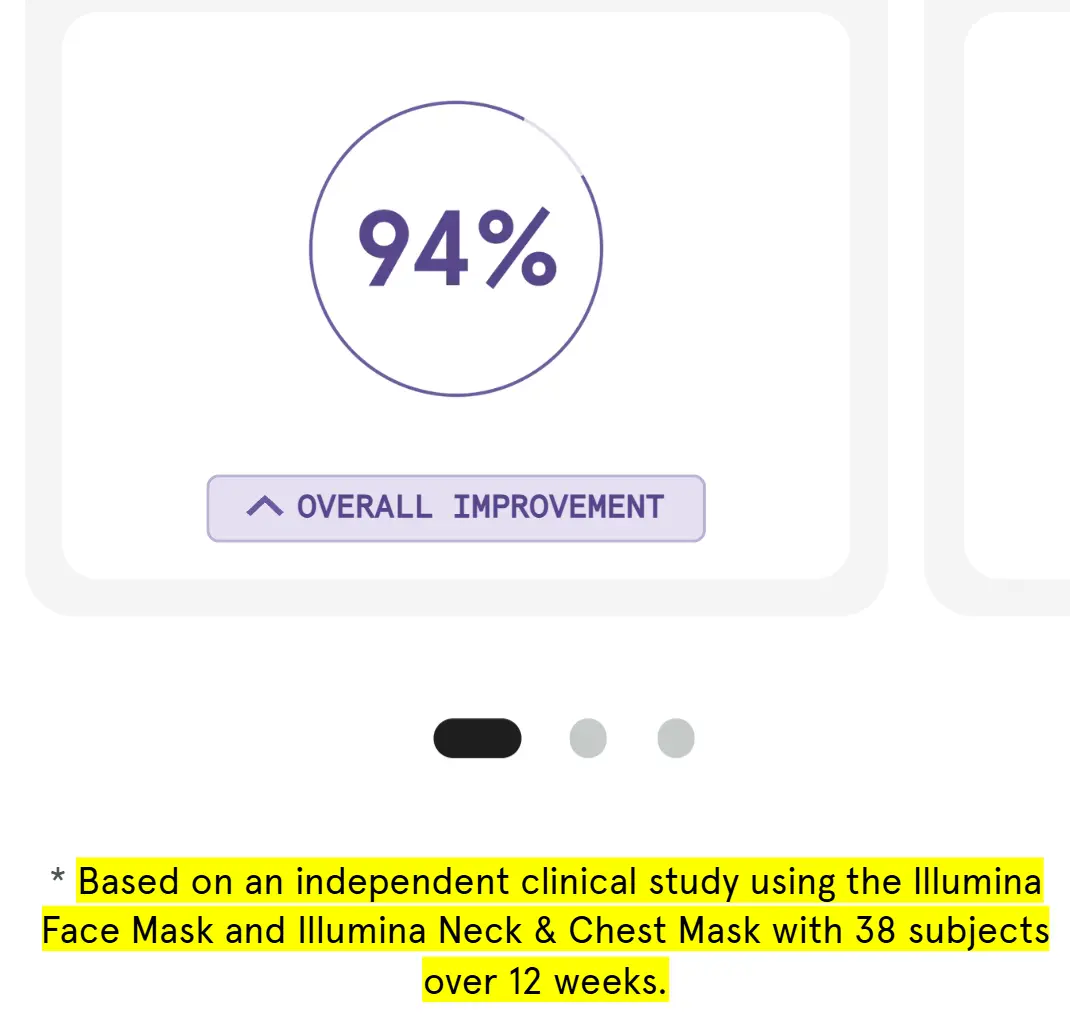
This is a problem for me, because this study only used the red and near-infrared LEDs from the previous models. It says nothing about lasers or the other five wavelengths, so I don’t know what the real difference is between these additions and the previous model.
Irradiance: 4/5
How much light reaches the skin, in mW/cm²? I evaluate this value, as well as how the information is presented, the conditions under which it was measured, and the total dose received in a single session. If the brand does not communicate it, I give it a severe rating.
Read my irradiance guideiRestore publishes an irradiance this time, one per mode:
- 70 mW/cm² in Mode 1,
- 97 in Clear,
- 93 in Brighten,
- 99 in Restore
- 126 with all 8 wavelengths on.
The previous Illumina LED mask published nothing when I tested it and now lists 35 mW/cm² for its red mode, half of this figure, so a figure per mode puts this model ahead of most of the market here. What’s still missing is the condition. No distance, no “at the skin level,” no “at the diode level,” and since the LED array is at a distance from the skin here, this detail is important.
Still, the figures themselves point to the diode because 70 mW/cm² for red and infrared alone is already above the 30 to 50 mW/cm² band where the published red light studies sit, and 126 mW/cm² for 10 minutes would be about 75 J/cm² on the skin, far above the doses that research uses (30 J/cm² being the sweet spot).
- iRestore Laser Face Mask Pro (Mode 1) 70
- Nooance Elite X600 50
- CurrentBody Series 2 30
- Omnilux Contour Face 30
- iRestore Illumina (Mode 1) 35
The Nooance Elite X600 (my review of that LED mask) publishes 50 mW/cm² at the skin level, and that condition is the half point between the two masks on my grid.
Coverage: 4/5
How many points of light does the mask actually feature, how evenly are they distributed, and which areas remain uncovered? Note that I am counting “bulbs” and not LEDs, because the number of LEDs often includes two, three or more diodes per bulb, which inflates the apparent coverage area.
Read my coverage guideiRestore Laser Face Mask Pro: 800 diodes or 378?
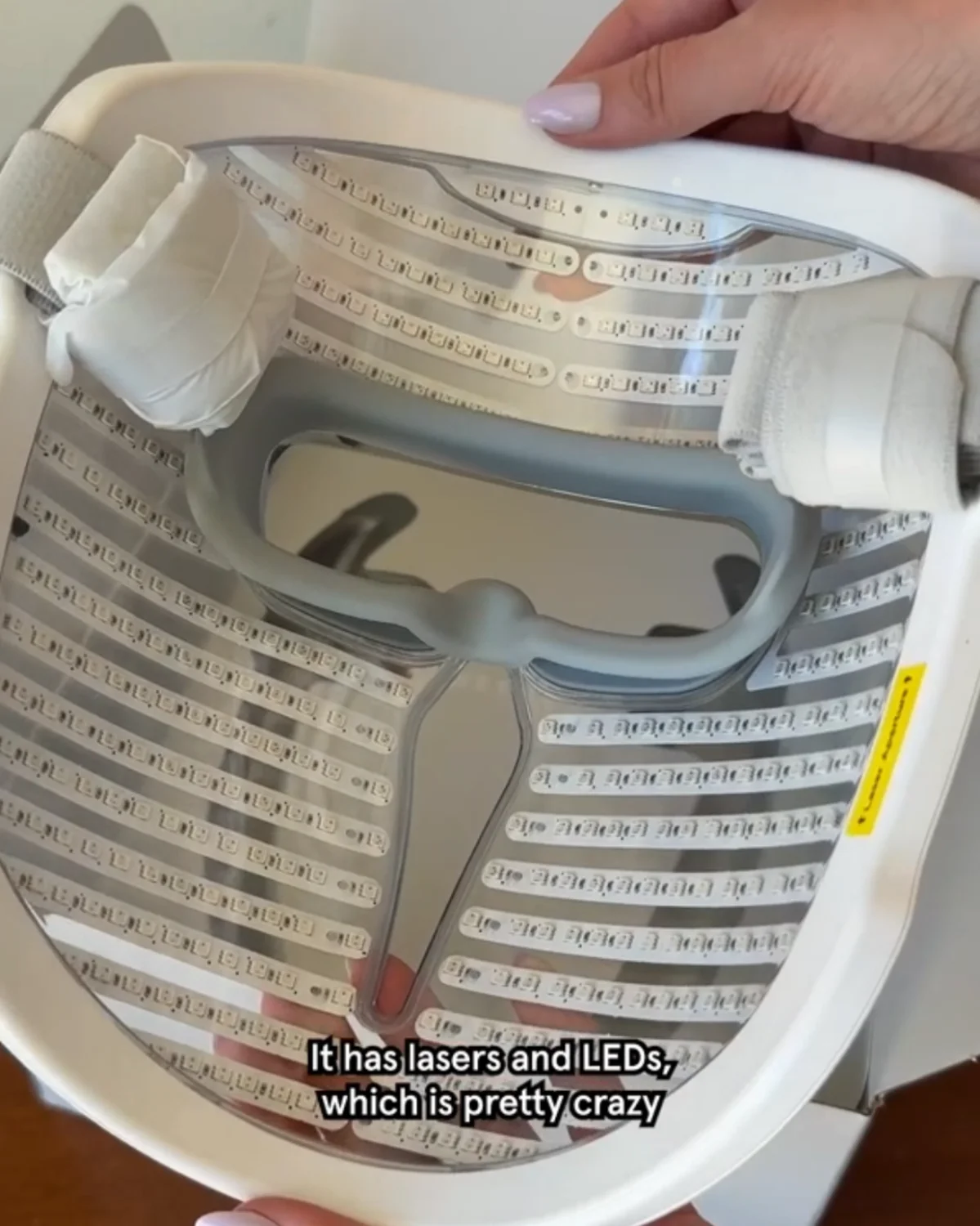
800 diodes is the headline, as many LED masks do. But the user manual (available here) gives the real architecture on its spec page: 800 light sources across 378 bulbs.
150 of those bulbs are the lasers, 90 at 660 nm and 60 at 850 nm, each one a single emitter.
The other 228 bulbs are LED packages that carry the 650 LED chips between them, so most of them hold 3 chips of different colors. Red 633 nm is by far the most numerous at 288 chips, then 80 near-infrared at 830 nm, 48 at 1,072 nm, and 78 each of blue, green and amber (so the blue coverage is not very high, not all over the face…).
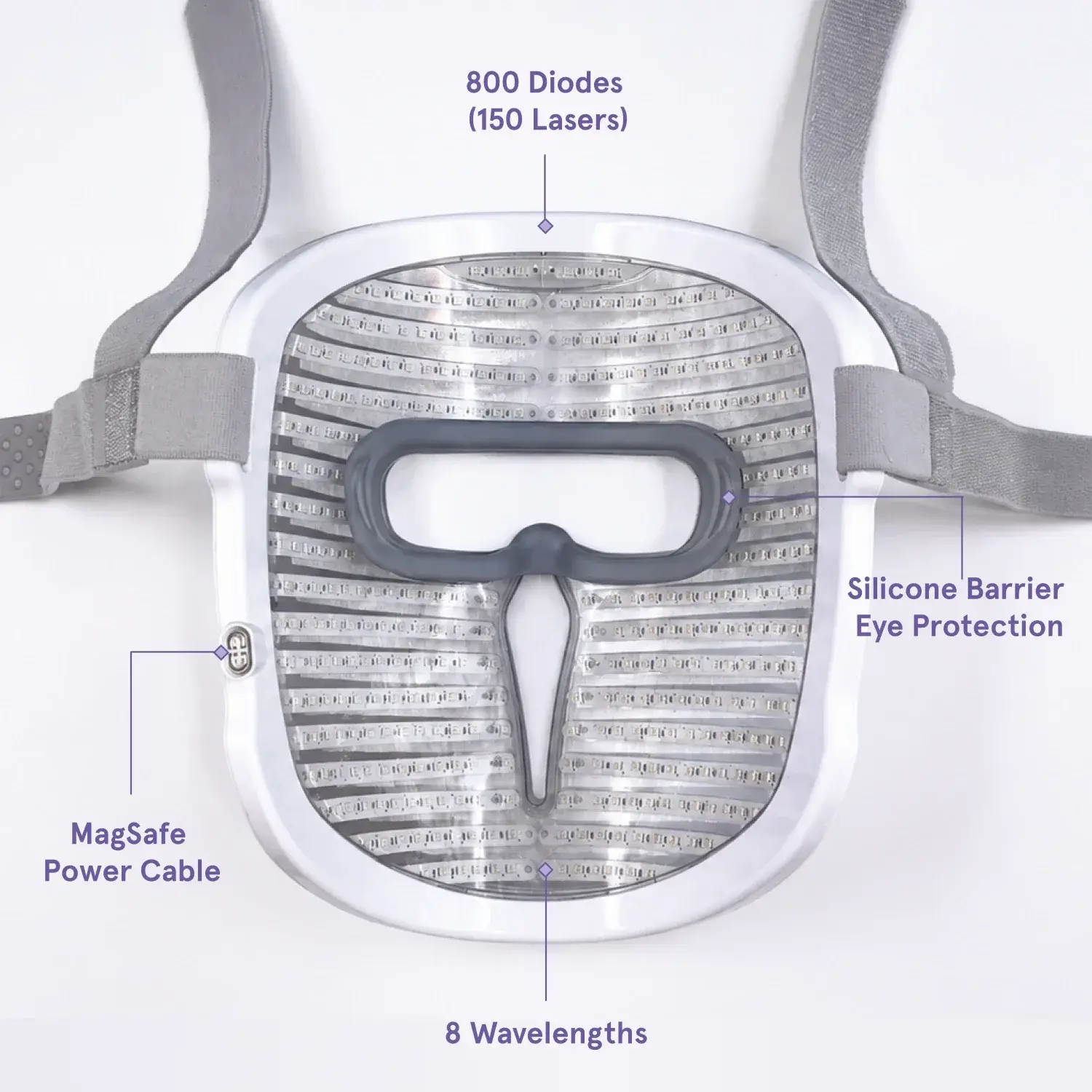
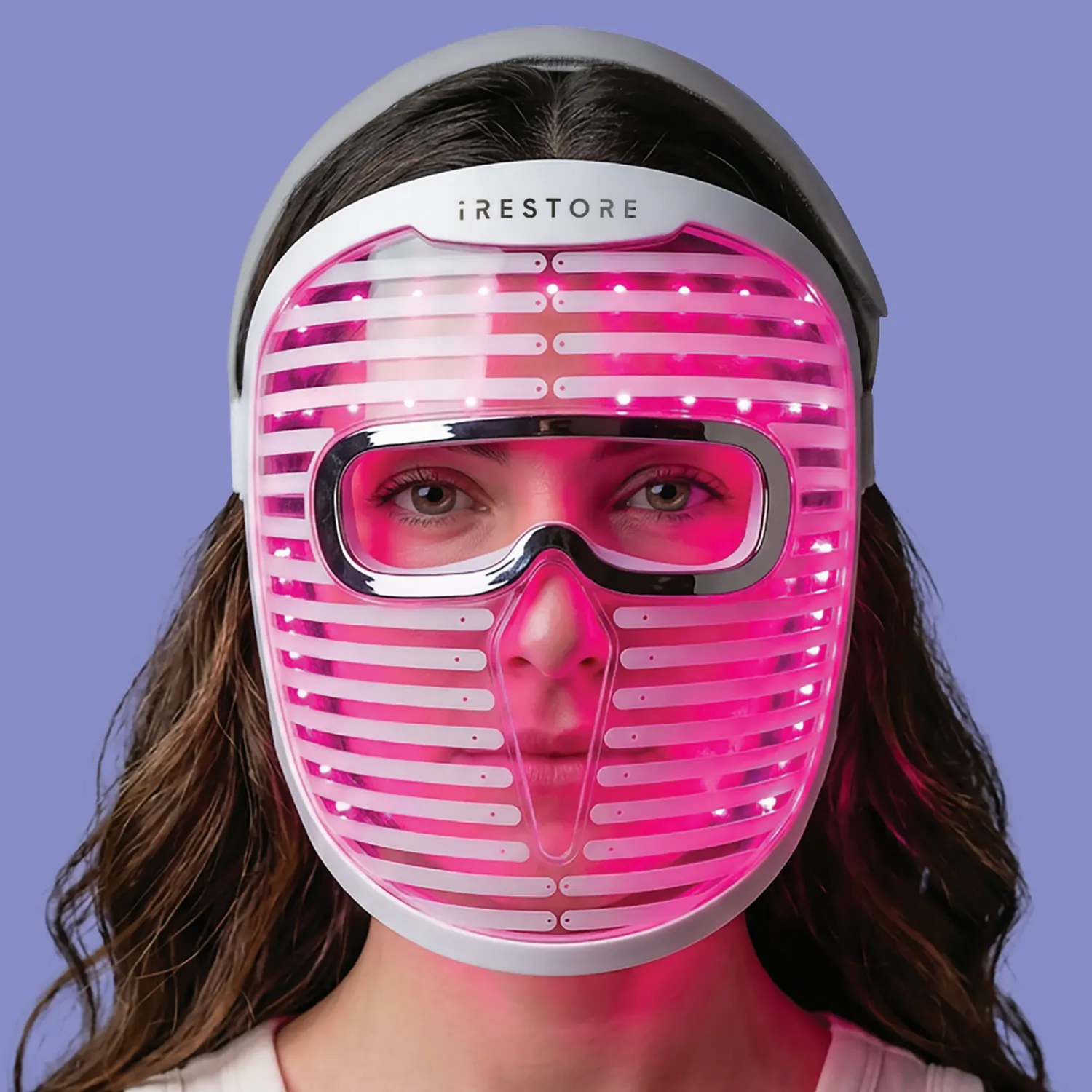
378 light points is a serious number. The Illumina had 120, the CurrentBody Series 2 lights 110 positions, and the same iRestore shell now carries more than 3 times as many, which you can see as the LED density is visually high.
In Mode 1 every red and infrared source is on, lasers included, so 566 of the 800 emitters are lit at once. Density is physics: more emitters this close together means beams that overlap instead of leaving gaps, and this is what I’m looking for. But, 150 out of those 378 are lasers, and I’ll explain below why lasers aren’t as effective as LEDs at covering the face.

Last issue is that the shell is still rigid, it hovers instead of sticking to the face (air reduces the light power). The expanded fit does reach lower than the Illumina, so my chin gets light now, but it gets it from a distance, and the underside of the jaw gets almost none. The nose and mouth still do not have LEDs in contact with them, they only receive some of the light scattered around them.
My concern: Rainbow mode on the iRestore Laser Face Mask Pro
Mode 5 activates all 8 wavelengths simultaneously, which iRestore calls the “full spectrum.” But on the face, it’s mostly a pattern: each LED has its own color, with a blue light next to a green one, a red one…
As a result, the skin doesn’t receive each color uniformly, especially since the blue has only 78 chips to cover the entire face (the same goes for amber and green).
Red and near-infrared are the two wavelengths for which there is the most scientific evidence (green and amber have no solid scientific evidence, and blue has preliminary results for acne).
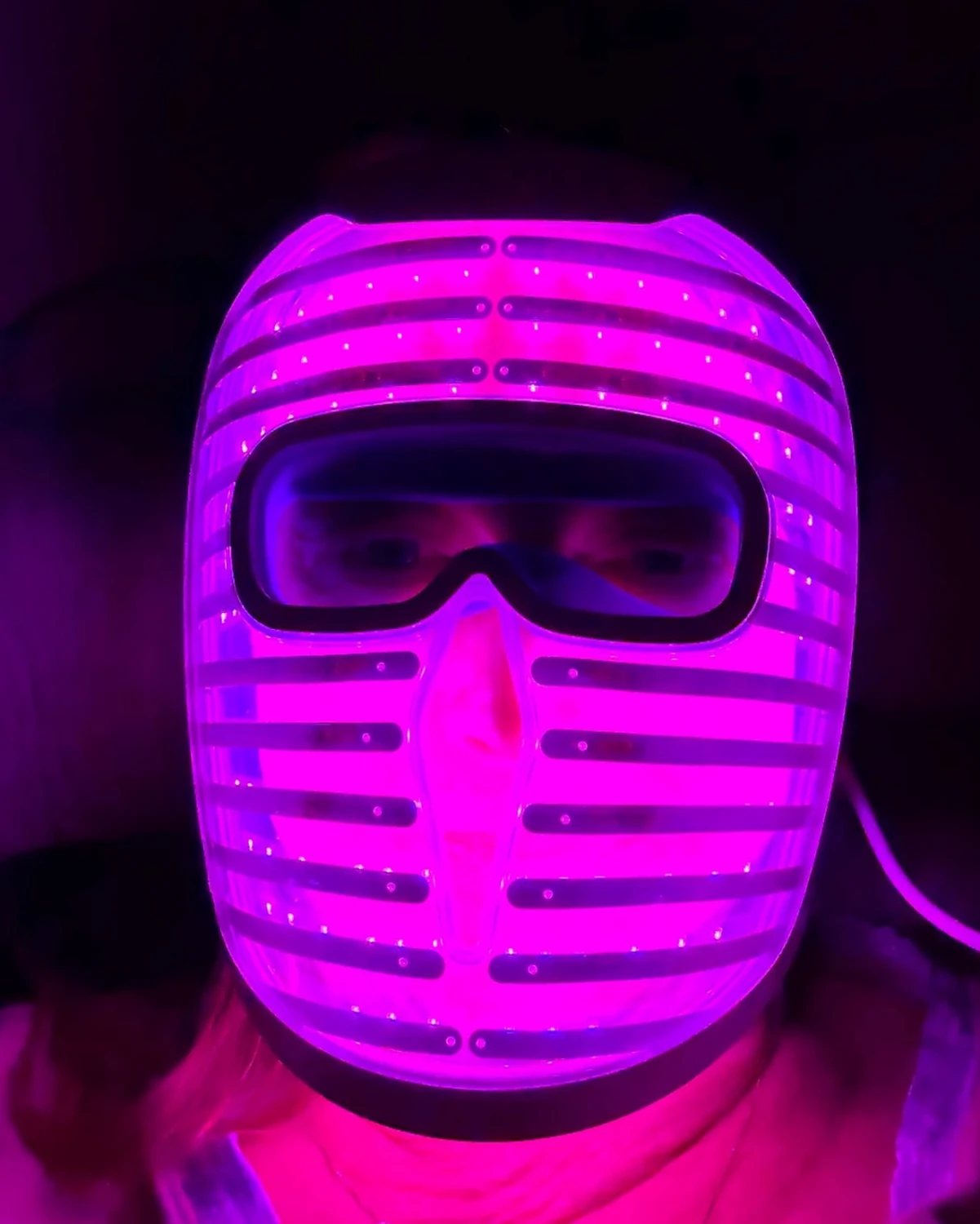
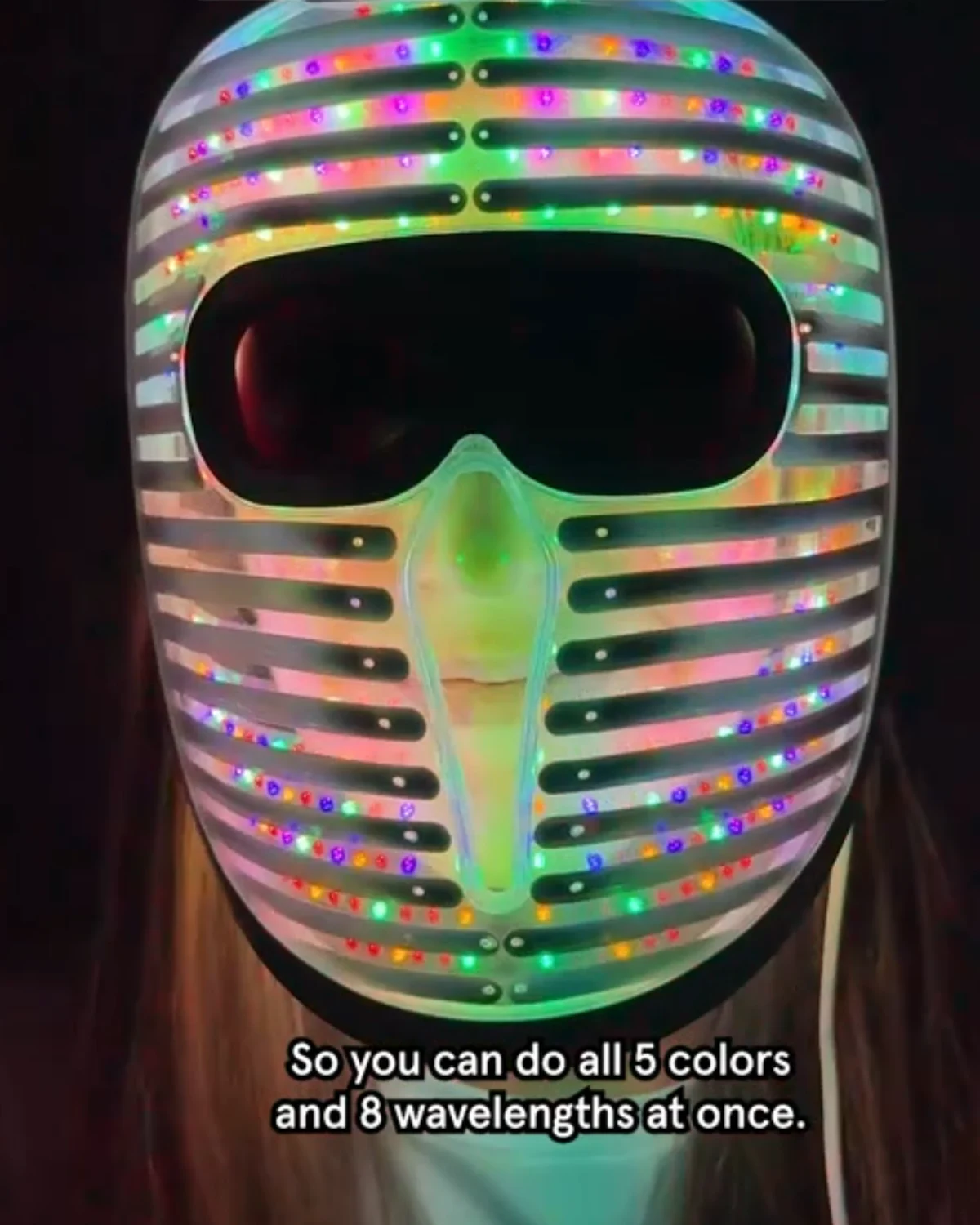
So I used only the red-infrared mode, just as in a clinic, and I consider the other four to be nothing more than a light show. In my view, multicolored LED masks are nothing more than a marketing gimmick, and this one illustrates the trade-off: the more colors you add, the fewer LEDs each color has.
Proof: 3/5
What the brand clearly displays and what I check in the FDA file: wavelengths (in nm), emitted dose, FDA clearance number, product study, safety tests, warranty.
Read my proof guideWhat the brand publishes
- Published: Wavelengths in nm: 660 and 850 lasers, 415, 532, 590, 633, 830 and 1,072 LEDs
- Published: Dose per session calculable: 70 mW/cm² for 10 minutes is 42 J/cm², with no measurement condition
- Missing: An FDA clearance number for this mask
- Missing: A clinical study on this exact model: the one cited ran on the Illumina
- Missing: Study documented for this model: enrollment, duration and lab exist only for the Illumina
- Published: Photobiological safety: IEC safety tested
- Published: Warranty and returns: 2 years on the page, 12 months in the manual, 100 day money back
Proof: 3/5
The page wears a “Clinically Tested” badge, but every number under it belongs to another LED mask as explained earlier. The dermatologist videos lower down still explain how the mask’s “three wavelengths” work, which was true of the Illumina and is 5 wavelengths short here.
Is the iRestore Laser Face Mask Pro FDA-cleared?
Unfortunately not. iRestore’s hair devices are, under 4 clearances in the name of Freedom Laser Therapy, but not this mask. I searched the 510(k) database for it and there is nothing for this model. I hope it will be done in next few months.
Do the lasers in the iRestore Laser Face Mask Pro go deeper than LEDs?
iRestore’s pitch is that its VIXO lasers “reach deeper into the dermis than LED alone“. How deep light gets into skin is set by its wavelength, and a 660 nm laser photon is the same photon as a 660 nm LED photon.
The effectiveness of lasers compared to LEDs has been studied for many years, and after reading several studies, what stands out to me most is that the key point is coherence. The 2018 study by Heiskanen and Hamblin demonstrates that it has “not been demonstrated that the speckle pattern created by lasers provides additional benefits.”
A 2026 systematic review of 16 controlled studies on wound healing reached the same conclusion: LEDs are “just as effective,” with the advantage of emitting more diffuse light that better covers the skin.
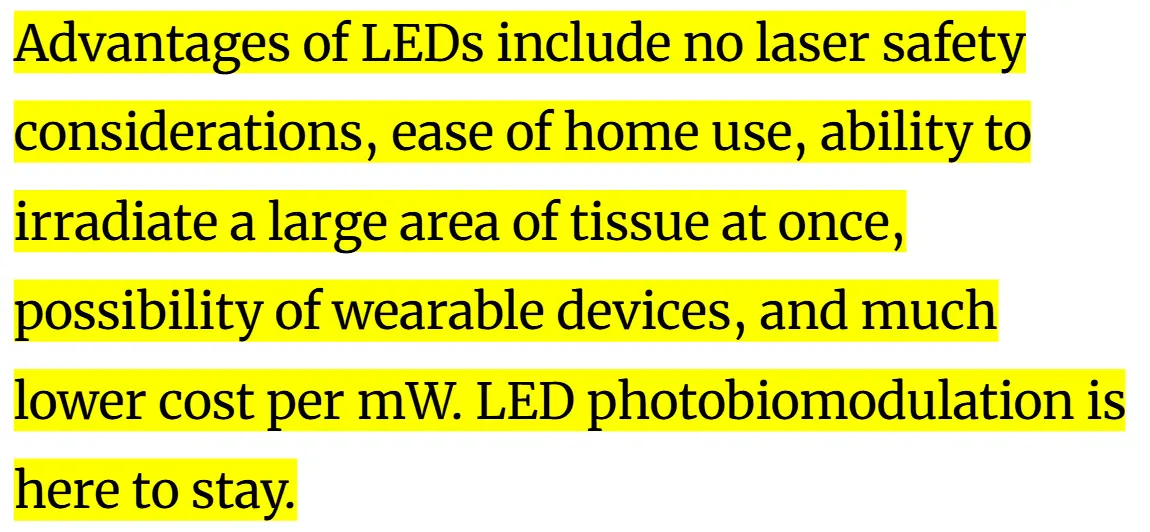
The one thing a laser does differently is concentrate its power on a dot. Under each of the 150 dots the local intensity is higher, and between the dots there is nothing, which on a face is the opposite of what a mask is for. The 650 LEDs around the lasers are what cover your skin.
Comfort: 3.5/5
Fit, weight, heat, eye comfort and minor inconveniences: straps, timer, battery. A mask that becomes a chore to wear several evenings a week scores poorly in these areas, as using it should be a pleasant experience!
Read my comfort guideEye protection is this LED mask’s strongest feature in terms of comfort. The wide strap that covers the eyes has silicone pads that effectively shield the eyes from light. This allowed me to keep my eyes open throughout every session without any issues.
The trade-off for this comfort is the same as with the previous model: a portion of the face not covered by LEDs, as well as the nose and mouth, which are not in contact with an LED.
The rest is the same as the Illumina Face mask experience. The shell is rigid and sits away from the face, the battery lives in a separate controller, and the mask weights 0.63 lb, which feels light on the face.
The warmth in Mode 1 is the same mild warmth as every other LED mask I own. No tingling, no redness afterwards, and nothing in 24 sessions I would call a side effect.
However, lasers are Class 3R lasers, with the warnings that go with that class. Don’t stare into the array, no mirrors or magnifiers in front of it, and a sensor keeps the diodes off until the mask is on your face.
Value: 2.5/5
The price I paid, when viewed in the context of the results achieved and compared to other masks I have tested, both within this price range and at different price points.
Read my value guideThe iRestore Illumina Face Mask Pro, or Laser Face Mask Pro, is sold at $799 most of the times, $1,099 on the strike-througt. That’s twice the $399 I paid for the Illumina: same design, but with better technical specifications.
3 times the light points, an irradiance figure twice the Illumina’s, and additional lasers. But the most important thing is missing: there are no studies measuring the results on the skin. So I think the price is too high for a LED Laser mask that hasn’t yet proven the benefits of its new features.
Safety & support: 4/5
Eye protection, build quality, warranty, returns, responsiveness of customer support, and the mask’s ability to remain functional over time.
Read my safety & support guideThe manual states a laser class and lists its contraindications: photosensitizing medication, lupus, active skin cancer, an age floor of 18… The sensor cuts the lasers the moment the mask leaves your face and that’s important. The 100 day money back gives you also enough time to test it for several weeks.
Who shouldn’t buy the iRestore Laser Face Mask Pro
Skip this one if you recognize yourself
- You want the light on your skin, jaw and chin included. This LED mask does not stick to the face.
- You are buying it for the lasers. On skin, a 660 nm laser and a 660 nm LED do the same thing, LEDs being better for coverage.
- You already own the Illumina. Mode 1 on the Pro did on my face exactly what the Illumina did, and the shell is the same.
Am I still using the iRestore Laser Face Mask Pro?
Updated November 2026. No. I stopped after the 24th session and went back to the Nooance Elite X600, which sits on my skin instead of hovering over it.
What I still want to know about the iRestore Laser Face Mask Pro
I’d like to know whether the irradiance of 70 mW/cm² is measured at the LED or at the skin, since these are two completely different measurements.
I’d also like to know if a 510(k) clearance is planned, and if a study on this Pro model is planned to actually measure the effect of lasers and other colors.
If you’re interested in LED density, this iRestore doesn’t have the highest LED density on the market: Nooance does, and I tested it for 3 months.
iRestore Laser Face Mask Pro: your questions
Is the iRestore Laser Face Mask Pro FDA-cleared?
No. iRestore’s 4 FDA clearances cover its hair growth devices, and there is no 510(k) for this mask under Freedom Laser Therapy or its manufacturer. The page uses “FDA-cleared” only about the hair helmets and the body belt.
How many LEDs does the iRestore Laser Face Mask Pro really have?
650 LED chips and 150 lasers, which spread across 378 bulbs: 150 single-emitter lasers and 228 LED packages that mostly hold 3 chips each.
Is the iRestore Laser Face Mask Pro safe for the eyes?
The manual classes it as a Class 3R laser product and tells you not to stare into the array or view it through mirrors or magnifiers. Silicone eye guards with no diode behind them ring each eye, and a sensor keeps the diodes off unless the mask is on your face. I kept my eyes open for all 24 sessions without discomfort.
What is the difference between the iRestore Laser Face Mask Pro and the Illumina Face Mask ?
Same rigid shell, but 378 light points instead of 120, 150 lasers added, 8 wavelengths instead of 3, 5 modes instead of 3, silicone eye guards inside the same band across the eyes, a published irradiance per mode. The price is twice what I paid for the Illumina, and the clinical figures on the Pro’s page come from the Illumina study.
Does the Rainbow mode on the iRestore Laser Face Mask Pro work better than red?
Not in my view. Each bulb has one color, so Mode 5 lights blue, green, amber and red bulbs side by side and no spot on your face gets all 8 wavelengths. Red and near-infrared are the wavelengths with the evidence behind them, and Mode 1 lights every one of those bulbs.
Test log
- Exact model
- iRestore Laser Face Mask Pro, item ID-615, US version. The manual in the box calls it the Illumina Face Mask Pro
- How I got it
- Bought on iRestore’s US site. No affiliate link or code in this article, no contact with the brand
- Test window
- September to October 2026, 8 weeks
- Sessions
- 3 evenings a week, 10 minutes, 24 in total, Mode 1 only.
- Documents read
- Product page, spec table and ID-615 manual v1. FDA 510(k) database. ClinicalTrials.gov NCT07025837

About Emilie
I have tested LED masks since 2023. I buy the devices, use them for weeks, and read the spec sheets nobody reads, because this market runs on numbers most brands never publish. Not a dermatologist, and I say so whenever a question needs one.
1 thought on “I tested the iRestore Laser Face Mask Pro for 8 weeks: my results and review”