
I buy the devices I test unless the article says otherwise. Some links and discount codes on this site are paid links: if you buy through one, I earn a commission. It never changes a score or a verdict.
CurrentBody sells more LED masks than anyone else, and the Series 2 is the one every roundup links to. I bought mine, wore it every other day for 3 months, and at the end of about 50 sessions my skin had not changed in any way I could defend.
So here is my full review after testing the Currentbody LED Mask Series 2.
72/100
Emilie Approved since August 2026Buy it if
- You want a flexible mask that molds to your face instead of sitting flat on it.
- You want ten minutes, three to five times a week, and nothing else to manage.
- You want a brand that publishes its wavelengths and ran its study on the model you are buying.
Skip it if
- You want light on your nose, your upper lip and around your eyes.
- You already own a denser mask you like.
- You expect a visible result in eight weeks.
What I tested
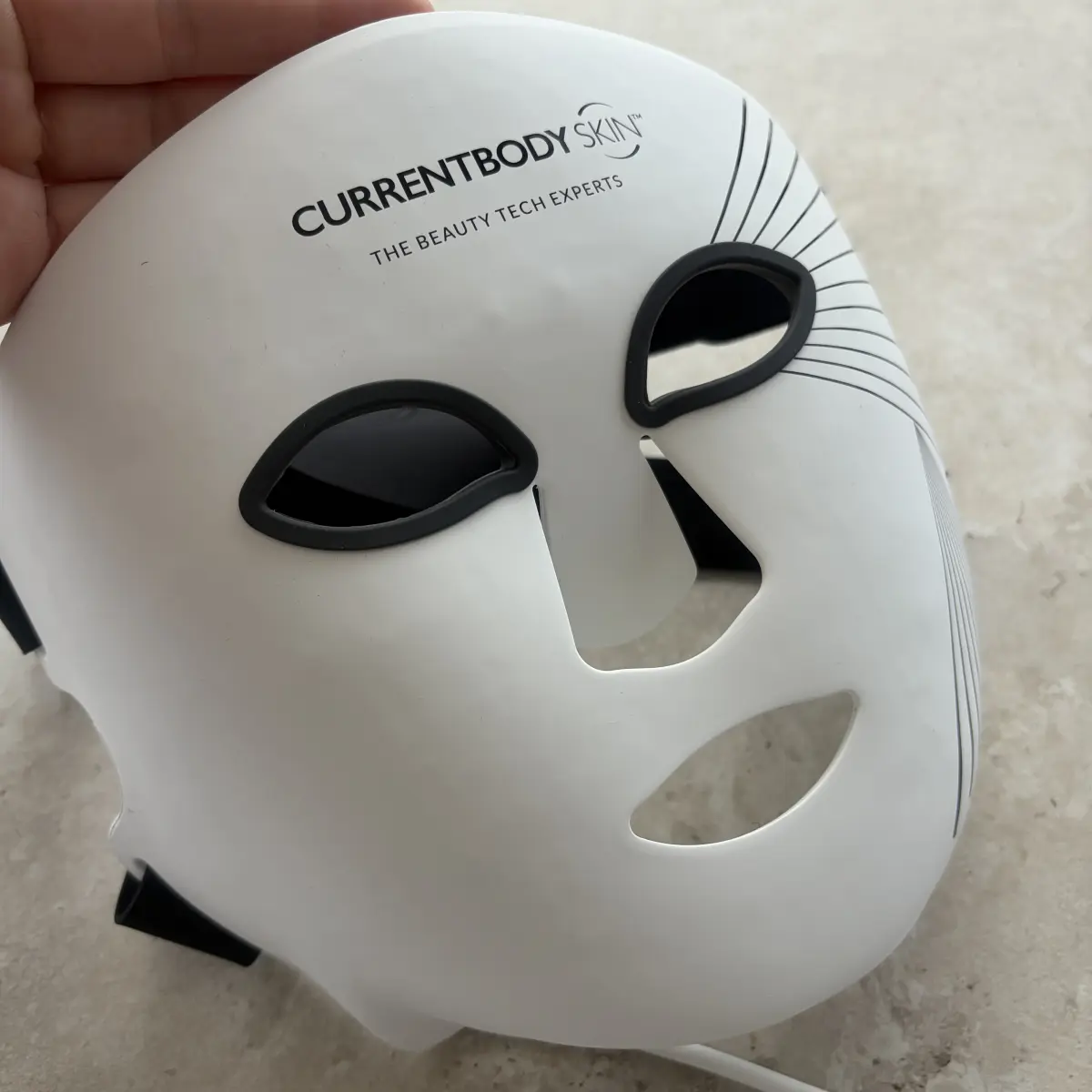
The CurrentBody Skin LED Light Therapy Face Mask: Series 2, red light version, model MK-90H, the one that sells for $469.99 on the US site. I paid for it myself.
I bought this mask with my own money. You can buy your own with the code EMILIE15: you get 10% off, I get a commission, but this does not touches my score.
I ran it every other day from April 1 to July 1, about 50 sessions, which sits inside the 3 to 5 times a week the manual asks for. I kept wearing it after the test window closed.
One thing colors everything below. The mask I normally wear is a French one with a much denser light output, so this test put me on weaker equipment for a season (you can see here Currentbody Series 2 VS Nooance Elite X600). The seven criteria my scores come from, and what each one weighs, are published on the page where I explain how I test.
Results: 3/5
50 sessions on CurrentBody’s own protocol produced no change I would defend: not a smoother texture, not a softer line, nothing I could point at in a photograph. Their page says results show at four weeks and their study runs to eight, so twelve weeks is not me cutting the device short.
My skin looked slightly redder and less even by the end, and I am not putting that on the mask. Spring turned into summer mid-test, I had just set aside a device I used for months, and I have no standardized before and after. I can report what I saw, not attribute it.
My twelve weeks on their own would sit at a 2. What lifts the number is evidence I did not produce and this criterion counts at less weight than my own face: the before and afters CurrentBody publishes, which run long enough and line up with the study they quote, and the results column of their review widget.
- Quality 4.7
- Ease of use 4.7
- Results 4.4
The gap between those numbers is small. What I find telling is the ranking: across four thousand buyers, the lowest-scoring column is the one people bought the mask for. They rate the build above the result.
So a 3, which is the highest this criterion goes for a mask that did nothing on my skin. Those photographs were chosen and lit by the company selling the device, and a review widget on a brand’s own store is not a controlled trial. They point the same way, they are worth counting, and neither of them is my face.
Irradiance: 3.5/5
Irradiance is the power a mask puts on your skin, in mW/cm². Multiply it by the length of a session and you get the dose in J/cm², which is the unit every published study on red light is built on. CurrentBody prints 30 mW/cm² in the spec sheet, and ten minutes of that arithmetic gives 18 J/cm².
Thirty is not a big number, and it changes how I would use the mask. CurrentBody asks for three to five sessions a week, and at this irradiance I would treat the five as the instruction rather than the ceiling. The cycle is locked at ten minutes, so frequency is the only lever you have left on what your skin receives in a week.
What the spec sheet never says is where that 30 was measured. Thirty milliwatts at the surface of a diode and thirty on a cheek two centimeters away describe two different masks. On this one, whose emitters sit far apart, that difference is the whole question. Almost nobody in the category publishes a measurement distance, so its absence costs no point on my grid. It still leaves me able to hand you a dose and unable to tell you what reaches your face.
No independent measurement of this mask exists that I can point you to, so the figure rests on CurrentBody’s word: published, plausible, unconfirmed. What puts it at the top of that band instead of the middle is that the number is printed at all, in a category where the usual answer to how much light is medical grade. One thing worth knowing before you pay for the upgrade, the Series 1 carries the same 30 mW/cm² on its own spec sheet.
Coverage: 3.5/5
How many LEDs does the CurrentBody Series 2 actually have?
236 is the number on the box, and it works harder in the marketing than on my face. The count splits three ways across the wavelengths, and the split is nowhere near even.
- Red, 633 nm 110
- Near-infrared, 830 nm 110
- Deep near-infrared, 1072 nm 16
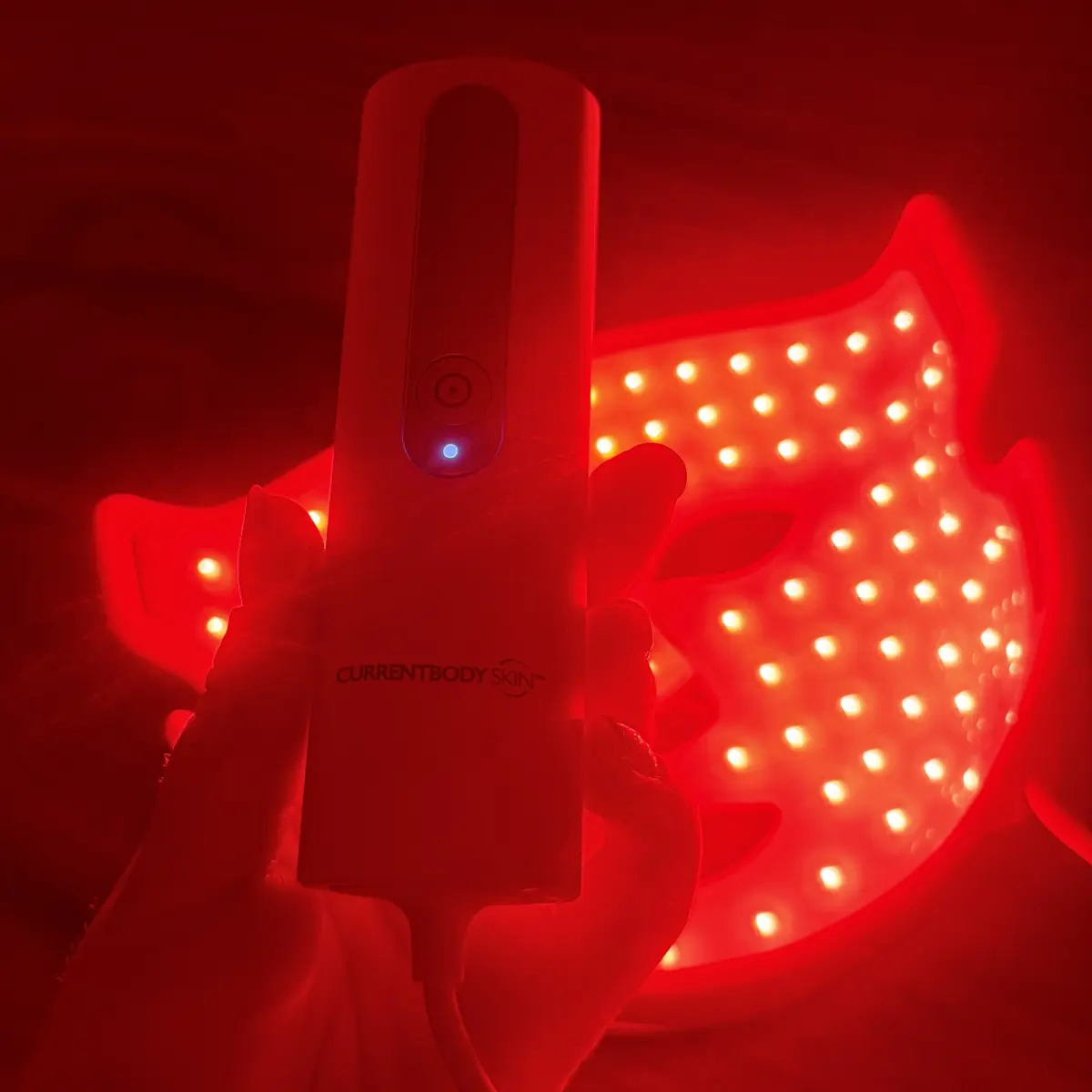
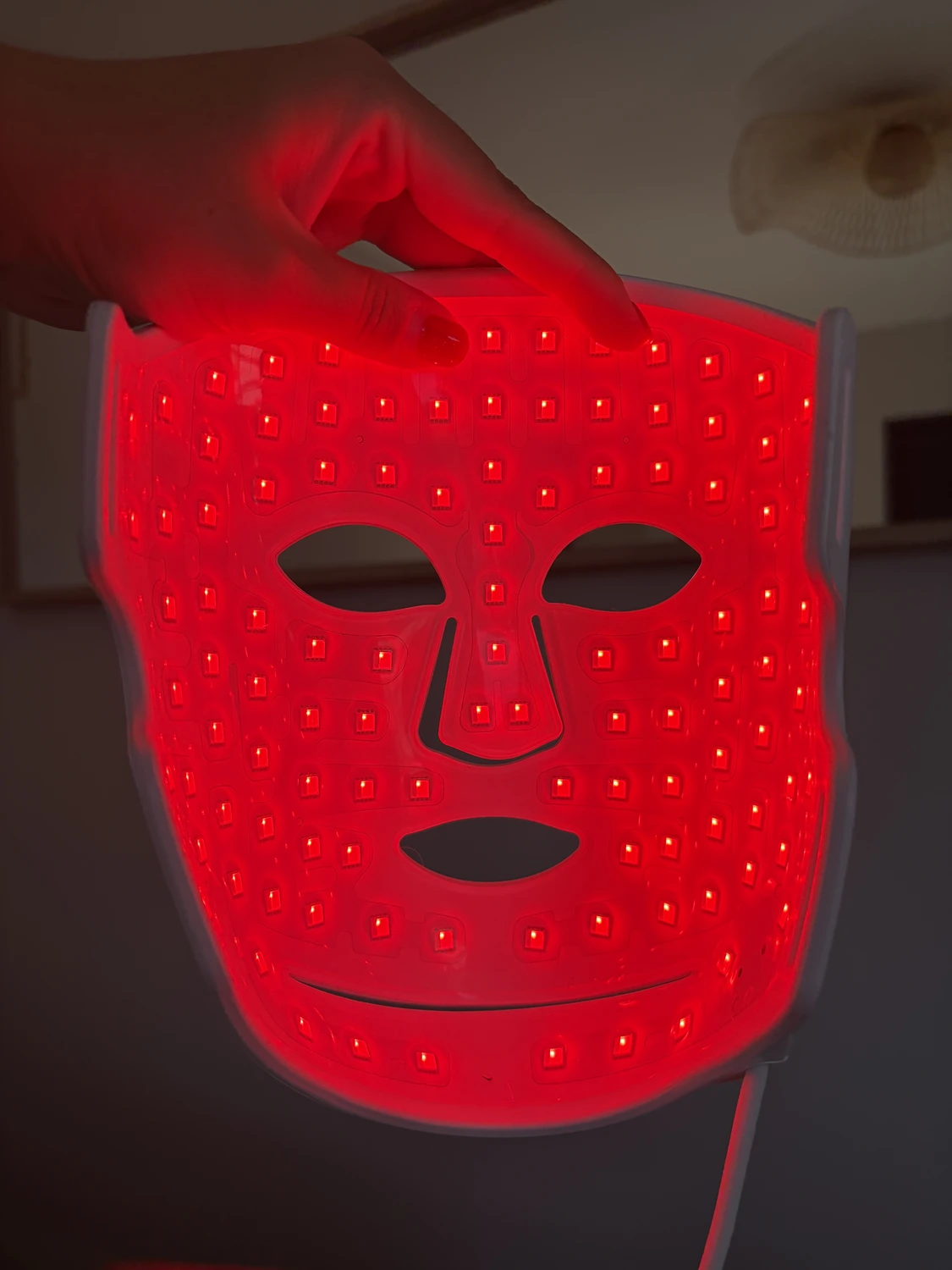
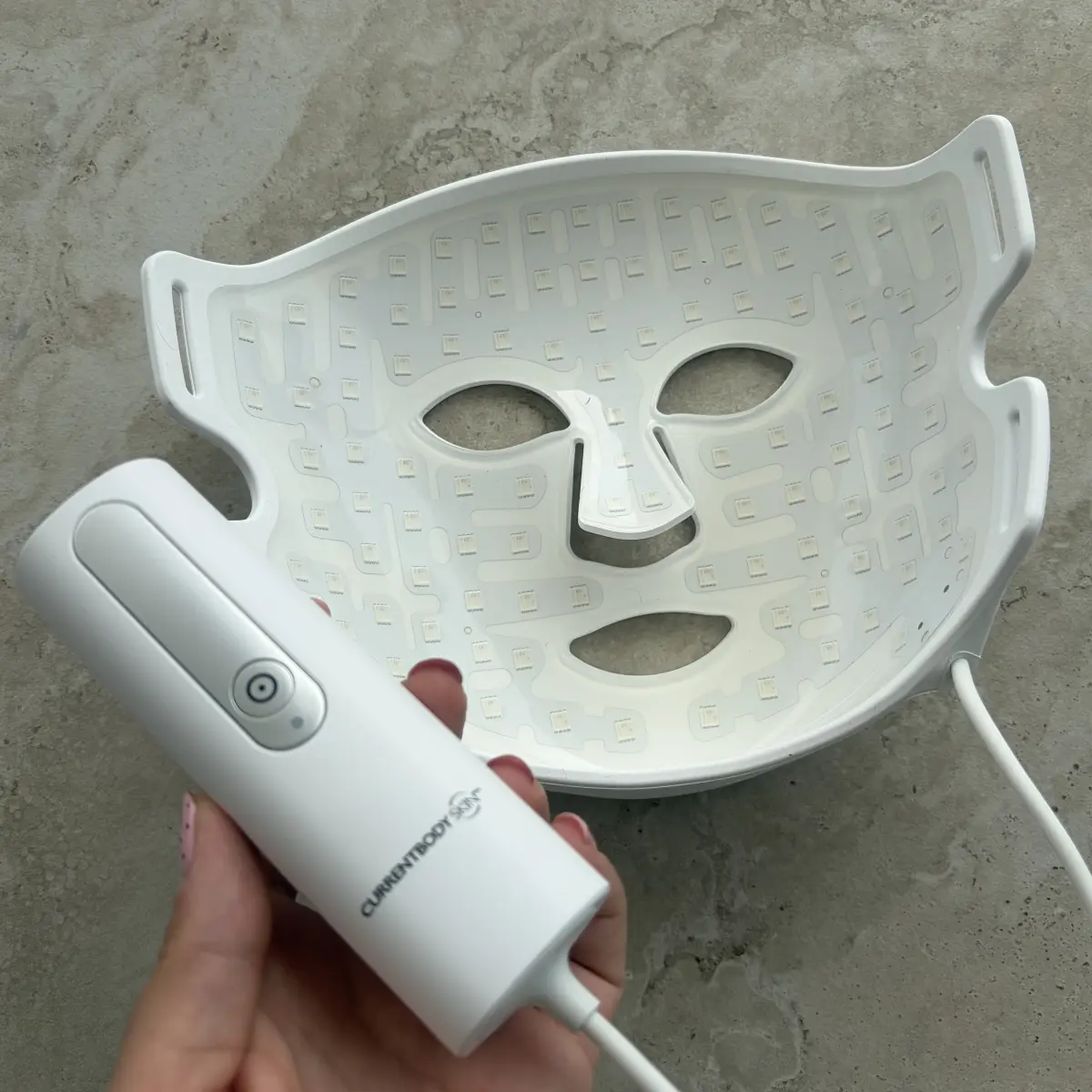
Two things come out of that breakdown. The 1072 nm deep near-infrared that headlines the whole upgrade over the Series 1 runs on 16 diodes spread over a full face. And because the red and near-infrared emitters share their positions in the mold, the mask lights roughly 110 spots on my skin, not 236.
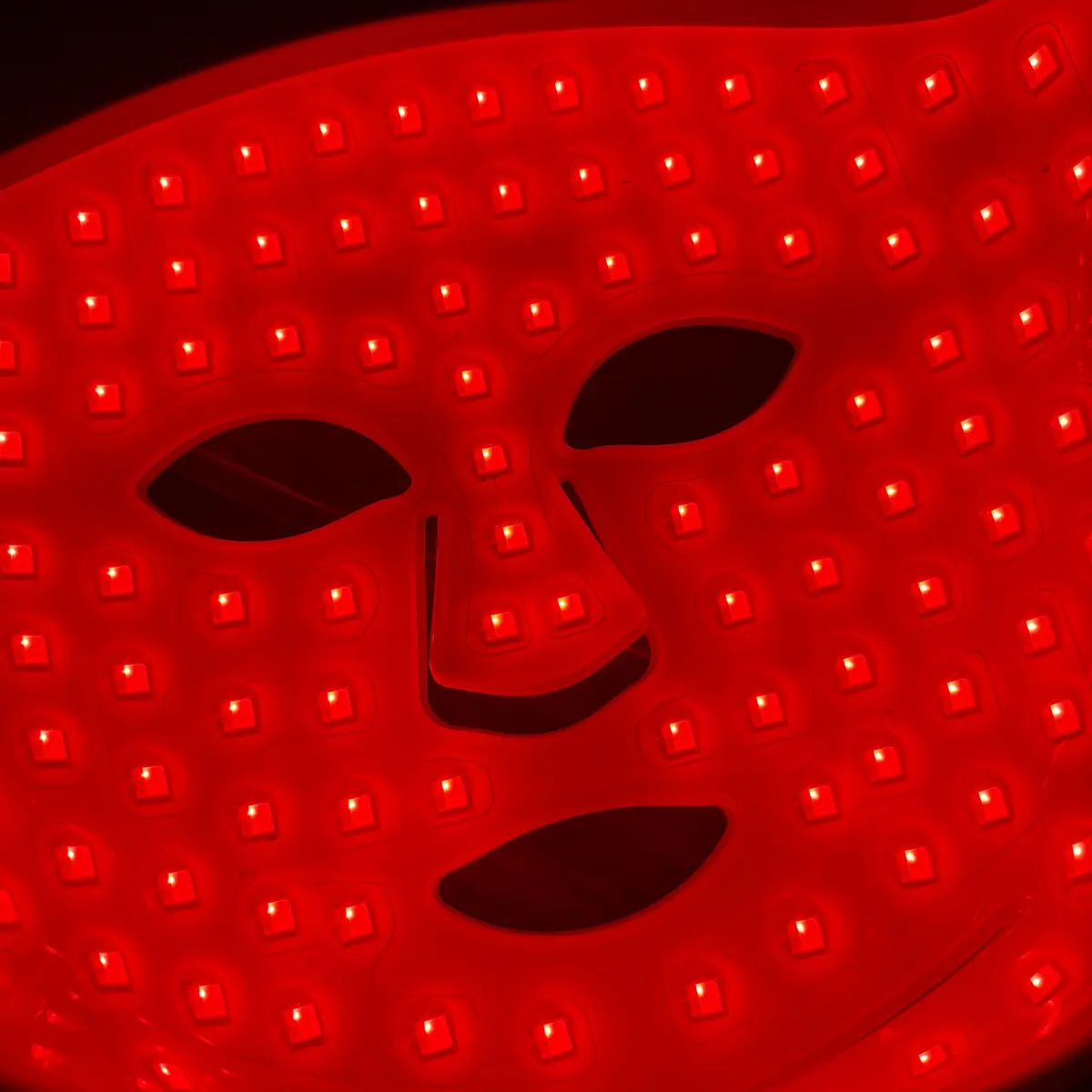
The top of my forehead runs out of diodes before my hairline does, and the cutouts handle the rest: nothing on my nose bridge, my upper lip or the skin right against my eyes. What the shell does reach is better than its diode count suggests. Light lands on my jaw, under my chin and out to the outer corners of my eyes, where several masks I have worn stop at the cheekbones and call it a face. The spacing costs the points here, not the shape.
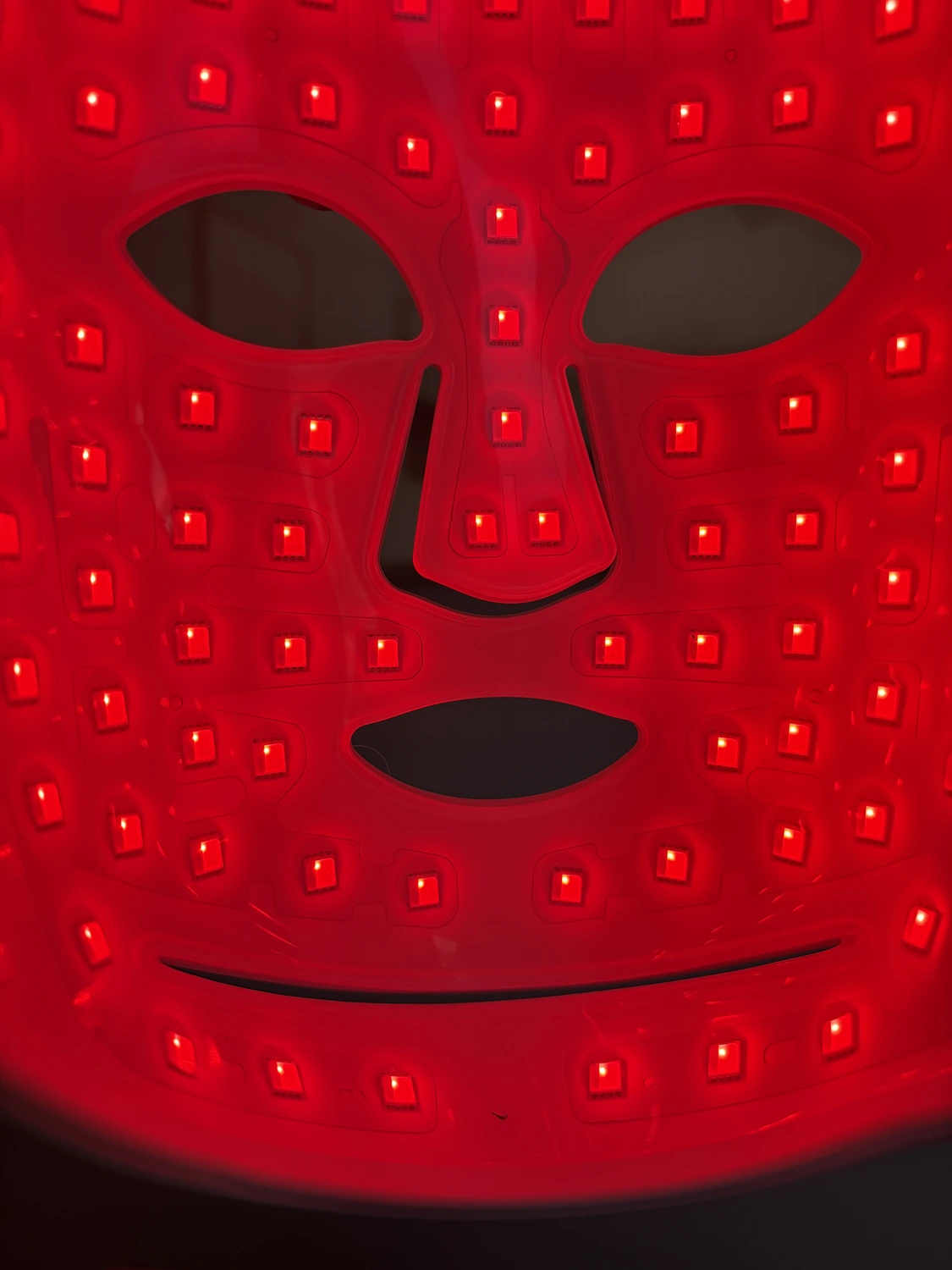
How dense is the Series 2 next to a denser mask?
Spacing is hard to argue about in prose, so here are both masks lit in the same room at the same distance. The second is the Nooance Elite X600 (my review), the French mask I wear the rest of the year, and it has since had its own 12-week test.
Neither visual measures anything. I own no irradiance probe, both were shot on a sensor that sets its own exposure, and a denser grid is not automatically a stronger dose at the face. What they show honestly is how much unlit silicone sits between one emitter and the next.
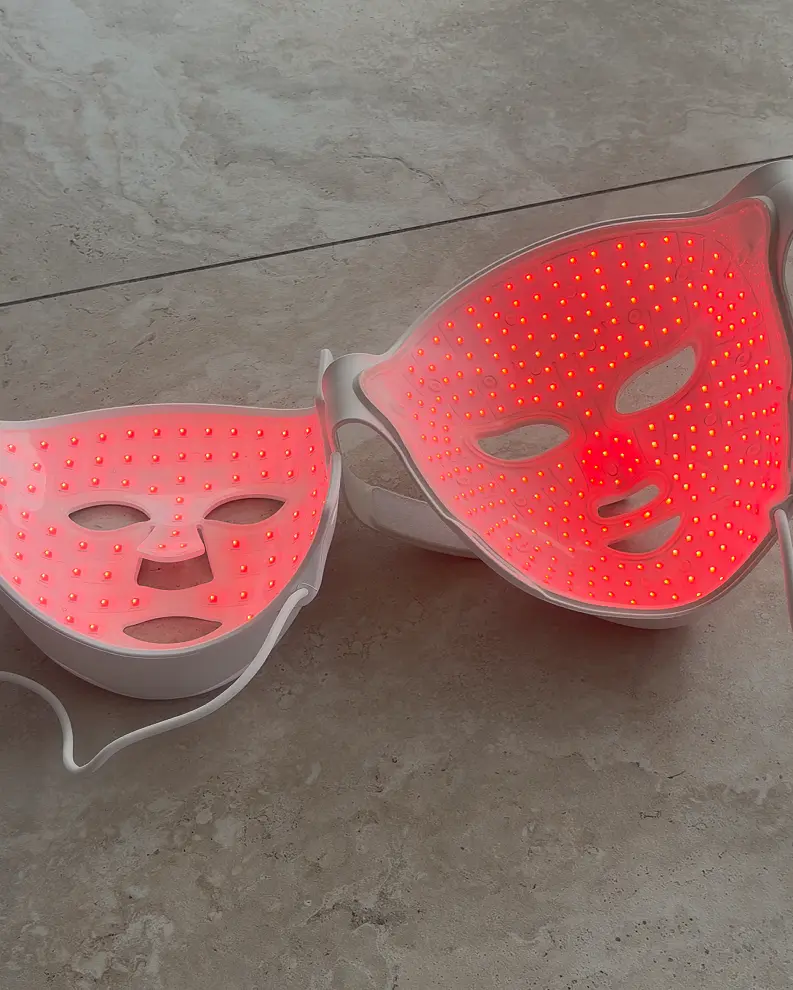
Fewer lit positions than the masks I would rather wear, arranged on a shell that puts them in better places than most. That trade is what a 3.5 looks like.
Proof: 4.5/5
What the brand publishes
- Published: Wavelengths in nm: red 633, near-infrared 830, deep near-infrared 1072
- Published: Dose per session: 30 mW/cm² over 10 minutes works out to 18 J/cm²
- Published: FDA clearance: cleared as K250966, verifiable in the 510(k) database
- Published: Clinical study run on this exact model, not on the Series 1
- Published: Study documented: 35 subjects, 56 days, lab named, measurement points listed
- Published: Photobiological safety: IEC 62471 testing listed in the FDA summary of K250966
- Published: Warranty and support: 2 years as standard, returns policy published
Proof: 4.5/5
The study is the line I would keep if I could only keep one. Plenty of brands quote a trial run on an earlier model, or on a different device entirely, and hope nobody checks. CurrentBody ran theirs on the mask I bought, and published enough of it to argue with: 35 subjects, 56 days, the lab named, the measurement points listed.
What the brand won’t tell you
CurrentBody writes FDA cleared on the product page and leaves it there, without the number that would let anyone check, so I found the file. The Series 2 is cleared under K250966, Substantially Equivalent, product code OHS, class II. The claim holds up, and that is where the half point I withheld went: the file is solid, the number is nowhere on their site, and a buyer who wants to verify the one regulatory line on the page has to know which database to open.
The name on the application is what stopped me. It is Shenzhen Kaiyan Medical Equipment Co., Ltd., the factory, not CurrentBody or the group that owns it. Nothing is hidden: I pulled the record from the FDA’s 510(k) database in one click, and so can you.
A second gap sits in the marketing copy. Their banner promises wrinkles down 30% and plumpness up 57% in eight weeks, so I opened their own summary of the SGS study. The 57.1% sits next to R7, biological elasticity, a cutometer reading of how well skin springs back. Plumpness appears nowhere near it, and the relabeled number is the bigger one.
Comfort: 4/5
If I could keep one thing about the Series 2, it would be the way it sits. The silicone is soft, it stays cool, and the 3D molded shape follows my cheeks and jaw instead of bridging across them. Rigid masks press on my cheekbones, flat ones float off my chin, and this one does neither.
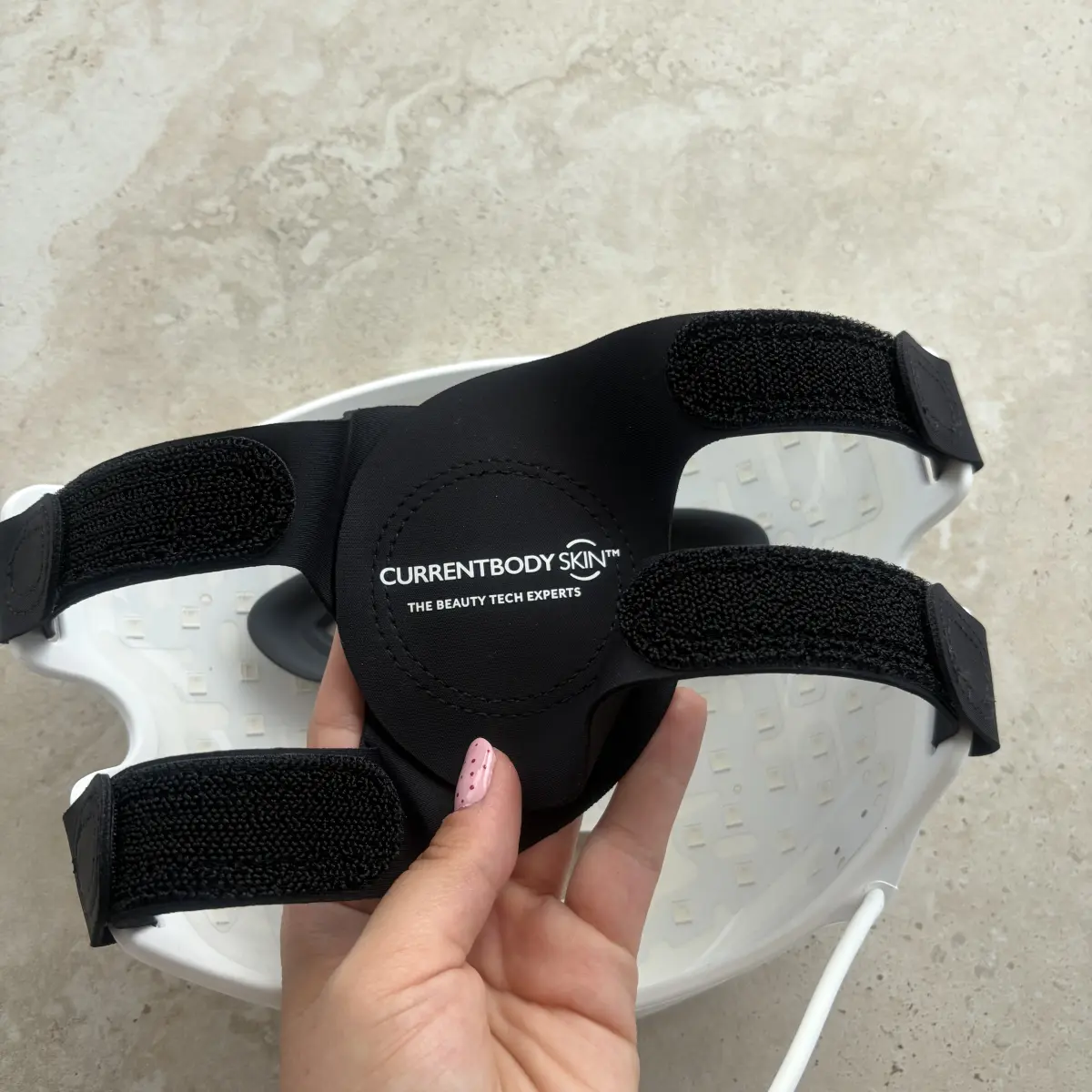
Two things keep it off a 4.5. The first is a molded ridge across the bridge of the nose, which I felt in every session, never painfully, but a small constant weighs more than a rare annoyance on a device worn this often. The second is the finish of the silicone, which is not as clean as $469.99 should buy.
Eye comfort
The eye inserts ship in the box, clip into the mold without fighting me, and with them in I can keep my eyes open and read my phone through a full session. No afterimage either, which I cannot say about every mask I have worn.
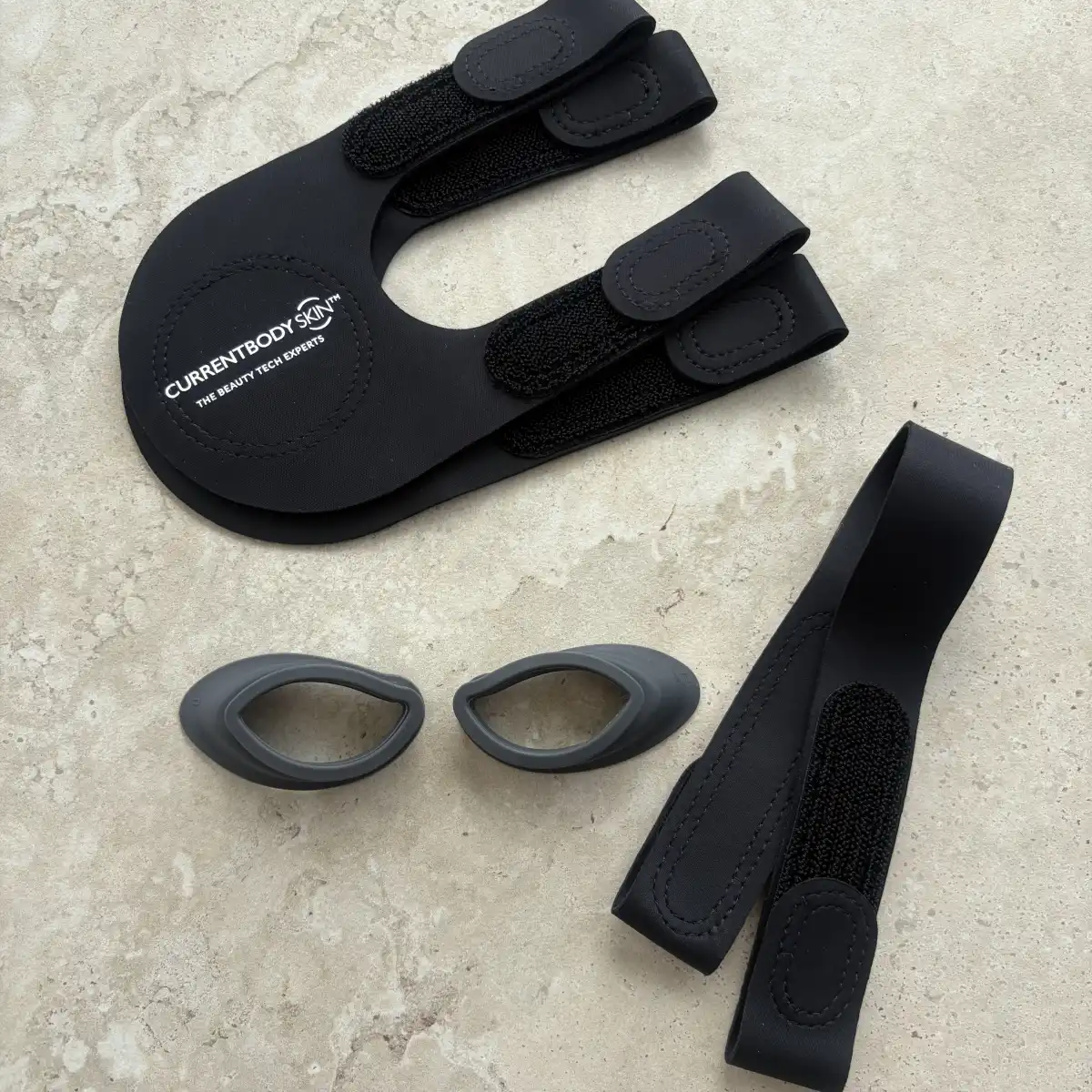
Leaving them out changes the session entirely. I tried it once, and the light was bright enough that I spent all ten minutes with my eyes shut. On a mask this bright, the inserts should be fitted, not loose in the box.
How much of an evening does one session take?
Ten minutes, and the mask shuts itself off. Beyond clipping the controller on nothing else is asked of me, and across three months of every-other-day use I never once missed a session because of the mask. The masks that end up in a drawer rarely get there because they hurt. They get there because using them is a chore.
The battery pack is the part I underrated. About ten sessions per charge meant plugging it in every three weeks instead of thinking about it every night, and in my bathroom the nightly charge is what quietly kills a device.
Value: 3.5/5
At $469.99 I am paying for the build, and the build deserves a good part of it: the mold, the straps, the inserts, the battery. What the price does not buy me is light where I want it, which is the one thing a full-face mask exists to provide.
One comparison is worth making before you shop, because I nearly bought the cheaper mask. The Series 1 sits at $379.99 with 132 LEDs and the same published irradiance, so the extra $90 buys the 16 deep near-infrared diodes, the molded shape and the chin strap, and no additional power on paper. I have not tested the Series 1, so that is the one thing I can tell you about it.
Given the choice I would still rather pay this money for denser coverage, which is why Value stops where it does. What holds it up there rather than lower is everything wrapped around the light: two years of warranty, a study run on this model, a spec sheet that answers questions plenty of brands at this price leave open, and four months of use with nothing to complain about in the build.
Should the Series 2 still be the one you want, my code EMILIE15 takes 10% off on its page on CurrentBody’s US site. That is a paid link, and I earn a commission when the code is used.
Safety & support: 4/5
The manual does more than most. It carries a full contraindication list, asks for a 24 hour sensitivity test on the inner arm before the mask touches a face, and backs that with a 14 day refund if skin reacts. I ran the patch test, nothing came of it, and across fifty sessions the mask never got warm on me.
Support is documented too, and I read the pages: two years of warranty as standard against manufacturing faults, plus a published returns policy. That answers the question I care about, which is what happens in month fourteen when a diode dies.
On the eye side, the FDA summary of K250966 lists IEC 62471, the standard classifying how safe a light source is to look at and for how long, among the tests run on this model. What CurrentBody does not print anywhere is the risk group that test produces, so I know the mask was tested and not what the result was.
Would the CurrentBody LED mask pass in Europe?
I grew up reading labels a regulator had already looked at, and that habit is why the applicant line matters to me. Contract manufacturing breaks no rule and is how most of this category gets built. It does mean the entity legally answering for this device is not the brand printed on the strap, and that it took a database query rather than a glance at the box to find out. The standards I hold my own work to are in my editorial policy.
Who shouldn’t buy the CurrentBody Series 2
Skip this one if you recognize yourself
- You already own a denser LED mask you like. That trade is the exact experiment I ran on myself, and it cost me three months.
- Your concern sits on your nose, your upper lip or around your eyes. The cutouts mean you would be buying a mask that does not light the thing you bought it for.
- You are pregnant, breastfeeding or planning a pregnancy. CurrentBody’s own manual rules this out: the device has not been tested in those conditions.
- You have cataracts, glaucoma or any diagnosed eye condition. Also from their manual, and I repeat it rather than soften it.
- You have lupus erythematosus, photosensitive eczema, albinism or light-induced headaches. Listed as contraindications by CurrentBody, who warn of a severe skin reaction.
- You take any medication that causes photosensitivity. Broader than people expect. Their manual names some antibiotics, chemotherapy drugs and diuretics.
The last four come straight from CurrentBody’s manual, and I reproduce them rather than paraphrase because I am not a dermatologist. If you recognize yourself in that list, the person to ask is yours.
Still using the CurrentBody LED mask?
Updated August 2026. I started testing on April 1 and I am still putting the mask on most weeks, four months in. That is the honest end of this review: a mask I keep reaching for, scoring 72 because almost everything around the light is well done, and still nothing on my face I can show you. If either half of that changes, this block is where it gets written, with its date.
What I still want to know from CurrentBody
Two questions stay open. The first is the measurement distance behind the 30 mW/cm², because without it the dose I calculated is arithmetic on a number with no geometry attached. The second is the IEC 62471 risk group: the FDA file says the test was run, and nothing from CurrentBody says what it found.
If either gets published, I will reopen this article, move the score it belongs to and date the change. It works in both directions: a figure landing worse than I assumed moves the score down just as readily, and the old value stays visible when it does.
FAQ on the CurrentBody LED mask
Is the Series 2 more powerful than the Series 1?
Not by the numbers CurrentBody publishes. I read both spec sheets and found the same 30 mW/cm² on each mask. What the Series 2 adds is the third wavelength at 1072 nm on 16 diodes, more diodes overall, the molded shape and the chin strap.
Is the CurrentBody Series 2 FDA approved?
No, and the two words are not interchangeable. I verified that the mask is FDA cleared under K250966, which means it went through 510(k) on the basis of a similar device already on the market. Approval is a far heavier process almost no consumer beauty device goes through, and I have never seen CurrentBody claim it.
What dose does one session deliver?
CurrentBody does not publish a dose, but their own figures produce one: 30 mW/cm² over a 10 minute session works out to 18 J/cm². That is arithmetic on their claim and not a reading of mine, so it holds exactly as well as their irradiance figure does.
How often did I use it?
Every other day for three months, about fifty sessions of ten minutes. That sits inside the three to five times a week the manual asks for, so under-use is not an explanation I can reach for.
Do I need the eye inserts?
I would use them every time, and I did after trying one session without. With the inserts in I can keep my eyes open and read through the ten minutes; without them the light was bright enough that I spent the session with my eyes shut.
Test log
- Exact model
- CurrentBody Skin LED Light Therapy Face Mask: Series 2, red light version, MK-90H
- How I got it
- Bought with my own money, $469.99. Affiliate code EMILIE15 with CurrentBody since September 2026.
- Test window
- April 1 to July 1, 2026, twelve weeks, and I still use it
- Sessions
- Every other day, 10 minutes, about fifty sessions, inside the manual’s 3 to 5 per week
- Sources checked August 5, 2026
- CurrentBody US product page and spec sheet, the Series 2 user manual, the CurrentBody delivery and returns page, and FDA 510(k) record K250966. Price on the US product page rechecked September 14, 2026

About Emilie
I have tested LED masks since 2023. I buy the devices, use them for weeks, and read the spec sheets nobody reads, because this market runs on numbers most brands never publish. Not a dermatologist, and I say so whenever a question needs one.